Gezicht op een Nederlandse nederzetting met fort en haven in Indonesië — History & Facts
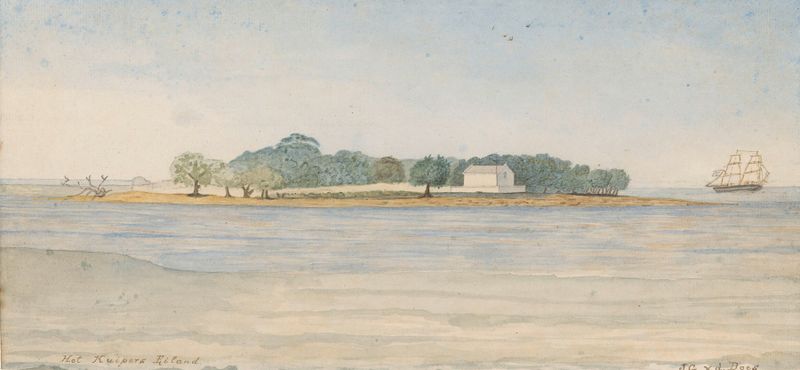
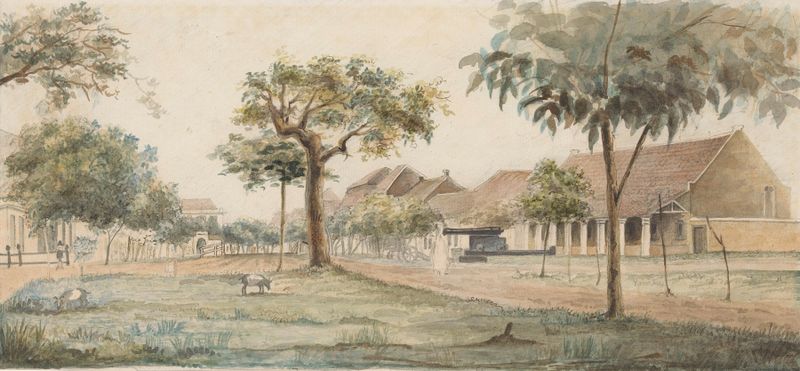
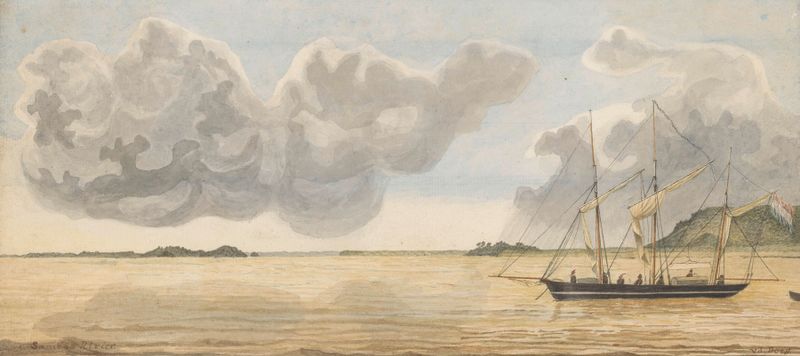
Is this a mirror — or a memory? In Gezicht op een Nederlandse nederzetting met fort en haven in Indonesië, the canvas invites us to reflect on a distant past, blending nostalgia with the reality of colonial ambition. A moment captured in time, it evokes the longing for a place that both is and isn’t ours. Look to the left at the sturdy fort, its imposing structure cast in warm ochres and subtle earth tones that anchor the composition. Notice how the painter’s brushwork conveys a sense of movement among the bustling figures at the harbor, with their sails billowing against the horizon, hinting at commerce and connection.
The play of light dances across the water’s surface, creating a shimmering effect that contrasts the solidity of the fort, deepening the emotional resonance of this juxtaposition between safety and the unknown. Beneath the picturesque tranquility lies an undercurrent of tension. The serenity of the setting belies the complexities of colonialism, inviting one to question the implications of this settlement. The scattered boats suggest both trade and the flow of different cultures, yet their presence also hints at the encroachment on indigenous lands and lives.
This duality echoes a deeper sense of longing for understanding, reflecting a history that is at once beautiful and fraught with conflict. In 1845, the artist was navigating the transitional period of Dutch colonialism in Indonesia, a time marked by both the flourishing of European interests and the unsettling realities faced by local populations. Living in a world where art served as a projection of power and identity, the painter's work captured both the allure of far-off lands and the complexities of his own society, a moment of reflection on what it meant to belong to two worlds.