Glencoe — History & Facts
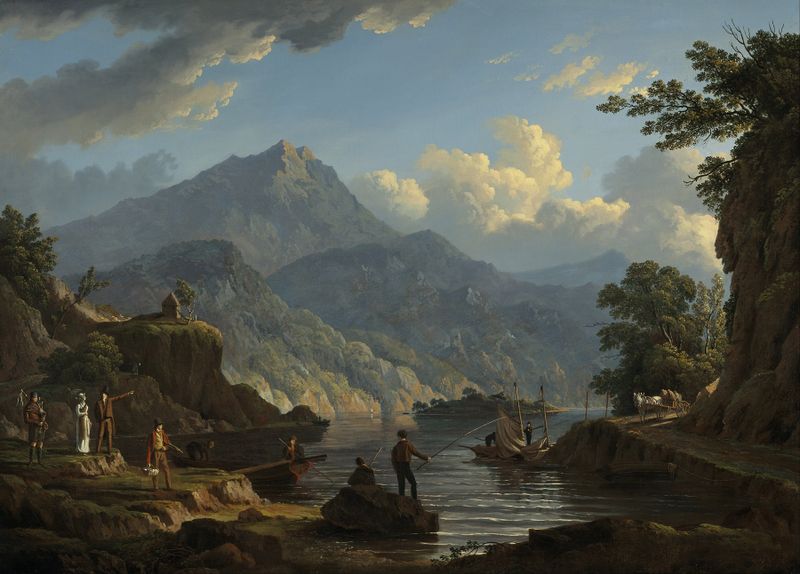
Could beauty survive in a century of chaos? In the haunting portrayal of Glencoe, the viewer is invited to confront the delicate balance between nature's splendor and the specter of mortality that looms over it. Look to the foreground where rugged mountains rise with imposing majesty, their sharp edges softened by a mysterious mist. Notice how muted greens and greys dominate the canvas, creating an atmosphere of both serenity and foreboding. The interplay of light and shadow weaves a tapestry of depth, inviting the eye to explore the hidden crevices of the landscape, where life clings tenaciously amid desolation.
Every brushstroke seems to echo the whispers of ancient echoes, hinting at transient beauty. Within this scene lies a profound tension: the eternal versus the ephemeral. The mountains, timeless guardians of the glen, stand resilient against the inevitable passage of time, while the mist envelops the lower valleys, suggesting a lingering uncertainty and the ephemeral nature of existence. This juxtaposition speaks to the struggle between life's beauty and the inevitable decay that follows—a poignant reminder that even in wilderness, there is a fragility that resonates with our own mortal journey. During a period marked by both personal and artistic upheaval, the artist rendered this landscape amidst a shifting cultural landscape in the late 19th century.
Knox, deeply influenced by the Romantic movement, sought to capture the raw, untamed essence of nature in a rapidly industrializing world. His choice to focus on such a dramatic scene reflects not only his personal exploration of identity but also a collective yearning for solace in the face of an ever-present chaos.