Going to the meet — History & Facts
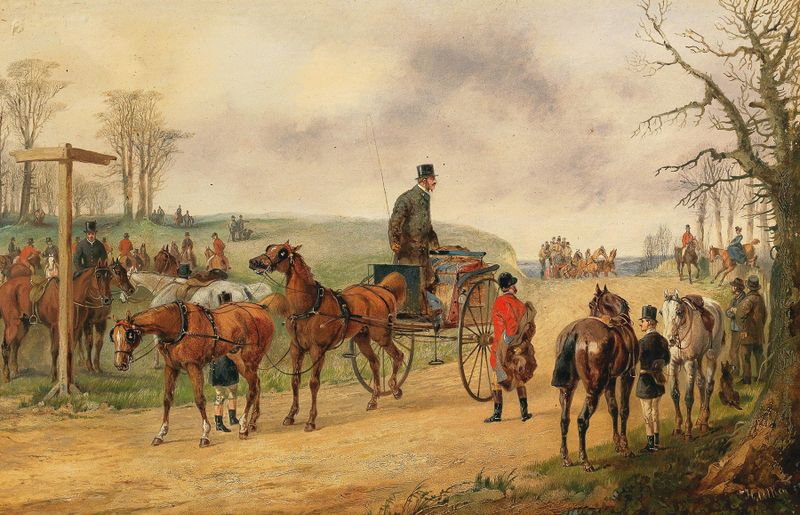
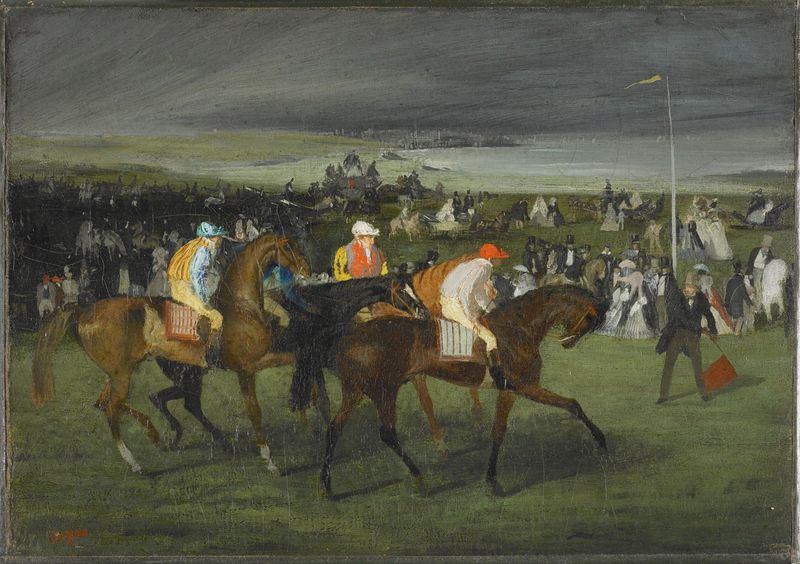
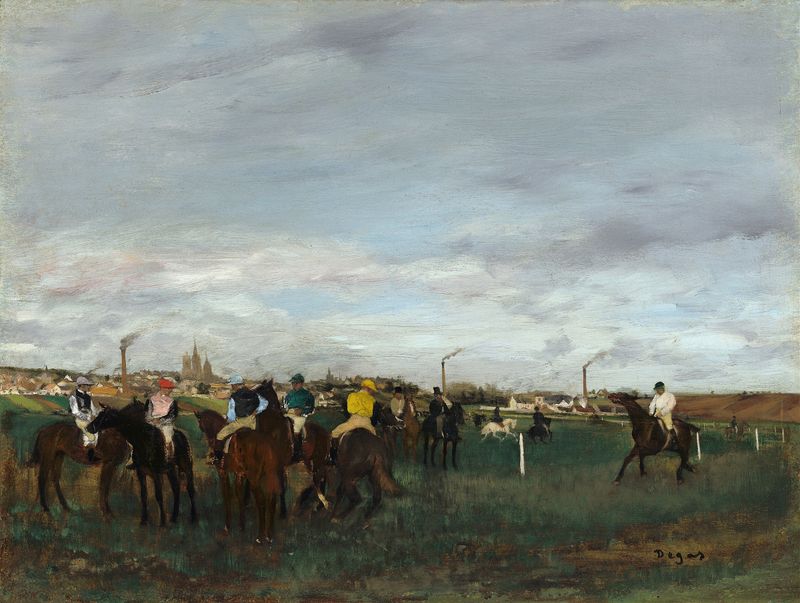
Who listens when art speaks of silence? The stillness in Going to the Meet echoes with a quiet obsession that lingers long after the viewer has moved on. To appreciate the intricacies of this piece, focus first on the horses positioned at the forefront, poised yet tense, their muscles taut with anticipation. Notice how the subtle brushwork captures the sheen of their coats, reflecting the soft light of the dawn sky. The muted color palette creates an atmosphere of calm before the impending action, while the distant figures in the background fade into a misty ambiguity, suggesting a world beyond the immediate scene that is both inviting and enigmatic. Within this tranquil setting lies a deeper narrative about obsession and ritual.
The horses, representing both power and grace, seem caught in a moment of anxious waiting, reflecting the tension between their instincts and human control. The distant figures, perhaps embodying the spectators of this impending event, hint at the social dynamics of equestrian culture—where excitement intertwines with a foreboding sense of duty. This contrast imbues the work with a sense of both exhilaration and restraint, revealing the underlying currents of devotion that fuel such pursuits. At an unspecified date, Henry Alken jun. created this artwork in a period where sporting culture was on the rise, capturing the fervor surrounding horse racing in 19th-century England.
Alken, known for his equestrian subjects, tapped into this obsession with a world that celebrated both the beauty of the horse and the complexities of human ambition. His work resonates with a historical context rich in social dynamics, encapsulating a moment that feels both personal and universal.