Gondelfahrt in Venedig am Campo de l’Abazia — History & Facts
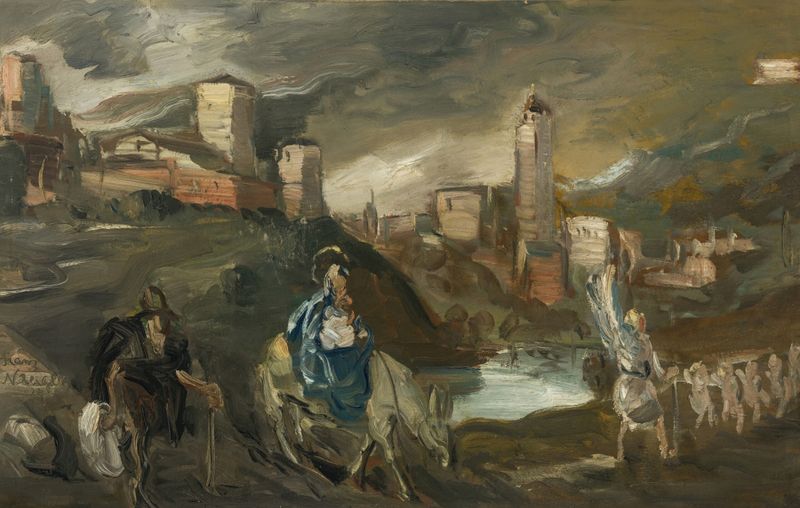
Could beauty survive in a century of chaos? This haunting question lingers in the air, evoking the timeless allure intertwined with decay that permeates the canvas. Look to the center, where the gondola glides gracefully across the water, its reflection dancing in the rippling surface. The palette is a masterful blend of muted blues and earthy browns, creating an atmosphere steeped in nostalgia and somber elegance. Notice how the light filters through the trees lining the canal, dappling the scene with gentle warmth, as if to soften the edges of an urban landscape in quiet distress.
The composition invites the viewer to linger, absorbing both the serenity of the moment and the underlying tension of a city on the brink of turmoil. In the delicate brushstrokes lie the whispers of history — the crumbling facades of the buildings suggest a city grappling with its past, while the stillness of the water reflects the deep-seated yearning for preservation amid inevitable decay. The juxtaposition of the serene gondola ride with the unyielding passage of time evokes a bittersweet nostalgia. As the scene unfolds, one feels the pulse of life continuing against the backdrop of a changing world, each stroke echoing the fragility of beauty in an era marked by uncertainty. Franz Naager created this work in 1941, during a tumultuous period in Europe.
Living in Germany, he experienced the upheaval of war and the strains on artistic expression. The art world itself was transforming as modernist movements struggled against the constraints of political ideologies. In this setting, Gondelfahrt in Venedig am Campo de l’Abazia becomes not just a depiction of Venice, but a poignant meditation on the resilience of beauty amid the weight of history.