
Gottstatt, Kloster, von Südwesten — History & Facts
Can beauty exist without sorrow? In the intricate embrace of nature and architecture, the duality of existence reveals itself, laying bare the heart’s hidden betrayals. Look to the left at the delicate play of light filtering through the trees, casting dappled shadows on the serene façade of the monastery. The soft hues of green and ochre blend harmoniously, inviting the eye to wander along the meticulously rendered path leading to the entrance. Notice how the artist’s brushstrokes convey a sense of tranquility, yet there lingers an undercurrent of tension, as the starkness of the building contrasts with the surrounding lushness. Biedermann captures the essence of a sacred space that stands resilient against time, hinting at the stories whispered within its walls.
There’s an unsettling juxtaposition between the beauty of the setting and the potential for betrayal it evokes; one can imagine the secrets held by those who sought refuge there. The rich textures and shadowy corners invite contemplation, suggesting that beneath the surface of peace lies a complex web of human emotions. Johann Jakob Biedermann painted this work during a period marked by a growing interest in landscape and architectural representation in the early 19th century. Working amidst the tranquil backdrop of Switzerland, he explored themes of spirituality and nature while navigating the evolving art world that increasingly favored Romantic ideals.
In this context, the painting reflects both his personal dedication to capturing beauty and the existential questions that arise from the quietude of the monastic life.
More Artworks by Johann Jakob Biedermann
Browse all →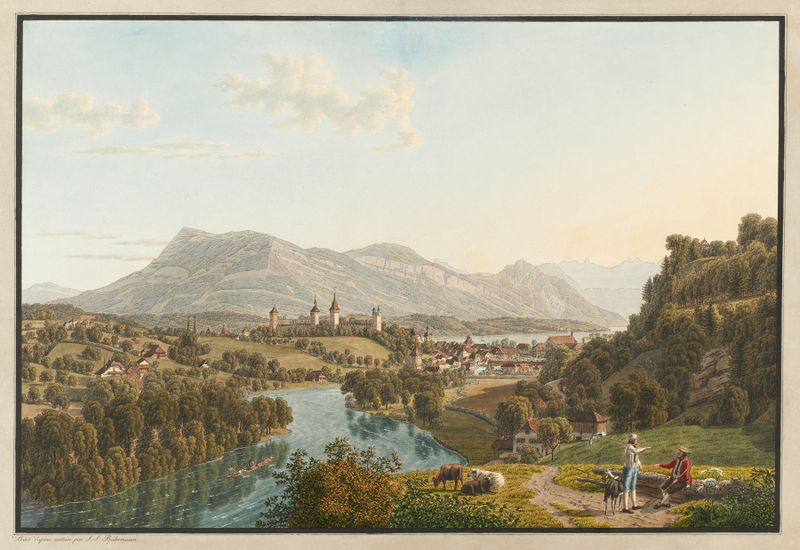
Luzern, von Nordwesten
Johann Jakob Biedermann

Sankt Gallen, von Norden
Johann Jakob Biedermann

Le Glacier nommé Rosenlaui, à côté du Wetterhorn
Johann Jakob Biedermann

Gottstatt, Kloster, von Nordwesten
Johann Jakob Biedermann
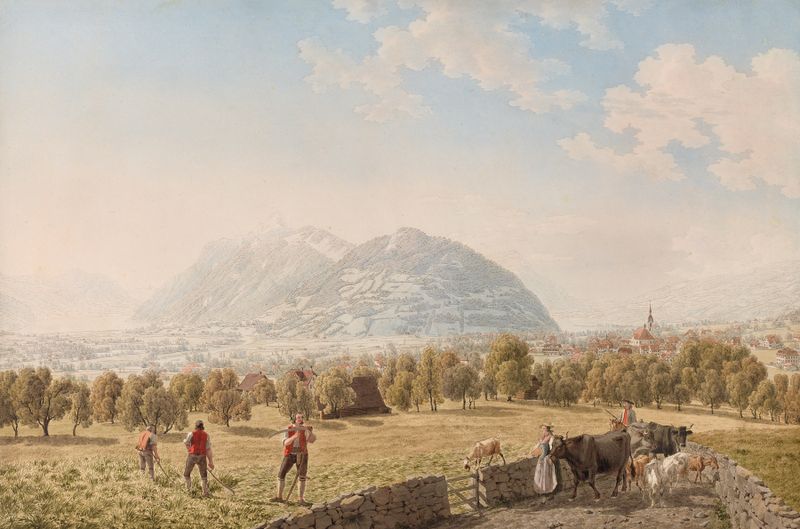
Schwyz, von Osten
Johann Jakob Biedermann

Twann und Bielersee von Nordosten
Johann Jakob Biedermann

Luzern, von Nordwesten
Johann Jakob Biedermann

Luzern, von Südwesten
Johann Jakob Biedermann
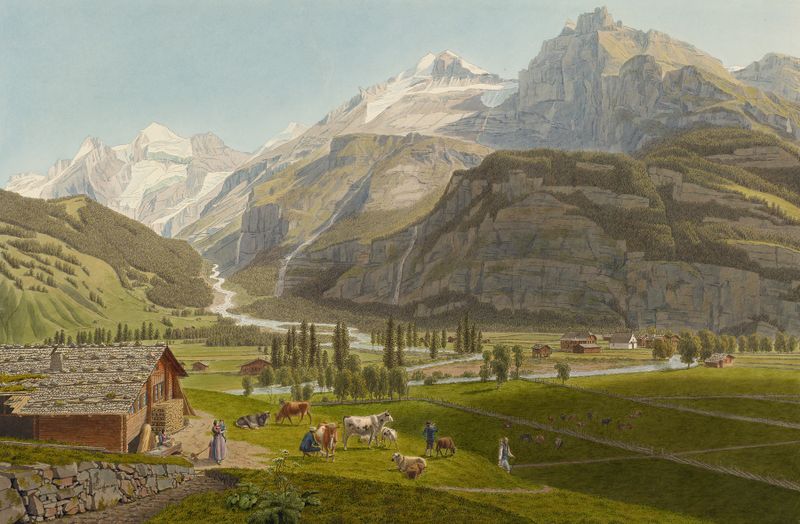
Kandersteg und das Kandertal, von Norden
Johann Jakob Biedermann

Schaffhausen, von Westen
Johann Jakob Biedermann
More Architecture Art
Browse all →
The statue of Liberty
Frédéric Auguste Bartholdi

View of Houses in Delft, Known as ‘The Little Street’
Johannes Vermeer

View of Houses in Delft, Known as ‘The Little Street’
Johannes Vermeer

The Cathedral in Rouen. The portal, Grey Weather
Claude Monet

The yellow house
Vincent van Gogh

The Church in Auvers-sur-Oise, View from the Chevet
Vincent van Gogh