
Grand approach to the Temple of Philæ, Nubia. — History & Facts
Who listens when art speaks of silence? In the grandeur of ancient ruins, beauty emerges not just from form, but from the echoes of history captured within the canvas. Look to the left at the elegantly towering columns of the Temple, their intricate hieroglyphs etched deep into stone, whispering tales of a forgotten civilization. Notice how the sun bathes the structure in a warm, golden light, casting shadows that stretch across the arid landscape. The artist meticulously layers the earth tones, juxtaposing the rich browns and ochres of the temple against the vivid blue sky, creating a harmony that invites contemplation.
This intentional use of color and light breathes life into the scene, making the ancient architecture feel both reverent and alive. Yet, beyond the beauty lies a profound stillness, a tension between the past and present. The serene, yet imposing presence of the temple speaks of resilience, its grandeur undiminished by time or the encroachment of the desert. In the foreground, a solitary figure stands in quiet reverence, illustrating the insignificance of humanity against the might of history.
This contrast hints at a deeper narrative of loss and preservation, inviting viewers to reflect on their own connection to a world far removed yet so intricately linked. During the years 1846 to 1849, the artist traveled through Egypt and Nubia, capturing the majestic landscapes and ancient monuments as European interest in these regions surged. This was a time of exploration, as the Romantic movement encouraged artists to seek out the sublime in nature and history. David Roberts' journey was not only a personal quest but also part of a broader cultural fascination with Egypt, influenced by archaeological discoveries and burgeoning tourism.
His work stands as a testament to the beauty and mystery of a world that, though distant, resonates deeply within the human experience.
More Artworks by David Roberts
Browse all →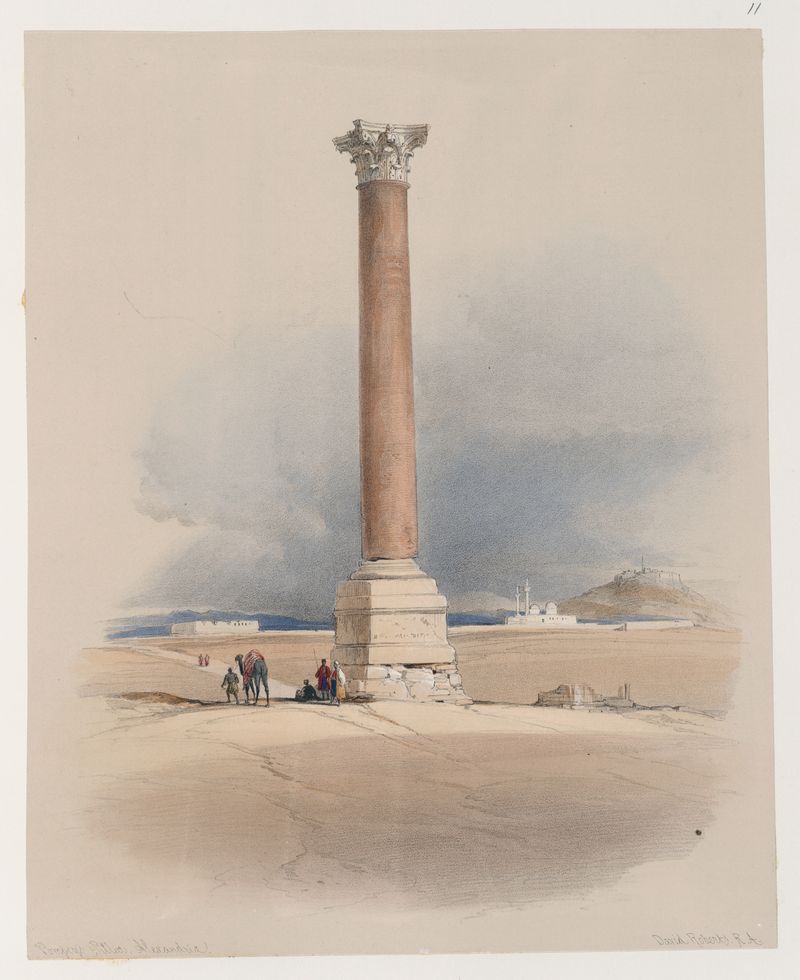
Pompey’s Pillar, Alexandria.
David Roberts

Approach to the Fortress of Ibrim.
David Roberts

Karnac [Karnak]. Nov. 29th, 1838.
David Roberts
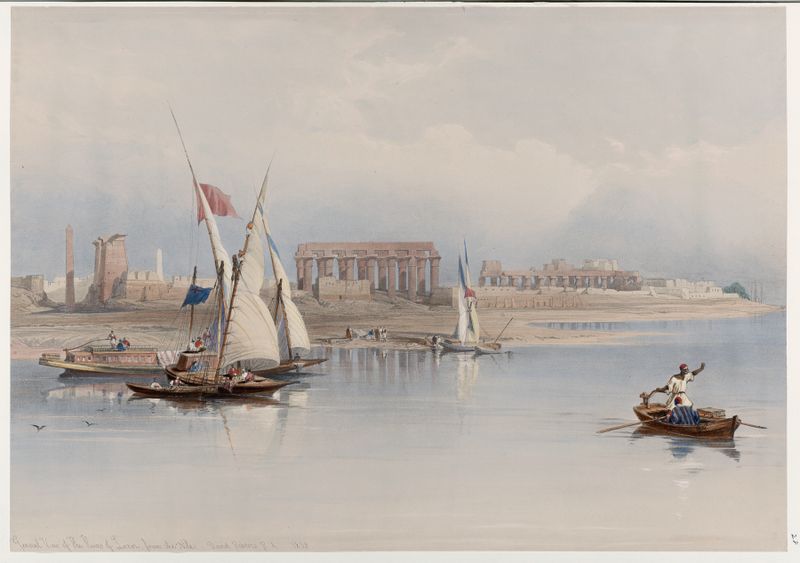
General view of the ruins of Luxor, from the Nile. 1838.
David Roberts

Statues of Memnon at Thebes, during the inundation.
David Roberts

Entrance to the tombs of the kings of Thebes. Bab-el-Malouk [Bîbân al-Mulûk].
David Roberts

The Fortress of the Alhambra, Granada
David Roberts
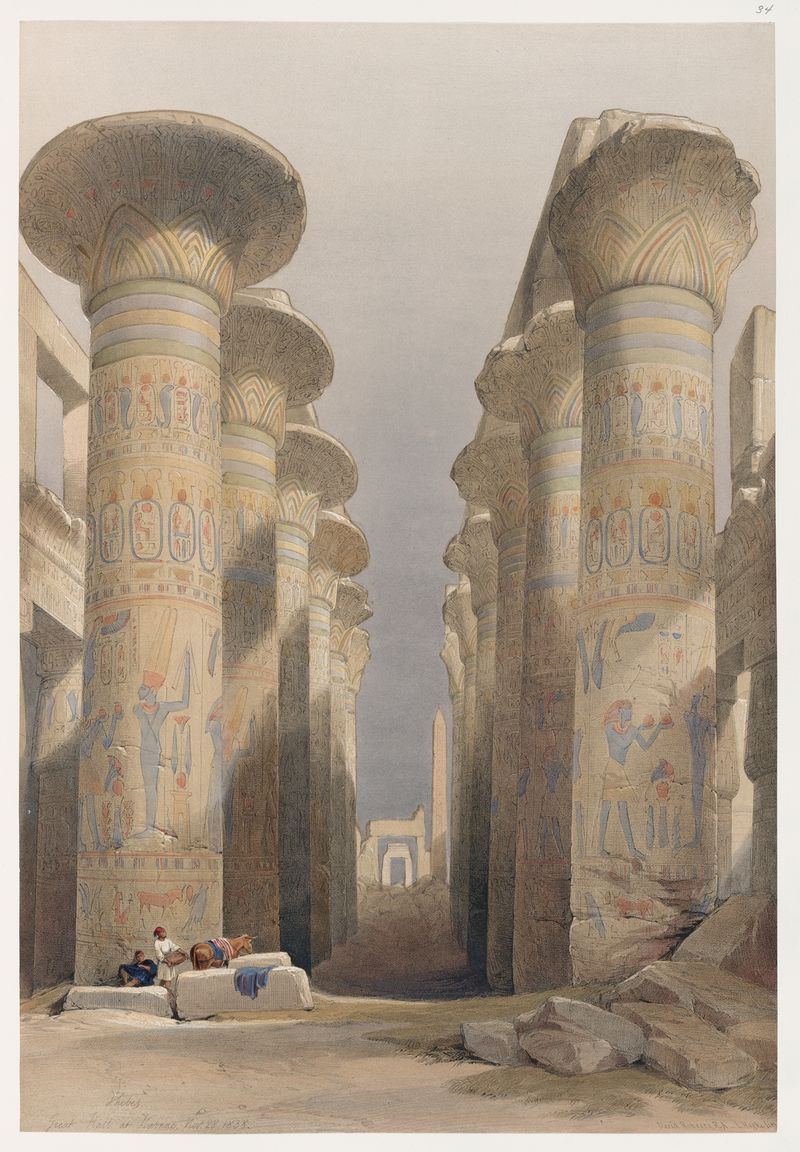
Thebes. Great Hall at Karnak. Nov. 28, 1838.
David Roberts
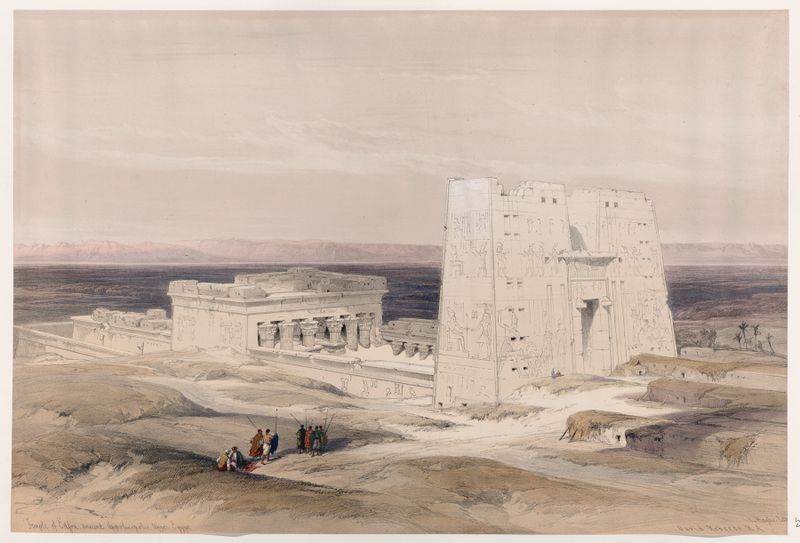
Temple of Edfou [Idfû], ancient Appolinopolis, Upper Egypt.
David Roberts

Temple of Kalabshee [Kalabsha, Kalâbishah], Nubia. Nov. 1838.
David Roberts
More Architecture Art
Browse all →
The statue of Liberty
Frédéric Auguste Bartholdi

View of Houses in Delft, Known as ‘The Little Street’
Johannes Vermeer

View of Houses in Delft, Known as ‘The Little Street’
Johannes Vermeer

The Cathedral in Rouen. The portal, Grey Weather
Claude Monet

The yellow house
Vincent van Gogh

The Church in Auvers-sur-Oise, View from the Chevet
Vincent van Gogh