
Grindelwald, unterer Gletscher mit Eiger — History & Facts
Could a single brushstroke hold eternity? In Grindelwald, unterer Gletscher mit Eiger, the essence of decay permeates the canvas, whispering the transient nature of both beauty and time. Look to the left at the imposing Eiger, its jagged peak piercing the sky, cloaked in ethereal clouds. The palette evokes an interplay of icy blues and muted greys, each stroke replicating the chill of the glacial landscape. Notice how the artist meticulously captures the shimmer of melting ice, reflecting light in a way that both dazzles and forewarns.
The subtle brushwork conveys a delicate tension between permanence and impermanence, inviting the viewer to ponder the inevitable changes that nature endures. Biedermann’s nuanced depiction reveals an intricate dance of contrasts; the grandeur of the mountain juxtaposes the fragile state of the glacier below. It speaks to humanity's own fleeting existence against the backdrop of nature's eternal cycles. The hints of decay in the ice suggest a poignant reminder of vulnerability, while the towering Eiger stands resolute, a symbol of strength amidst the ravages of time.
This duality echoes within the viewer, prompting reflection on our relationship with the natural world. Although the exact date of creation remains unknown, Biedermann painted this work during a period characterized by Romanticism's profound appreciation for nature's beauty and power. He was exploring the Swiss landscapes that captivated many artists, driven by a desire to evoke emotion through stunning vistas. In doing so, he contributed to a rich tradition that revered the sublime, all while grappling with the realities of decay and change that form the core of the human experience.
More Artworks by Johann Jakob Biedermann
Browse all →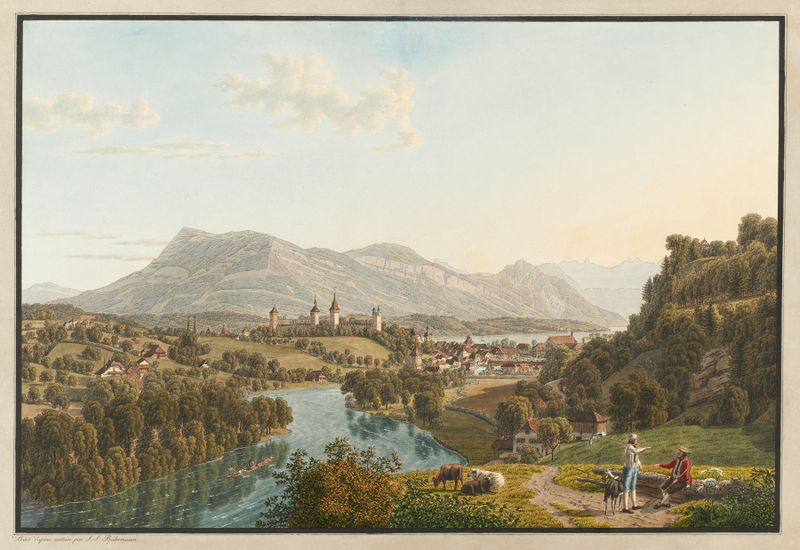
Luzern, von Nordwesten
Johann Jakob Biedermann

Sankt Gallen, von Norden
Johann Jakob Biedermann

Le Glacier nommé Rosenlaui, à côté du Wetterhorn
Johann Jakob Biedermann

Gottstatt, Kloster, von Nordwesten
Johann Jakob Biedermann
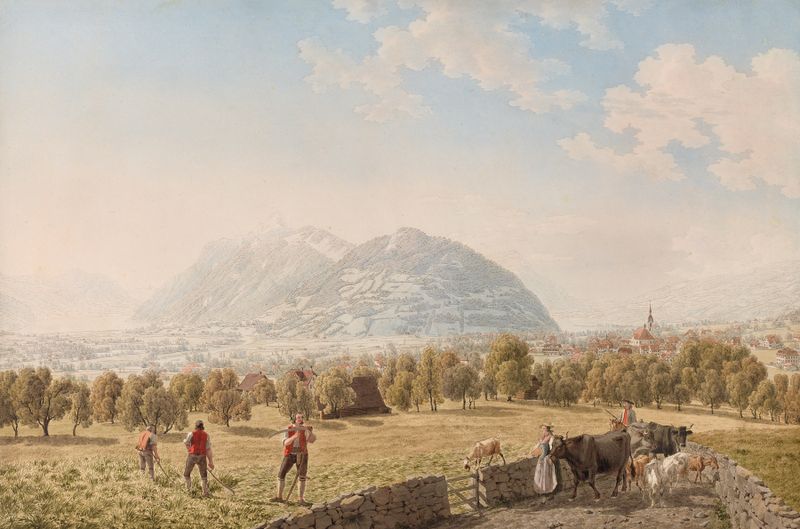
Schwyz, von Osten
Johann Jakob Biedermann

Twann und Bielersee von Nordosten
Johann Jakob Biedermann

Luzern, von Nordwesten
Johann Jakob Biedermann

Luzern, von Südwesten
Johann Jakob Biedermann
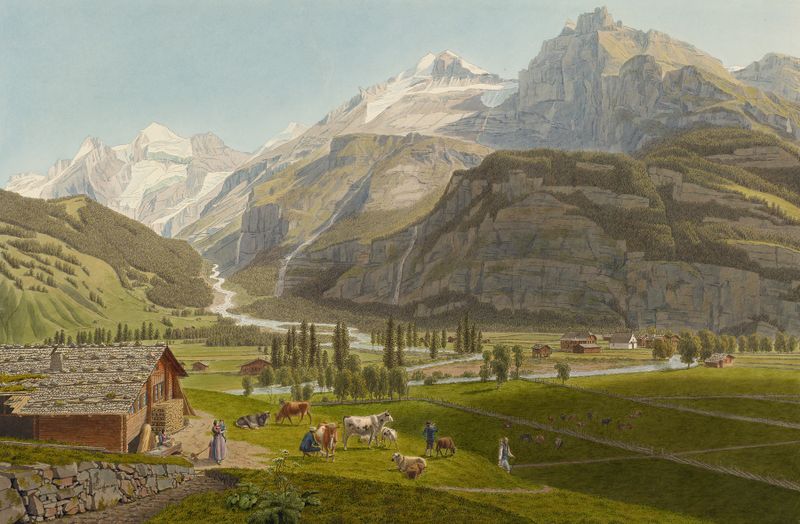
Kandersteg und das Kandertal, von Norden
Johann Jakob Biedermann

Schaffhausen, von Westen
Johann Jakob Biedermann





