Haga — History & Facts
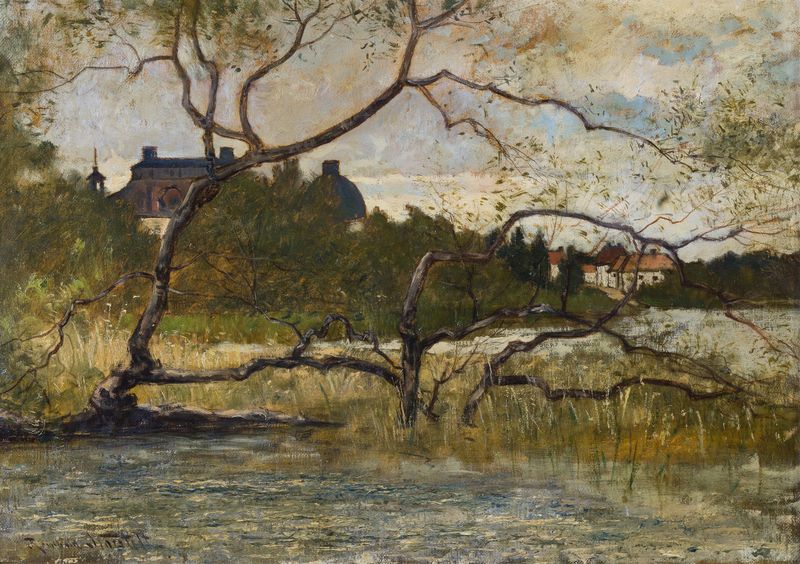
Who listens when art speaks of silence? In a world where noise surrounds us, the weight of isolation can feel both suffocating and profound, a whisper captured in a moment frozen on canvas. Focus your gaze on the muted palette that envelops the scene—subtle grays and soft blues swirl together, inviting you to delve deeper into the essence of solitude. Notice how the solitary figure stands against the vastness of the landscape, their posture both contemplative and resigned. The gentle brushwork creates a sense of movement in the sky, suggesting the passage of time, while the ground remains eerily still, anchoring the figure in their own world of introspection. Among the nuances, examine the contrasting textures: the smoothness of the figure’s clothing juxtaposed with the roughness of the earth beneath, symbolizing the internal struggle between human vulnerability and the harshness of existence.
The absence of any companions amplifies the feeling of loneliness, yet the figure's quiet presence hints at a quiet strength—an acceptance of solitude that resonates deeply within the viewer's own experiences. In 1908, Reinhold Norstedt painted Haga during a period marked by a growing fascination with impressionistic techniques in Sweden. At this time, he was navigating the complexities of both personal life and the evolving art world, striving to carve a niche that captured emotion and atmosphere. This piece reflects not only his technical prowess but also his ability to encapsulate the universal truths of isolation within a beautifully rendered landscape.