Hallowe’en — History & Facts
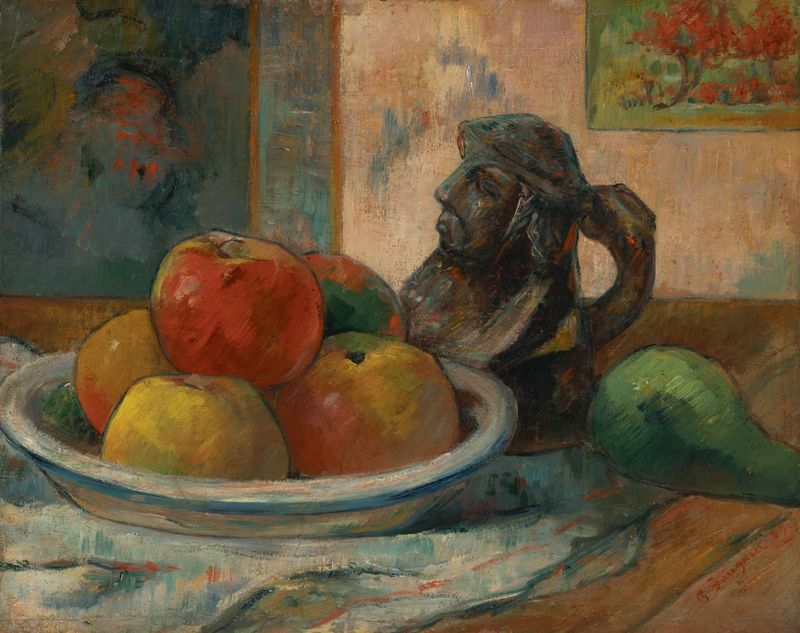
In Hallowe’en, the stillness is not void but a vibrant tapestry woven with the threads of movement and anticipation. Look to the center of the canvas, where a festively decked table beckons, laden with pumpkins and apples, their colors vivid yet softened by the gentle chiaroscuro. The artist employs rich oranges and deep shadows, creating a dance of light that highlights the textures of the objects, inviting the viewer to reach out, to touch the smooth skin of a pumpkin or feel the crispness of an apple. The composition draws your gaze across the tableau, the arrangement hinting at a gathering just momentarily paused, caught between the raucous laughter of children and the hushed whispers of the awaiting night. Yet, beneath this playful surface, deeper tensions linger.
The juxtaposition of bright, inviting colors against shadowy corners suggests a duality of festivity and foreboding. Each object holds potential stories—what hands carved those pumpkins? What secrets lie beneath the surface of that still apple? The movement implied by the scattered leaves and the slight tilt of the table adds urgency to the scene, as if one could almost hear the rustle of footsteps and the distant echo of laughter, hinting at a world just beyond the canvas. During an undefined period in his career, Ozias Dodge painted this piece amid a transformative era in American art marked by increasing experimentation with subjectivity and expression. The festive nature of Hallowe’en reflects his engagement with contemporary themes and the evolving celebration of traditions—a time when artists were beginning to explore the emotional resonance of ordinary scenes, capturing the essence of community and the fleeting moments that bring it to life.