
Hannah Speakman Rowe (Mrs. John Rowe) (1725-1805) — History & Facts
Can beauty exist without sorrow? In the delicate portrait of Mrs. John Rowe, exquisite light dances across the canvas, revealing the complex interplay of elegance and melancholy that defines her presence. Look to the left at the soft glow illuminating her face, where gentle shadows caress the contours of her cheek. The artist employs a subtle palette of muted earth tones, allowing the rich fabric of her gown to stand out without overpowering her delicate features.
Notice the intricate lace collar framing her neck; it whispers of refinement and societal expectations, while her serene expression invites a deeper contemplation of the emotions swirling beneath the surface. In this portrait, the contrast between the softness of her gaze and the firmness of her stance evokes a profound tension. The juxtaposition of light and shadow hints at a duality within her life—beauty gracing the surface, yet suggesting an unspoken story of struggle and resilience. The slight tilt of her head, almost imperceptible, suggests an openness to the viewer, while simultaneously guarding her innermost thoughts, leaving us to ponder what lies hidden beneath the visage of grace. Created in 1748, this work emerged during a period of artistic transition in colonial America, where Feke, a pioneering portrait painter, sought to blend European influences with local culture.
As he painted this intimate portrayal of Mrs. Rowe in his studio, the colonies were grappling with their identity, and the tension between tradition and innovation was palpable. This painting reflects not just the subject's beauty but also the era's growing complexity, framing her within a moment of historical significance.
More Artworks by Robert Feke
Browse all →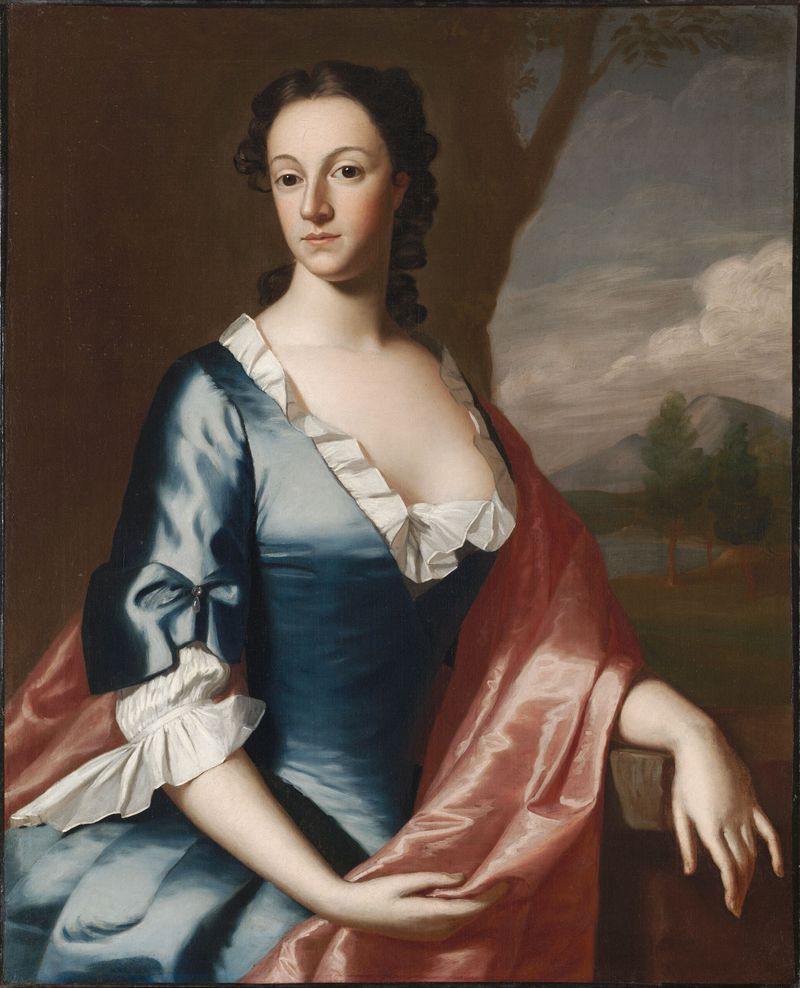
More Portrait Art
Browse all →
Las meninas
Diego Velázquez

Self-portrait with a Bandaged Ear and Pipe
Unidentified artist

Girl with a Pearl Earring
Johannes Vermeer

The Sampling Officials of the Amsterdam Drapers’ Guild, Known as ‘The Syndics’
Rembrandt van Rijn

The Hundred Guilder Print: the man seen on the back in the lower left corner
Rembrandt van Rijn

Portrait of Dr Gachet
Vincent van Gogh