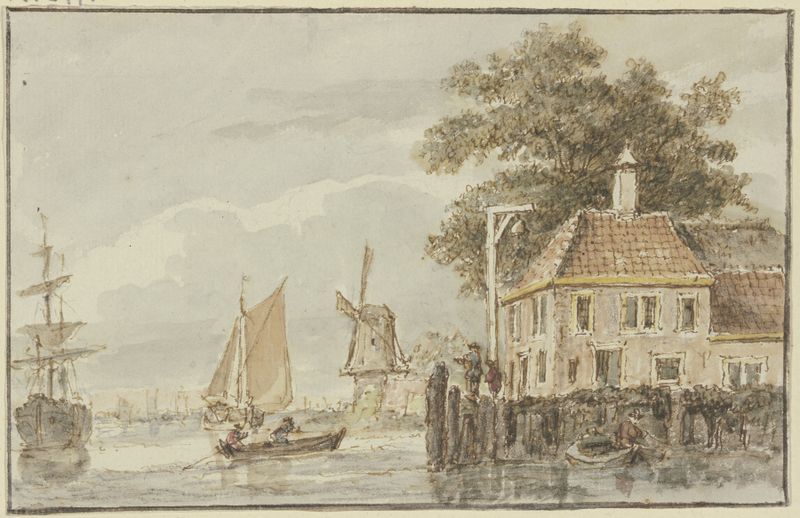
Haus unter Bäumen, am Tor eine Frau, außerhalb des umzäumten Grundstücks ein sich entfernender Wagen — History & Facts
Where does light end, and longing begin? In a world of shifting shadows and unseen boundaries, the interplay of illumination and emotion becomes a dance of revolution. Look to the foreground, where a solitary woman stands poised at the gate, her silhouette both a barrier and an invitation. The vibrant greens of the trees envelop her, their dappled sunlight playing across her figure, creating a halo of warmth. The distant wagon, receding into the background, carries with it a sense of movement and departure, its form a blur that contrasts sharply with the stillness of the woman and the surrounding foliage.
This delicate balance of color and composition draws the viewer's gaze, inviting deeper exploration of the emotional landscape. The tension in this scene is palpable. The woman, caught between the safety of her enclosed world and the unknown beyond, embodies a longing that resonates with the viewer. The trees serve as silent witnesses, their sturdy trunks and swaying branches echoing a sense of stability yet also hinting at the potential for upheaval.
The fading wagon symbolizes change, evoking a bittersweet desire for freedom while also suggesting the inevitable passage of time and the weight of choices made. Created in an uncertain era that blurred the lines between the traditional and the modern, the artist crafted this piece during a time of personal and cultural transition. Hendrik Spilman found himself navigating the complexities of a transforming society, where the remnants of past norms were shifting under the pressure of innovation. His works, like this one, reflect the delicate tensions of a world on the brink, inviting viewers to ponder their own journeys between the familiar and the unknown.