Haystacks — History & Facts
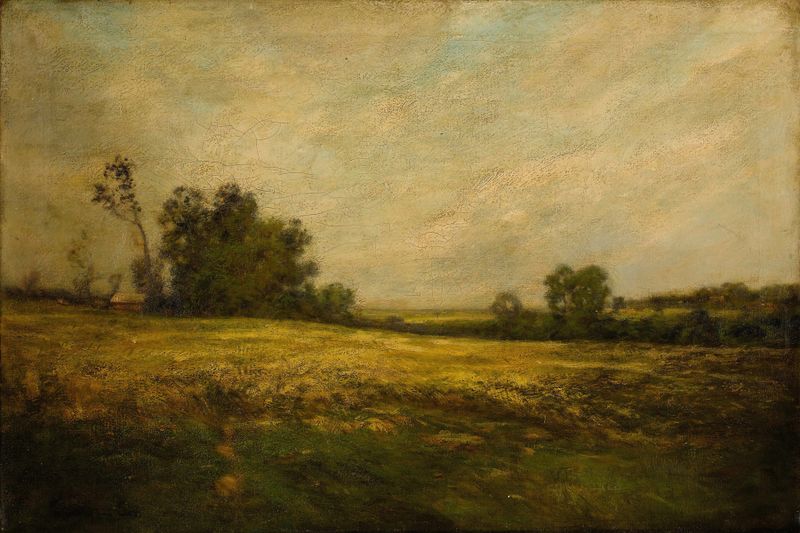
In the quietude of nature, the act of creation unfolds in vibrant hues, whispering the secrets of rural life through the art of stillness. Look to the bottom right at the cluster of golden haystacks, their textured surfaces capturing the fleeting light as it dances across the landscape. The warm earth tones blend seamlessly with the soft greens and blues of the surrounding fields, inviting a sense of serenity. Notice how the artist’s brushwork reveals a tender interplay of light and shadow, conveying an almost tactile quality that draws the viewer deeper into the pastoral scene. As you linger, consider the emotional resonance behind the simplicity of haystacks.
They symbolize the cyclical nature of life and labor, a tribute to farmers who harvest and toil without fanfare. Each stack, though a common sight, embodies the quiet dignity of creation—reminders that beauty often resides in the unadorned and forgotten corners of our world. The contrast of vibrant colors against the muted background evokes a sense of nostalgia, sparking reflections on the passage of time. Edward B.
Gay created this piece during the late 19th century, a time when American artists were increasingly turning to landscapes and rural scenes in response to the changing dynamics of society. Living in New England, Gay found inspiration in the agrarian landscape around him. This period marked a shift towards capturing everyday life and nature with emotional depth, blending realism with impressionistic techniques that celebrated the beauty of simplicity.