Heide bij avond — History & Facts
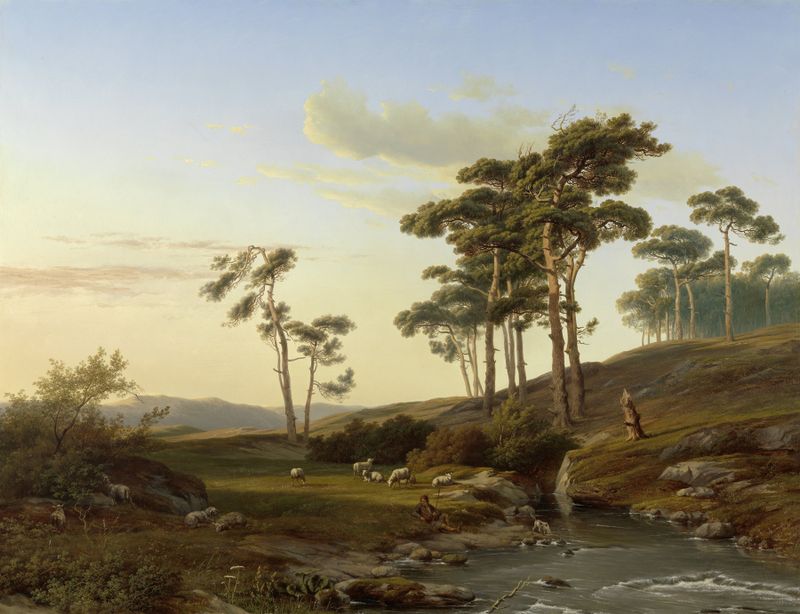
Where does light end, and longing begin? In the quiet embrace of twilight, the boundary between day and night whispers of a world caught in evolution—a place where nature asserts its beauty and humanity yearns for change. Notice how the gentle hues of dusk envelop the canvas, drawing your gaze toward the fading horizon. The soft oranges and deep purples blend seamlessly, as if the sky is blushing under the weight of unspoken desires. Focus on the foreground, where the heather blooms defiantly amidst the encroaching shadows, a symbol of resilience against the inevitable darkness.
Every brushstroke feels deliberate, echoing the artist’s yearning for transformation amid a shifting society. Beneath the surface, Heide bij avond resonates with deeper meanings of hope and revolution. The heather, bathed in twilight, contrasts starkly with the fading light, illustrating the tension between life and death, presence and absence. The ethereal glow mirrors the spirit of an era poised on the cusp of change, inviting viewers to ponder their own longings and the social shifts that ripple through the landscape of existence.
Each element intertwines, suggesting not just a scene, but a moment pregnant with possibility. Cornelis Lieste painted this piece between 1837 and 1859 while navigating a Europe transforming through industrialization and social upheaval. He found inspiration in the natural beauty of his homeland, capturing the essence of the evening landscape during a time when artists began to explore emotive expression over strict realism. This work reflects not just his aesthetic choices but also the broader quest for identity and meaning during a period of profound societal change.