
Heimkehr von der Kornernte bei Ascholding — History & Facts
Can paint confess what words never could? The delicate brushstrokes in Heimkehr von der Kornernte bei Ascholding whisper the fragility of life, a testament to the passage of time and the inevitability of mortality. Look to the center of the composition, where the golden fields of grain meet the horizon. The gentle curves of the landscape guide your gaze toward the small figures carrying sheaves of wheat. Notice how the light spills softly across the scene, illuminating the rich greens and golden yellows, while the distant church and castle stand sentinel, their stone façades contrasting the warmth of the harvest with a hint of somber permanence. The juxtaposition of labor and tranquility resonates deeply within the painting.
The harvesters, symbols of toil and community, embody a fleeting moment of joy against the backdrop of enduring structures that have witnessed generations. Meanwhile, the fading light of day suggests both the end of a fruitful season and a metaphor for life itself, underscoring the transient nature of existence. The viewer is reminded that each return from the fields is not just a celebration but a reminder of what is lost. Anton Doll painted this piece circa the late 19th century in Germany, during a time when the Romantic movement was giving way to Realism in art.
As he captured this serene rural scene, Doll was immersed in a rapidly changing world, where industrialization was beginning to alter traditional ways of life. The tension between nostalgia for the pastoral past and the encroaching modernity is palpable in his work, reflecting his desire to preserve the beauty of a vanishing world.
More Artworks by Anton Doll
Browse all →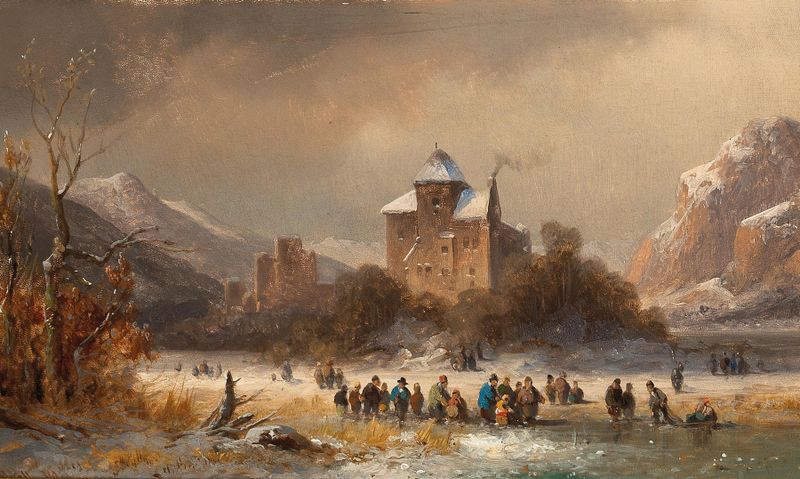
Ruine Kropfsberg und Schloß Lichtwert
Anton Doll
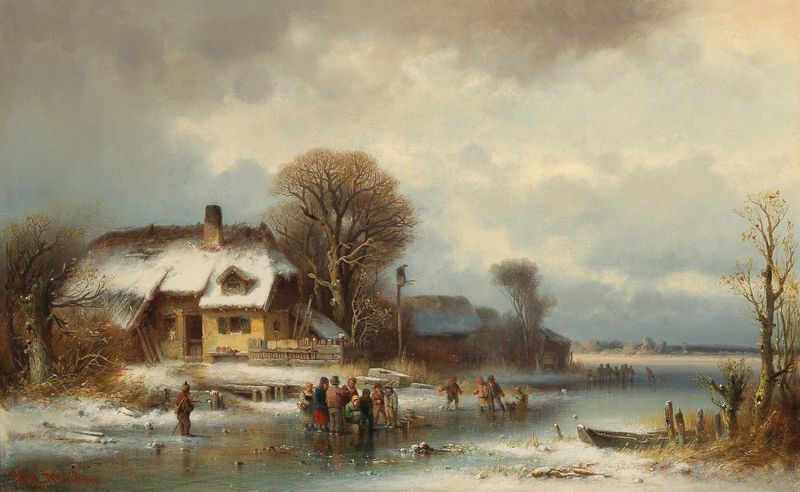
Winter Landscape With Ice Skaters
Anton Doll

Winter Amusements With A Town In The Background
Anton Doll
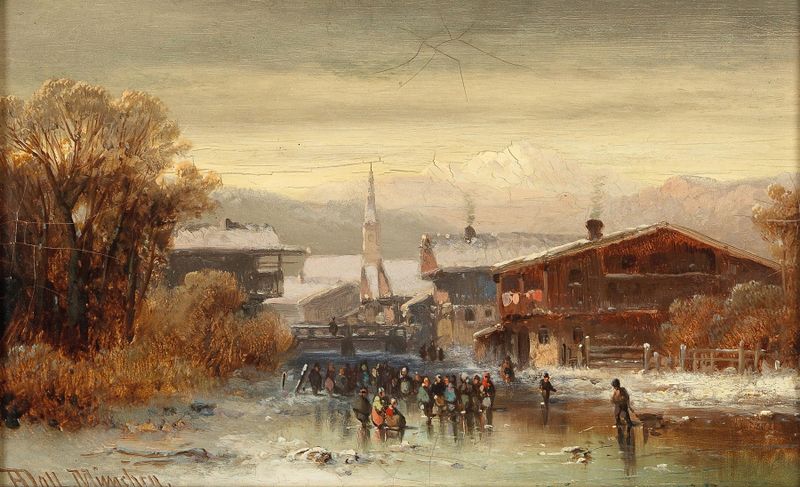
View Of Hardt On Lake Constance
Anton Doll
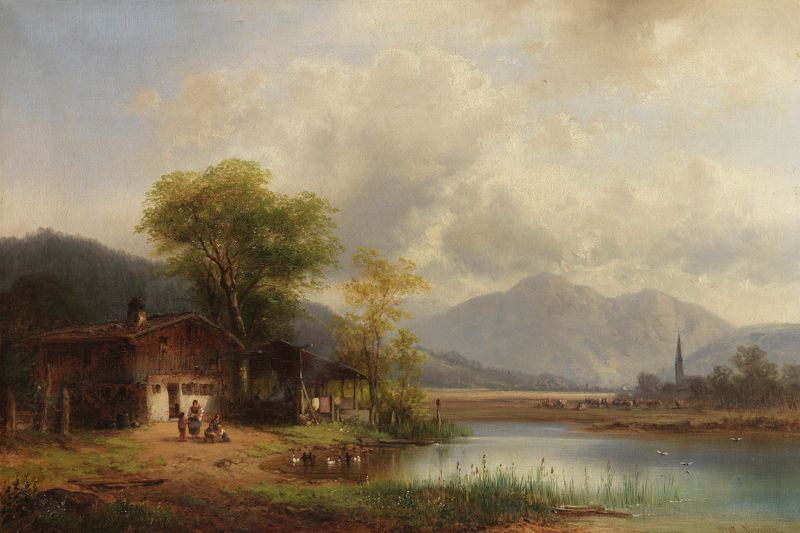
Oberbayerische Landschaft mit Waschhaus am See
Anton Doll
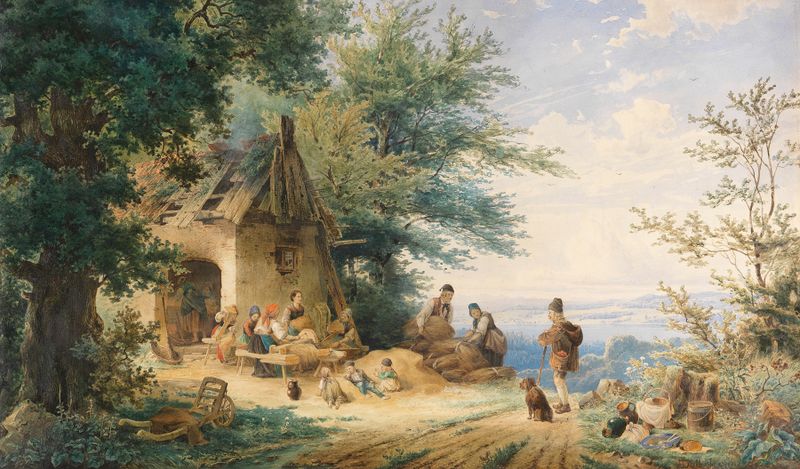
Sommerliche Landschaft mit Bauern bei der Flachsverarbeitung
Anton Doll

Wintervergnügen
Anton Doll
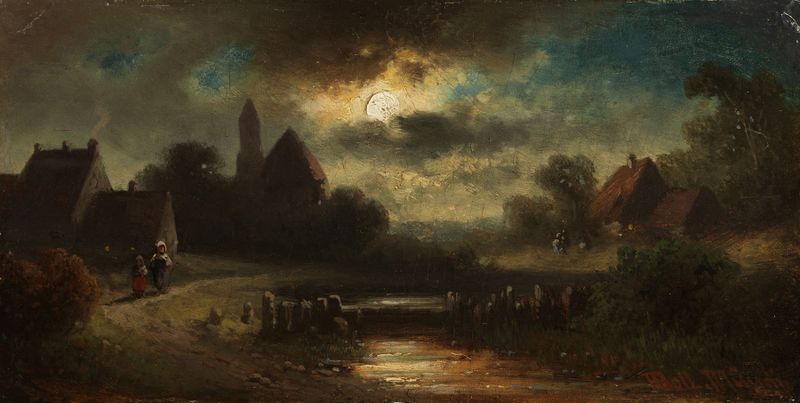
Dorfansicht in der Abenddämmerung
Anton Doll

Winterliche Flusslandschaft mit figürlicher Staffage
Anton Doll
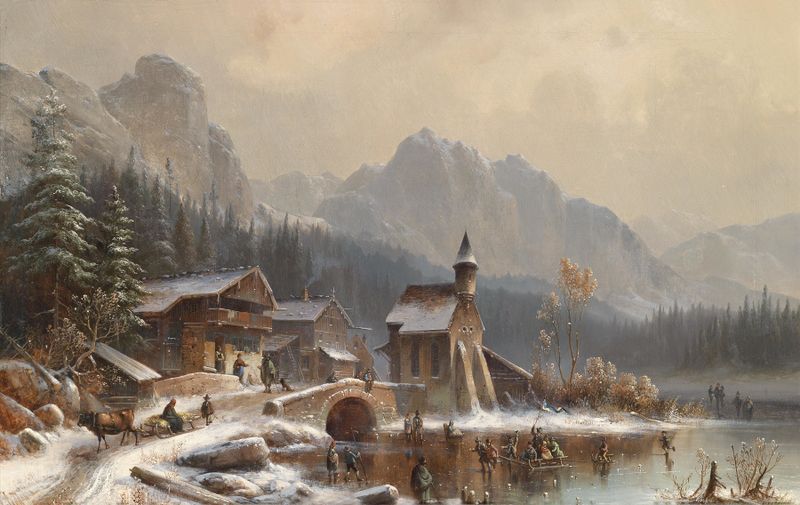
Wintervergnügen
Anton Doll





