Herbstliche Waldlandschaft — History & Facts
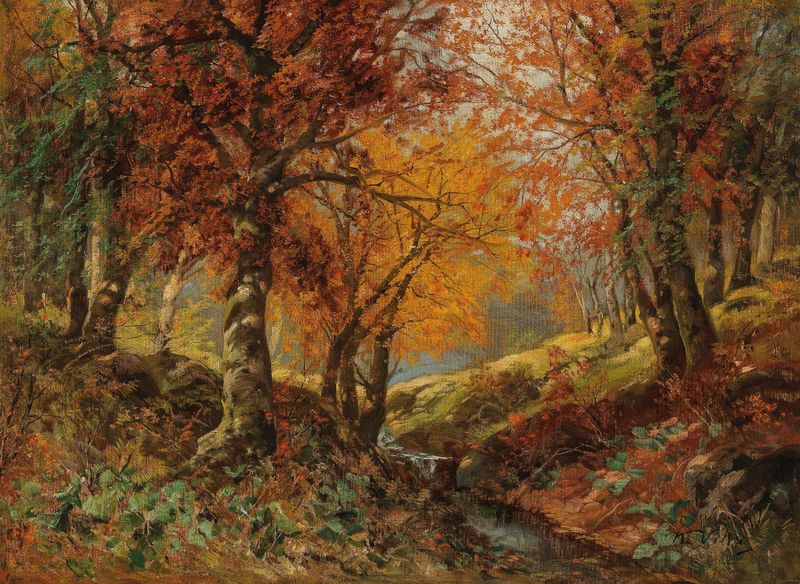
The stillness of nature holds secrets, whispering of change and the passage of time as seasons shift and life transforms. Look to the left, where a tapestry of amber, rust, and gold leaves unfurls against a backdrop of towering trees. Each brushstroke mingles with the colors, evocative of autumn’s poignant splendor. The contrast between the vibrant foliage and the somber, shadowed trunks creates a rhythmic dance of light and dark, drawing the eye deeper into the forest's embrace.
Notice how the subtle layering of hues evokes a sense of depth, inviting contemplation of the serene yet transient beauty of the landscape. Yet, beneath this picturesque surface lies a compelling narrative of transformation. The fallen leaves, cradled on the forest floor, suggest a cycle of renewal and decay, resonating with the inevitability of change inherent in nature. The tranquil atmosphere masks an undercurrent of melancholy, reminding viewers that beauty often thrives against a backdrop of impermanence.
This delicate balance between the vibrant and the fading prompts reflection on one’s relationship with the world and the passage of time. Created during an undefined period in Vikas's life, Herbstliche Waldlandschaft embodies the artist’s exploration of nature’s cycles amidst societal shifts in art and thought. Vikas sought to capture the ephemeral quality of landscapes, reflecting broader movements in the artistic community toward embracing emotional depth and personal reflection. His work signifies not just a moment captured in paint but an invitation to engage with the transformative power of the natural world.