Herbstsonne im Walde — History & Facts
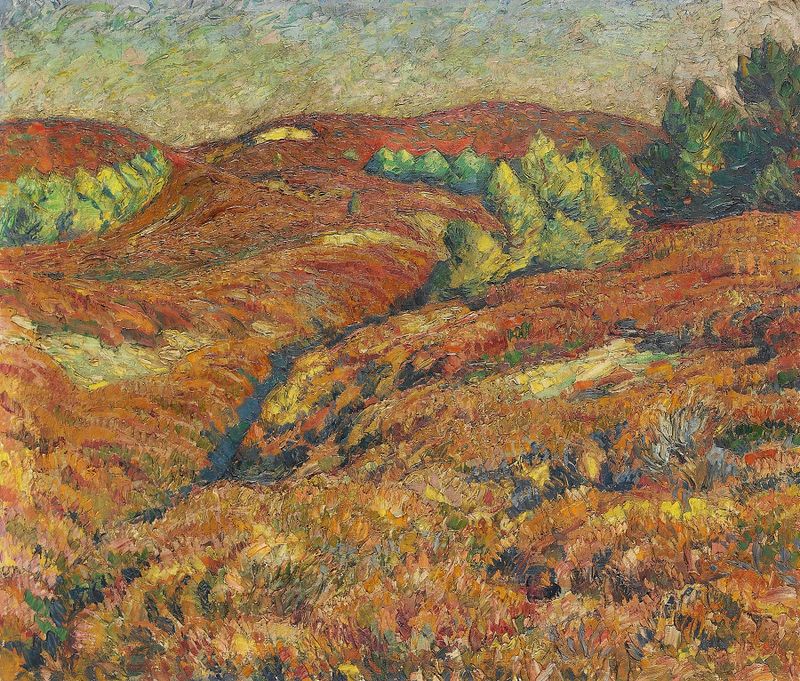
What if beauty was never meant to be finished? In a world fraught with noise and haste, the stillness captured in the painting invites contemplation and reverie. Look to the center where dappled sunlight streams through a forest canopy, illuminating the rich greens and golden hues of autumn leaves. The meticulous blending of oil paints creates a soft yet vibrant atmosphere, as if the light itself is a character in this serene narrative. Notice how the intricate play of shadows and highlights reveals the trunks of the trees, standing sentinel amidst a world poised in perfect balance. In the low-saturation palette, there is a quiet tension between the vibrancy of nature and the inevitable passage of time.
Each leaf, caught in the golden glow, speaks of transience while the sturdy trunks symbolize endurance. The silence of the woodland scene resonates deeply, prompting a reflection on the beauty that exists in moments of stillness, as ephemeral as they may be. Georg Burmester painted Herbstsonne im Walde in 1915 during a period marked by both personal and collective upheaval. In the wake of World War I, artists sought solace in nature, expressing a yearning for peace through their work.
This painting reflects Burmester's desire to encapsulate the fleeting beauty of the natural world, a poignant contrast to the chaos surrounding him.