Herdboys and Buffalo in Landscape — History & Facts
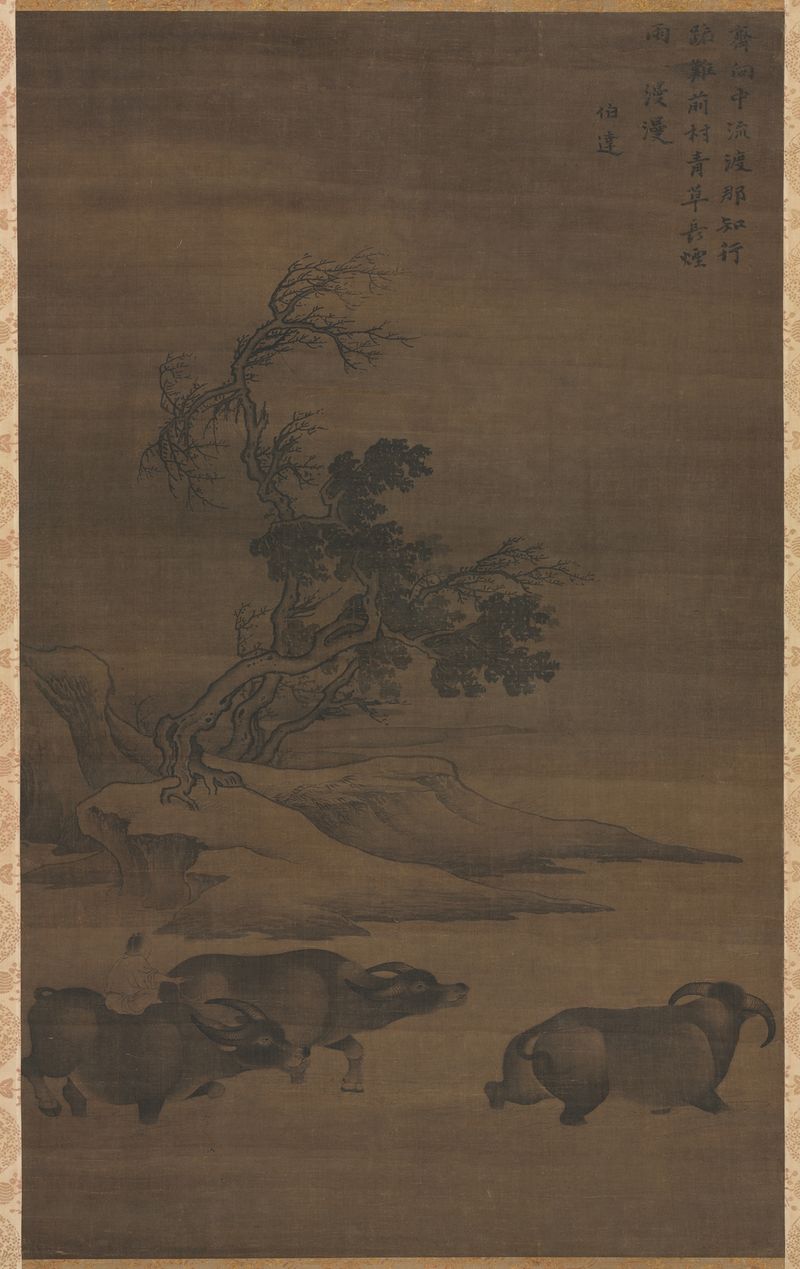
Did the painter know this moment would outlive them? In an era where the whispers of time often drown out individual voices, Guo Min captures a singular, tranquil instance of life that transcends centuries, inviting contemplation on the nature of creation itself. Look to the center of the canvas, where two young herdboys guide a majestic buffalo through a lush, undulating landscape. The earthy tones of green and brown harmonize with the soft, golden light that bathes the scene, illuminating the boys' innocent camaraderie and the powerful, serene presence of the animal. Notice how the brushstrokes create a gentle rhythm, echoing the undisturbed flow of the hills, while the deliberate use of negative space surrounding them amplifies the vastness of the natural world, inviting the viewer into this serene moment. Yet, beneath this pastoral beauty lies a rich tapestry of meaning.
The buffalo, a symbol of strength and resilience, signifies the enduring relationship between humanity and nature. In contrast, the youthful herdboys embody both innocence and the inevitable passage of time, suggesting a fragile balance between work and play. The interplay between the boys’ carefree gestures and the solemnity of the buffalo evokes a poignant tension, a reminder of the responsibilities that accompany youth in a world that demands growth. Created in the 1200s, this piece reflects the Song Dynasty’s cultural emphasis on harmony with nature and the celebration of rural life.
Guo Min, navigating a period marked by artistic innovation and a deepening philosophical inquiry into existence, produced this work while drawing from the socio-political changes around him, seeking not only to depict life but to immortalize these fleeting moments in the canvas of history.