Het Godshuis — History & Facts
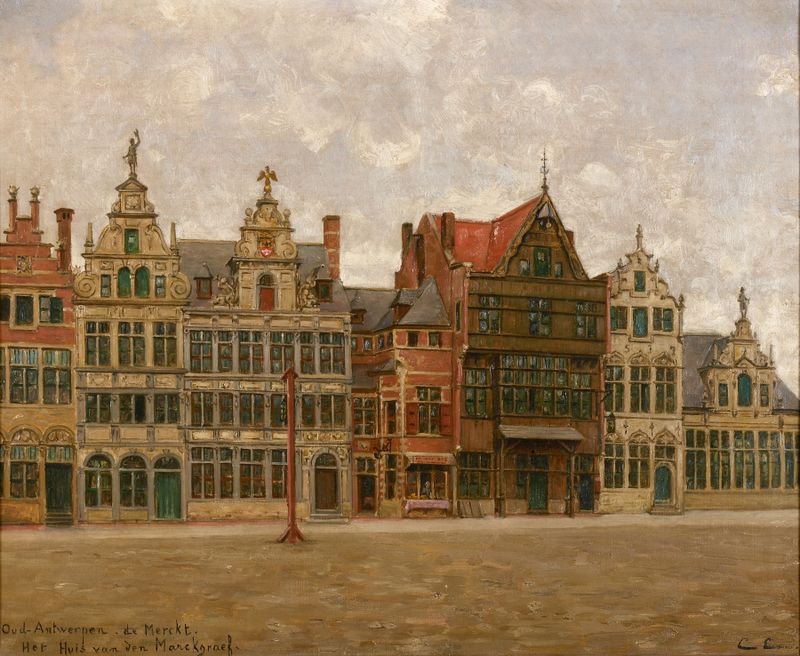
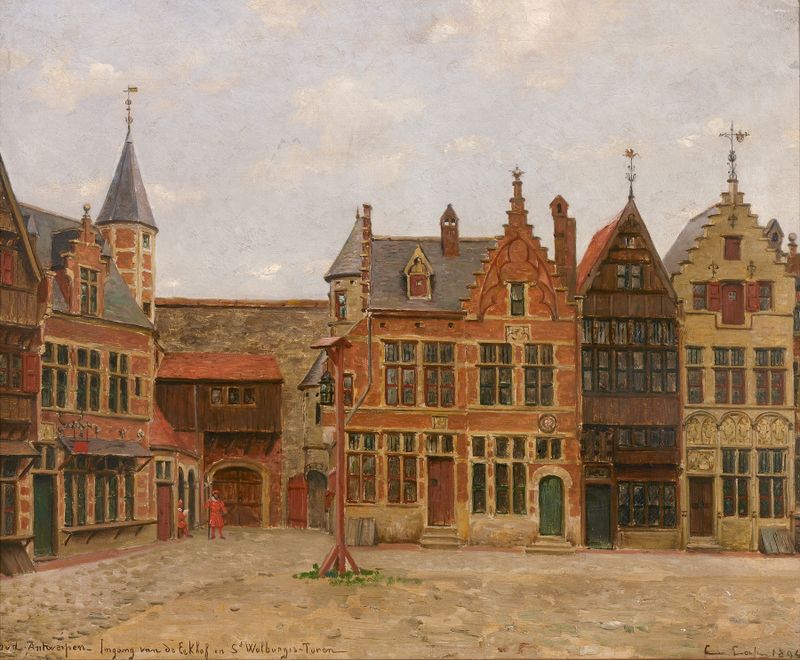
Could a single brushstroke hold eternity? In the haunting landscape of emptiness, one might find reflections of solitude and longing that linger well beyond the canvas. Look closely at the center where the dilapidated house stands, its weathered façade absorbing the surrounding stillness. Notice how the muted earth tones meld with the cool greys of the sky, creating a seamless blend that evokes a sense of desolation. The sparse trees frame the structure, their gnarled branches reaching out as if to embrace a forgotten past.
The brushwork is both delicate and deliberate, inviting the eye to trace the contours of a life once vibrant yet now faded into memory. This artwork reveals contrasts that speak volumes—between the solidity of the house and the ethereal quality of the landscape. The emptiness surrounding the structure embodies both loss and resilience, inviting viewers to ponder the stories that linger in the silence. The interplay of light and shadow enhances the tension, suggesting that even within abandonment, there exists a haunting beauty.
Each stroke conveys emotion, hinting at the fragile nature of existence itself. In 1894, Constant Cap painted Het Godshuis during a period marked by the rise of symbolism and a fascination with the themes of decay and nostalgia. Living in Belgium, he found inspiration in the changing societal landscapes, often reflecting on the ephemeral nature of life and the emotional resonance of forgotten spaces. This work encapsulates a moment in time when artists began to explore deeper psychological realms through their art, shifting away from mere representation toward profound introspection.