
Het stenen vuurbaken en het havenhoofd van Durgerdam — History & Facts
What if silence could speak through light? In Het stenen vuurbaken en het havenhoofd van Durgerdam, a quiet melancholy seeps from the canvas, where decay dances alongside the hope of renewal. Look to the horizon where the weathered lighthouse stands resolutely against a muted sky. The earthy tones of ochre and dull blues create a somber palette, embodying the passage of time. Notice how the brushstrokes suggest the crumbling stones of the harbor, each textured layer revealing both history and fragility.
The diagonal line of the pier draws the eye inward, guiding the viewer's journey into an almost meditative introspection. Delve deeper into the details that evoke a sense of loss—perhaps the fading light reflects the toll of nature on manmade structures, a reminder of impermanence. The still water mirrors the scene above, creating a quiet dialogue between land and sea, stability and change. This interplay suggests a yearning for what once was, capturing the essence of decay not just as an end, but as a bridge to something new. Aert Schouman painted this work in 1756, amidst a time of burgeoning artistic exploration in the Netherlands.
The artistic community was shifting, embracing a more intimate and contemplative style that contrasted with the grandeur of previous eras. This period allowed Schouman to capture the raw beauty of his surroundings, reflecting both his personal experiences and the evolving landscape of Dutch art.
More Artworks by Aert Schouman
Browse all →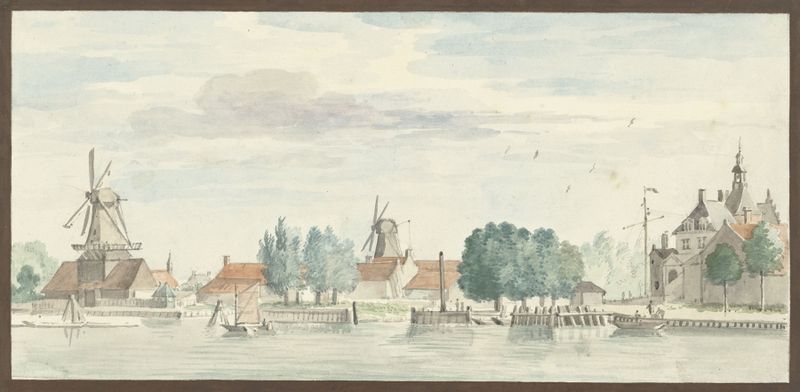
Gezicht op Dordrecht met de Rietdijkspoort en windmolens
Aert Schouman
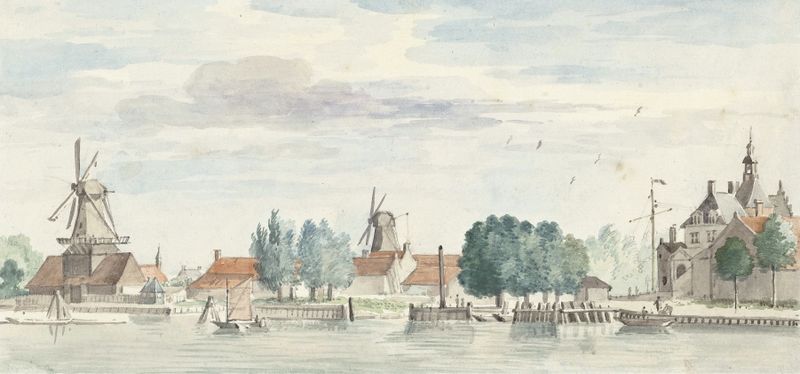
Gezicht op Dordrecht met de Rietdijkspoort en windmolens
Aert Schouman
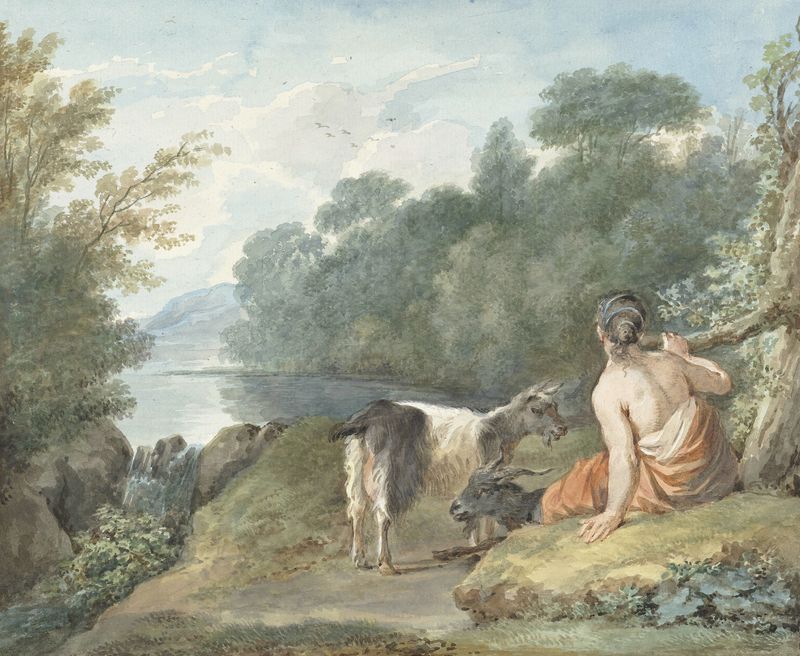
Herderin met geiten in een landschap met een meer
Aert Schouman

Gezicht op de bevroren Merwede bij Moerdijk
Aert Schouman

Zeilschepen op de rivier bij Dordrecht
Aert Schouman

Het kasteel en school te Wouw
Aert Schouman
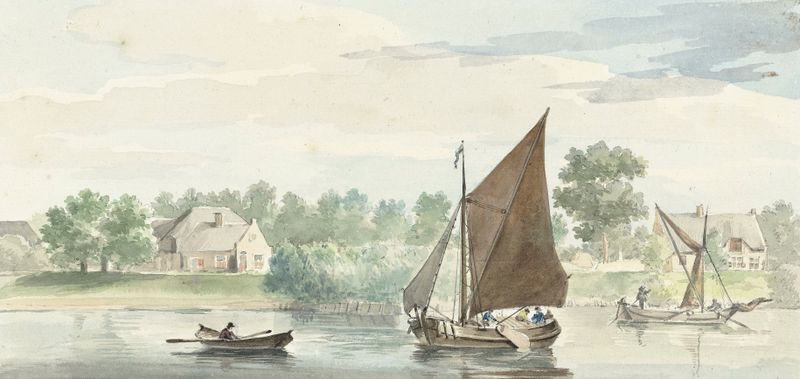
Zeilend schip op de Beneden Merwede bij de Papendrechtse dijk
Aert Schouman

Het dorp ‘s-Gravezande
Aert Schouman

Het kasteel Ter Hooge op Walcheren
Aert Schouman
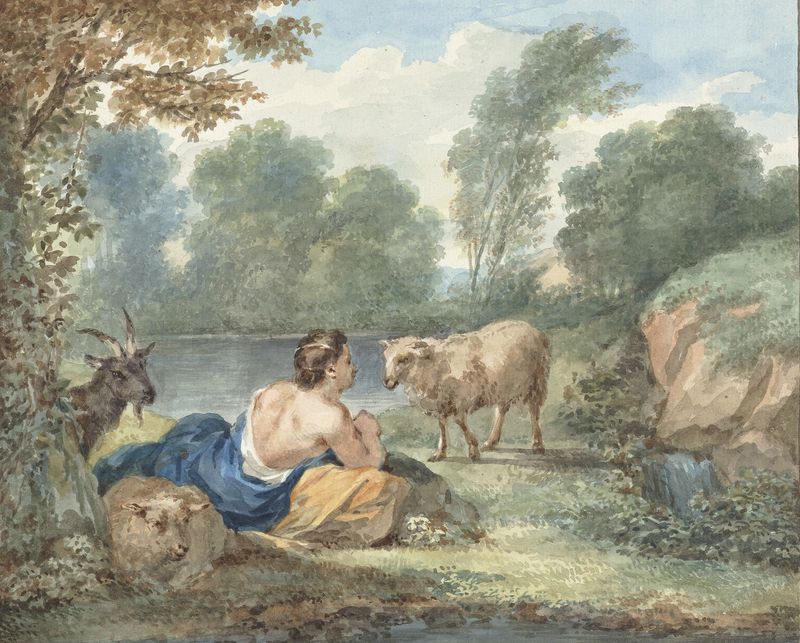
Herderin met schapen in een landschap met een meertje
Aert Schouman





