Het Zoute — History & Facts
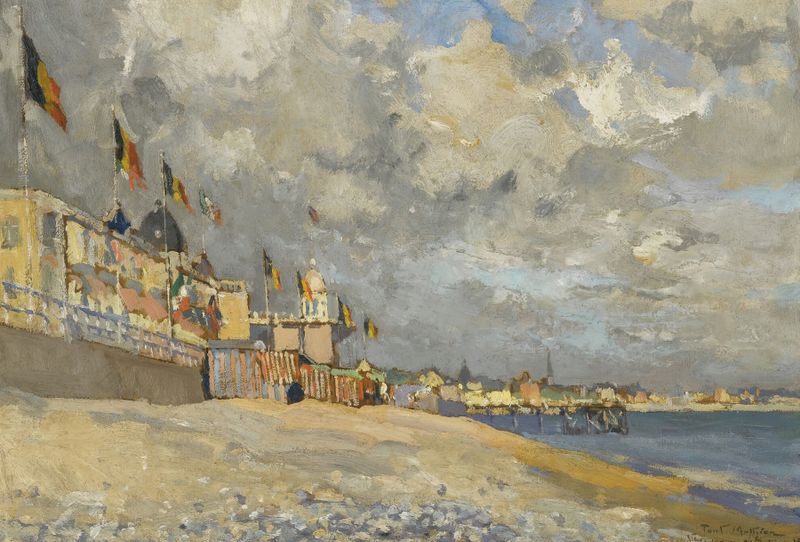
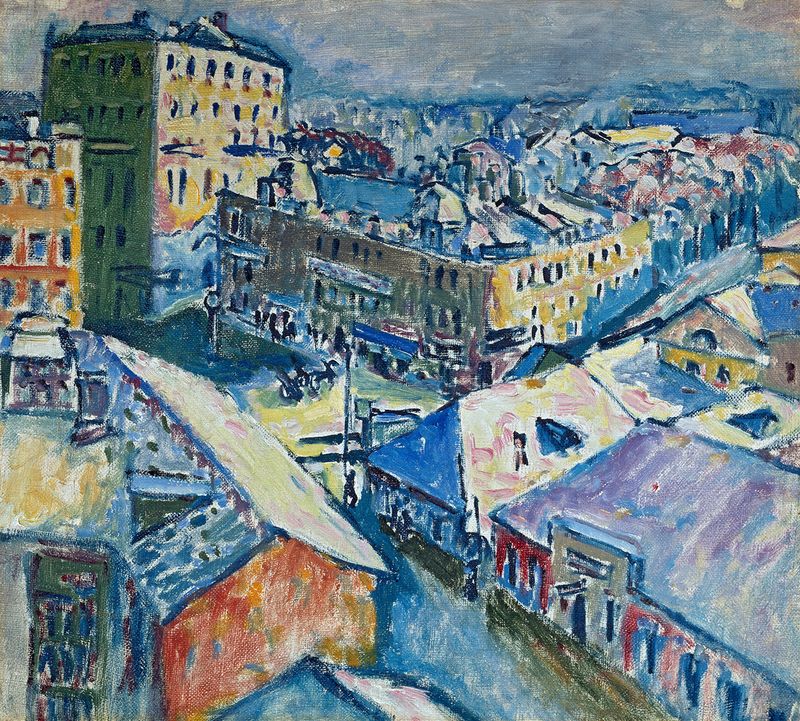
When did color learn to lie? It’s a chilling question, echoing through the layers of Paul Mathieu’s work, Het Zoute, where hues dance on the edge of serenity and chaos. In this piece, the vibrant palette teases the eye, wrapped in an unsettling warmth that belies the violence lurking beneath its surface. The tension of beauty intermingles with the palpable weight of something sinister, inviting the viewer to explore the depths of perception. Look to the center, where bursts of color converge, drawing you into an intricate whirlwind of shape and form.
The brushstrokes are confident, yet they create an underlying disarray, as if the canvas is a battlefield of emotions. Notice how the deep reds and tranquil blues collide, each color vying for dominance, yet harmonizing in a chaotic ballet. The composition is both structured and frenzied, a visual paradox that keeps your gaze restless as it navigates through the chaotic equilibrium. Hidden within the vibrant chaos are whispers of deeper meaning—perhaps a commentary on the duality of existence, where beauty can mask brutality.
The juxtaposition of light and dark elements speaks to the fragility of peace, suggesting that tranquility can erupt into violence without warning. Each brushstroke becomes a metaphor for the turbulent emotional landscape that defines human experience, forcing us to confront our own perceptions of reality. During an undefined moment in his career, Paul Mathieu created Het Zoute, a period marked by experimentation and bold explorations in color. Living in a world shifting from the constraints of historical representation to a more abstract future, he reflected the tumult of his time.
The late 20th century was witnessing a departure from traditional narratives in art, and Mathieu embraced this transformation, using color not just to depict but to engage with the complexities of human emotion and conflict.