Heuvelig landschap met rivierbocht — History & Facts
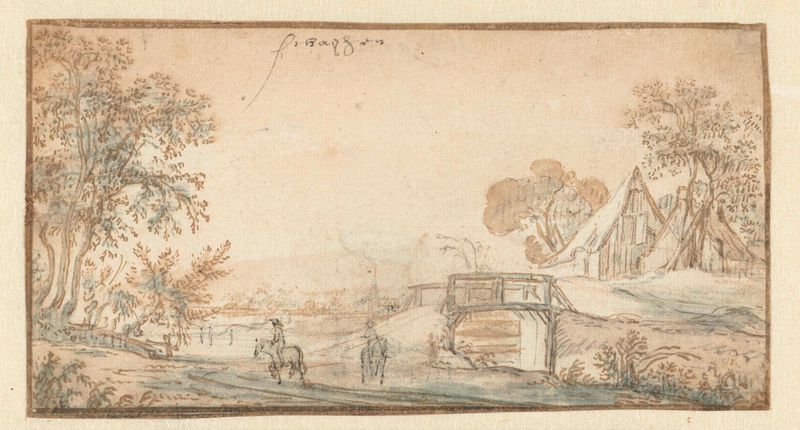
The canvas doesn’t lie — it simply waits. Each stroke preserves the delicate tension between life and decay, whispering secrets of a landscape caught in time. Look to the left at the gentle curve of the river, its surface shimmering with dappled light that hints at both tranquility and transience. The rolling hills rise softly in the background, bathed in a warm, golden hue that evokes the fading warmth of late afternoon.
Notice how the palette shifts from vibrant greens to muted browns, suggesting a landscape caught between lush vitality and the quiet inevitability of decline. As you explore further, the intricacies of decay come to life. The fallen leaves scattered along the riverbank symbolize nature’s cyclical beauty, while the distant trees, some barren and others rich with color, create a dialogue of contrast. This duality invites contemplation on the passage of time, where every flourishing moment is accompanied by a shadow of decline.
Here, the artist captures not just a location, but an emotional landscape that resonates with the viewer’s own experiences of change. Jacob Colijn painted this work around the early 17th century, a period marked by the Baroque’s embrace of realism and emotional depth. Working in the Netherlands, where art was flourishing, he was influenced by both the natural world and the turbulent socio-political climate of his time. This painting reflects a deep consciousness of nature’s transitory beauty, capturing a fleeting moment that resonates with the universal themes of life and decay.