High Noon — History & Facts
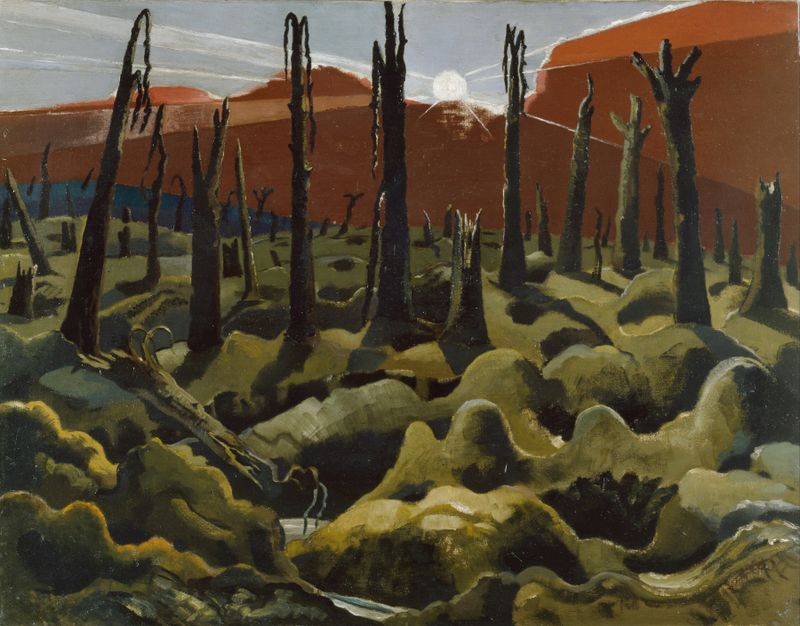
When did color learn to lie? The layers that paint can hold often speak of truths buried beneath gleaming surfaces, yet there exists a memory woven into the fabric of hues that challenges our perception. Look closely at the top left, where deep blues and vibrant oranges meld in a delicate dance. The bold strokes create a fractured horizon, suggesting a world suspended between day and night. This juxtaposition of color draws the eye, inviting exploration of the twilight where reality blurs into dream.
In the foreground, contrasting textures emerge; the smoothness of the sky interacts with the roughness of the land, reflecting the emotional tensions that ripple through the composition. The painting captures a moment of stillness, yet there lies an undercurrent of unease. The interplay between light and shadow evokes an ambiguous narrative, hinting at memories that feel both familiar and distant. Each brushstroke becomes a fragment of recollection, suggesting that what we see is tinted by our past experiences, leading to a deeper understanding of how memory shapes identity. Created in 1924, this work emerged during a transformative period in Shively's career, as he explored the emotional weight of landscapes through his unique compositional style.
Living in a time of shifting artistic movements, he drew inspiration from the modernist trends around him while also reflecting on personal memories and the power of nature. This moment in art history marked a pivotal point for artists seeking to bridge the gap between reality and subjective experience.