Hill with Trees — History & Facts
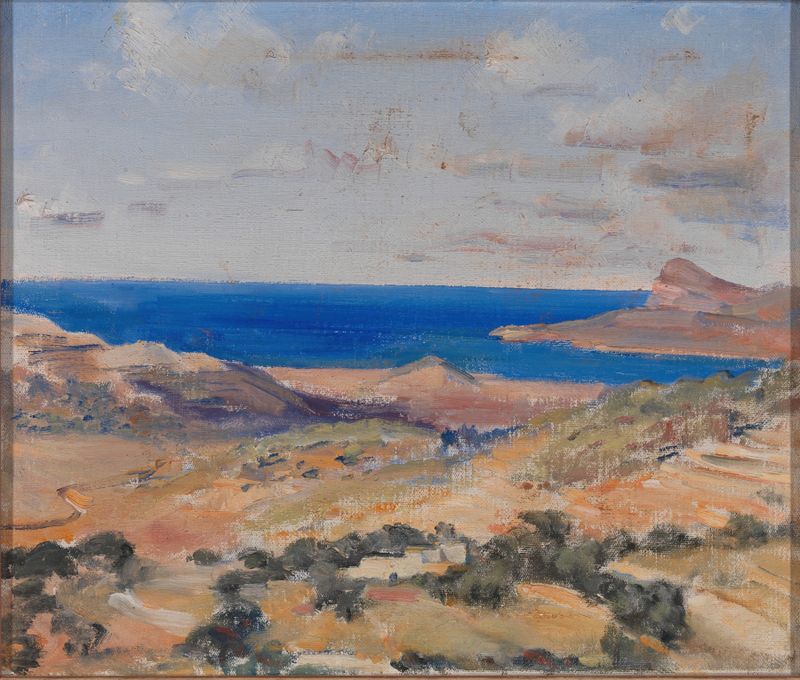
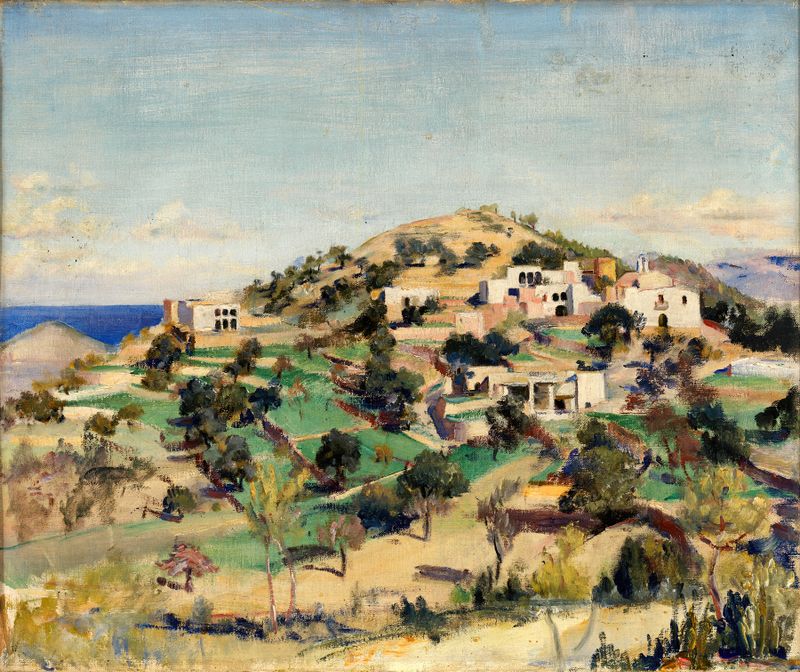
Did the painter know this moment would outlive them? In a world where decay is inevitable, the stillness of nature captures a fleeting beauty that transcends time. Look to the foreground, where muted greens and browns swirl together, evoking a sense of tranquility yet hinting at the passage of time. The trees, ancient sentinels of the landscape, stand tall against a whisper of wind, their bark textured with the wear of seasons. Notice how the gentle gradient of light plays across the canvas, a soft invitation to explore the undulating hills that recede into an uncertain horizon. Hidden within the strokes of paint lies a tension between life and decay.
Each tree embodies resilience and vulnerability, their shadows lengthening as day wanes. There’s an unspoken dialogue between the vibrant hues of nature and the muted tones of the earth, reflecting the cycle of growth and decline. This contrast prompts contemplation — is the beauty of this hill an expression of permanence, or merely a pause before inevitable change? Eleanor Harris painted this work during a time when impressionism was evolving, carving out its space in the art world.
The exact date is unclear, but it is likely created when she was deeply immersed in her exploration of landscapes, seeking to capture the essence of nature's fleeting moments. Surrounded by a growing movement of artists who celebrated the ephemeral, she crafted a piece that resonates with both vibrancy and the quiet acknowledgment of decay.