Hillside Landscape — History & Facts
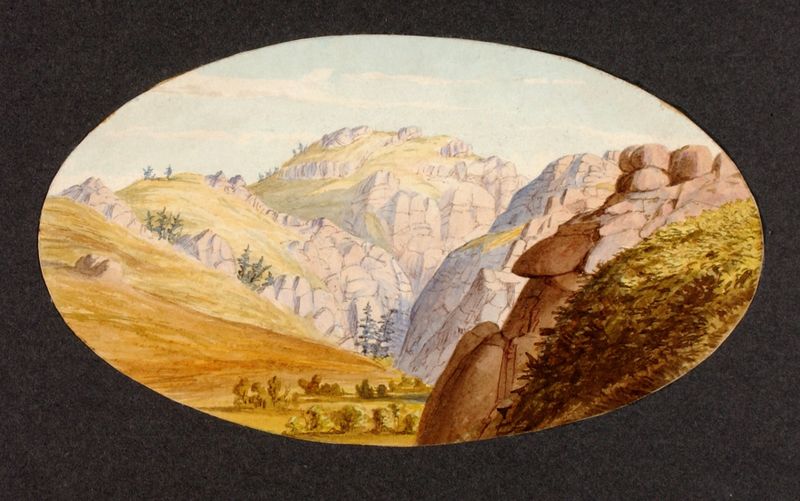
Who listens when art speaks of silence? The gentle stillness enveloping the landscape invites contemplation, urging us to pause and absorb the tranquility offered by nature. Look to the left at the rolling hills, bathed in soft greens and muted browns, which harmonize beautifully under a delicate sky. Notice how the light dances across the undulating terrain, highlighting the subtle textures of the grasses and the gentle curves of the land. The composition draws you into the depth of the scene, guiding your gaze to the horizon where earth meets sky, evoking a sense of endless possibility. The quietude suggests not merely a serene escape, but also a deeper reflection on solitude and human connection with nature.
The absence of figures in this expansive vista hints at a longing for introspection, encouraging viewers to find their own stories within the landscape. This delicate tension between peace and absence creates a poignant emotional landscape, one that resonates with both the beauty of nature and the silence that accompanies solitude. In 1902, Edward S. Siebert was immersing himself in the burgeoning American Impressionist movement, where artists sought to capture fleeting moments of light and atmosphere.
Painting Hillside Landscape at a time when the world was rapidly industrializing, he embraced nature as a refuge from the chaos of modern life. This work reflects both a personal and artistic quest for serenity amid the clamor of change.