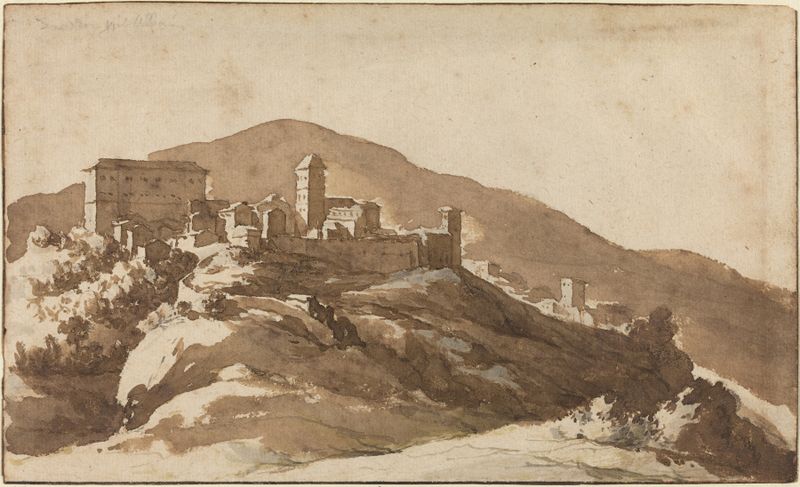
Hilly Landscape with Figures — History & Facts
What if beauty was never meant to be finished? The colors of nature swirl in a dialogue, whispering stories of fleeting moments and eternal landscapes. Focus on the gentle undulations of the hills, where soft greens blend into warm ochres, creating a sense of serenity. Look closely at the figures amid this idyllic scene; their postures express an intimate connection with the land, caught in a moment of reflection or conversation. The artist’s choice of muted tones infuses the landscape with a dreamlike quality, inviting the viewer to step into a world that feels both familiar and otherworldly. Yet, beneath this peaceful exterior lies a contrast between the stillness of the landscape and the subtle dynamism of the figures.
Their soft outlines blend into the background, suggesting a harmony with nature that hints at deeper truths about existence and the passage of time. The interplay of shadow and light across the hills evokes a transient beauty, reminding us that these moments, though serene, are ever-changing. Jan de Bisschop created this work during a period of exploration in the 17th century, a time when artists were deeply engaged with the representation of nature. Working in the Netherlands, he sought to capture the essence of the landscape around him, reflecting the evolving approaches in art that embraced both realism and idealism.
His fascination with color and form during this era positioned him as a significant figure in the landscape genre, allowing viewers to appreciate the beauty inherent in both nature and human interaction.