
Hohlweg mit Schafherde bei Kelsterbach — History & Facts
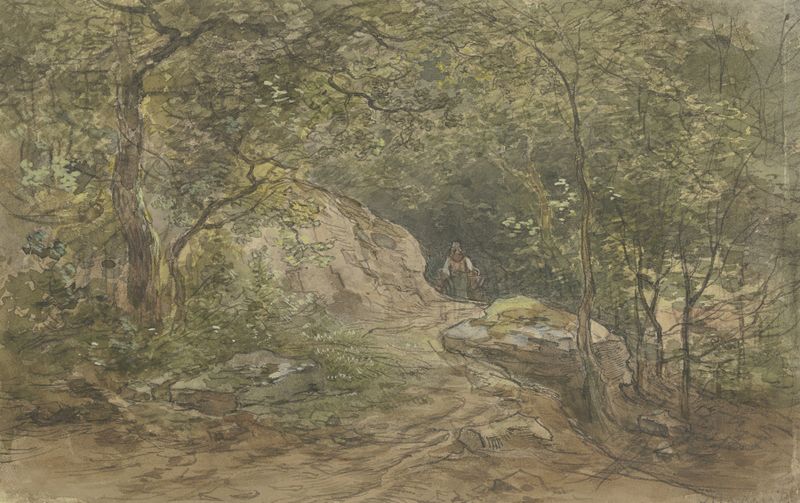
Can paint confess what words never could? In Hohlweg mit Schafherde bei Kelsterbach, we find not only a pastoral scene but an exploration of illusion and reality, captured through delicate brushstrokes. Look to the left, where a narrow path meanders through verdant grasses, inviting you into the serene embrace of nature. Notice how the light plays upon the woolly forms of the sheep, illuminating their soft textures against the backdrop of gentle, rolling hills. The artist employs a muted color palette, blending greens and soft browns, suggesting a tranquil atmosphere while the rugged terrain creates a rustic charm that seems almost tangible. As you absorb the nuance of the scene, consider the contrasts at play.
The sheep symbolize serenity and pastoral beauty, yet their presence amidst the untamed landscape hints at the delicate balance of nature and agriculture. The winding path beckons, representing life's journey, while the shadows cast by the trees evoke a sense of mystery and the unseen. This interplay between light and dark mirrors the duality of existence, drawing the viewer into contemplation. Anton Burger painted this work in 1881, during a period of growing interest in realism and the depiction of everyday life in art.
Living in Germany, he was influenced by the Romantic movement yet sought to convey a more authentic representation of rural landscapes. The late 19th century was marked by social changes and an appreciation for the natural world, which are palpably reflected in the quiet yet profound simplicity of this piece.
More Artworks by Anton Burger
Browse all →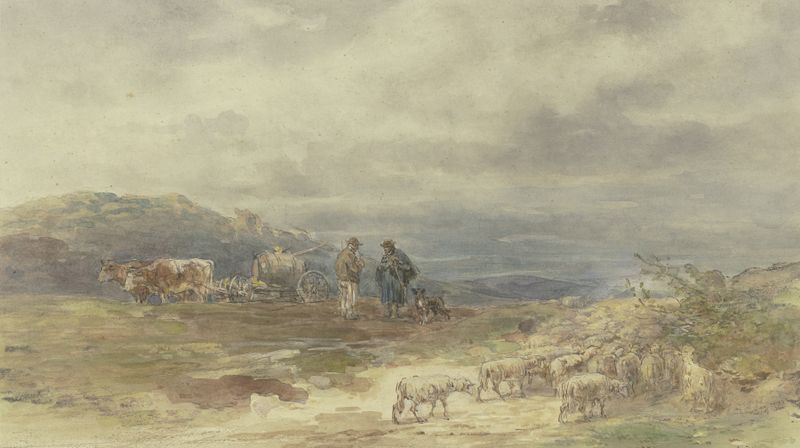
Landschaft mit Schafherde und Ochsenfuhrwerk
Anton Burger

View of Kronberg
Anton Burger
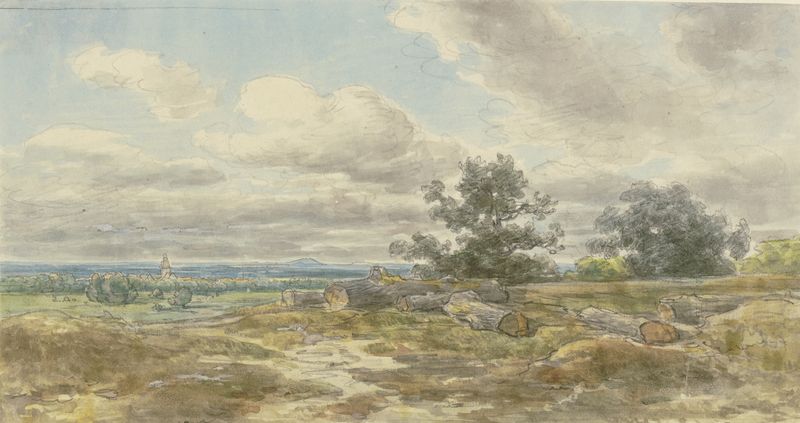
Aussicht über eine Ebene, im Vordergrund umherliegende abgesägte Baumstämme
Anton Burger
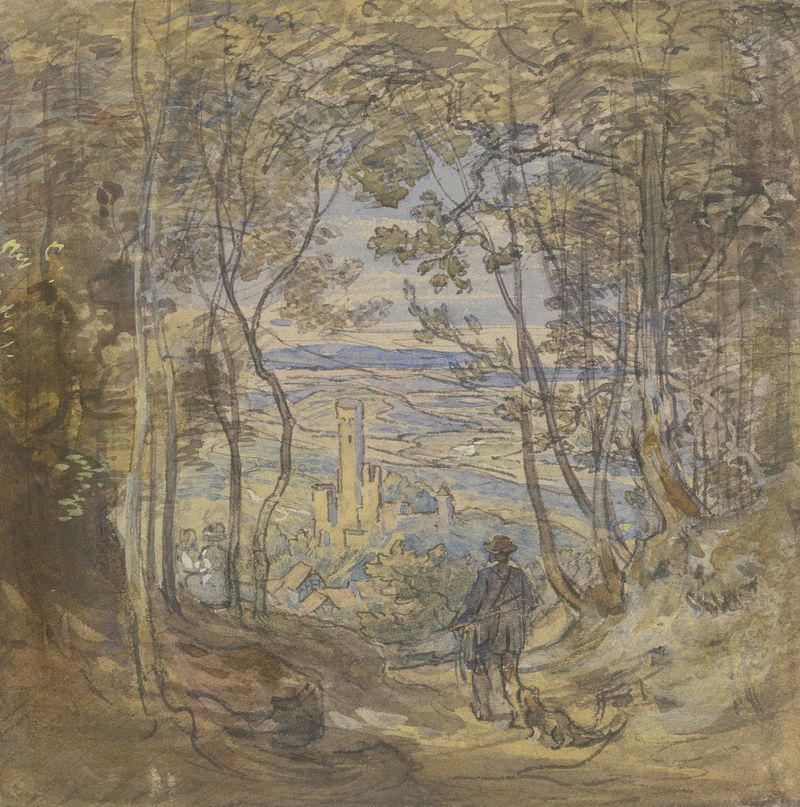
Blick aus dem Wald auf Eppstein
Anton Burger

Oberreifenberg mit Burg Reifenberg
Anton Burger
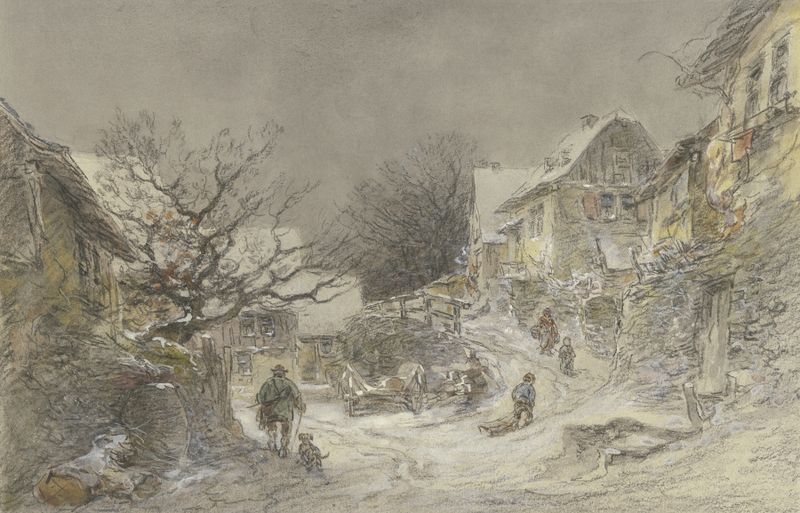
Winteransicht von Falkenstein
Anton Burger

Hohlweg mit Schafherde bei Sonnenuntergang
Anton Burger

Landschaft mit Ochsengespann
Anton Burger
Fahrweg durch einen Buchenwald
Anton Burger

Street in Kronberg
Anton Burger





