Horses at a Fountain — History & Facts
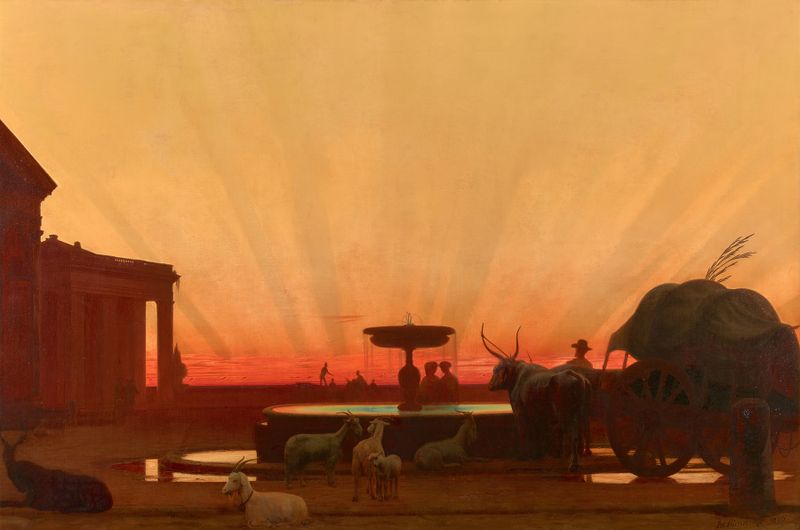
In Horses at a Fountain, the artist captures a moment of serene reflection, inviting us to consider the interplay between nature and the creatures that inhabit it. Focus first on the fountain at the center of the composition. The intricate details of the water cascading down contrast beautifully with the muscular forms of the horses, their strong bodies defined by the interplay of light and shadow. Notice how the artist’s palette employs a soft harmony of earth tones and blues, harmonizing the vitality of the horses with the tranquility of their setting.
The gentle ripples in the water echo the internal rhythm of the scene, drawing the eye to the natural beauty of the moment captured. Beneath the surface, there’s a tension between the wildness of the horses and the stillness of their surroundings. The animals, though poised at the fountain's edge, seem to be caught in a moment of both rest and readiness. This duality reflects an inherent struggle between freedom and captivity—an exploration of the relationship between humans and nature.
The subtle reflections in the water hint at deeper emotional currents, suggesting a sanctuary that offers respite from the chaos of the outside world. In the mid-19th century, Rimmer created this work during a period of transition in his career, primarily in Boston, where he was also influenced by the Romantic ideals flourishing in the art scene. The balance between realism and idealism in his work mirrors broader cultural shifts, as artists grappled with the emerging tensions of modernity and the natural world. Rimmer’s focus on dynamic forms and emotive landscapes reveals his desire to connect with nature while responding to the artistic currents of his time.