House in a park in winter — History & Facts
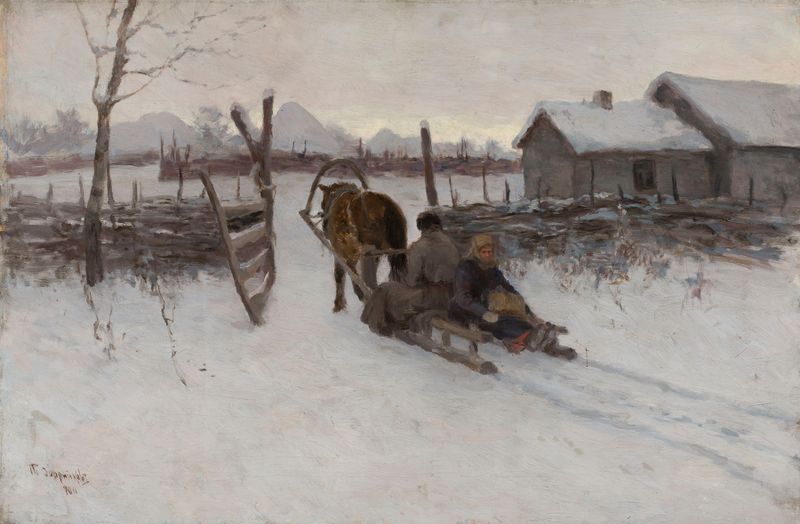
Can beauty exist without sorrow? In this work, the stark contrast of winter’s chill against the delicate architecture whispers of an obsession with the ephemeral nature of life. Look to the center of the canvas, where a solitary house stands resilient within a blanket of snow. Notice how the crisp white contrasts with the soft, muted blues and grays of the winter sky, creating a tranquil yet haunting atmosphere. The artist employs sharp lines to define the structure, bringing to life the meticulous detail of each window and roof peak, while the surrounding trees bend beneath the weight of snow, their dark trunks emphasizing the purity of the landscape.
This interplay of light and shadow draws the viewer’s gaze, inviting contemplation of the solitude encapsulated within the scene. As you absorb the composition, consider the deeper emotional undertones. The house, though inviting and aesthetically pleasing, seems to nestle uncomfortably in its stark environment, reflecting a sense of isolation and longing. The trees, heavy with snow, evoke a feeling of restraint, hinting at the struggle to thrive in a frozen world.
This tension between the serene beauty of the landscape and the underlying sense of desolation speaks to the complexity of human emotion—each brushstroke a testament to the duality of existence. During an undated period, Tite-Jakovlevitch Dvornikoff crafted this piece, likely influenced by a time of introspection as he navigated the currents of artistic expression in a world marked by tumult and change. Emerging from the Russian avant-garde, he captured the essence of landscape painting, merging technical precision with an emotional depth that resonates through his work. As the art world was evolving, Dvornikoff’s exploration of nature and architecture reflected broader themes of solitude and obsession—elements that continue to captivate audiences today.