Höstlandskap — History & Facts
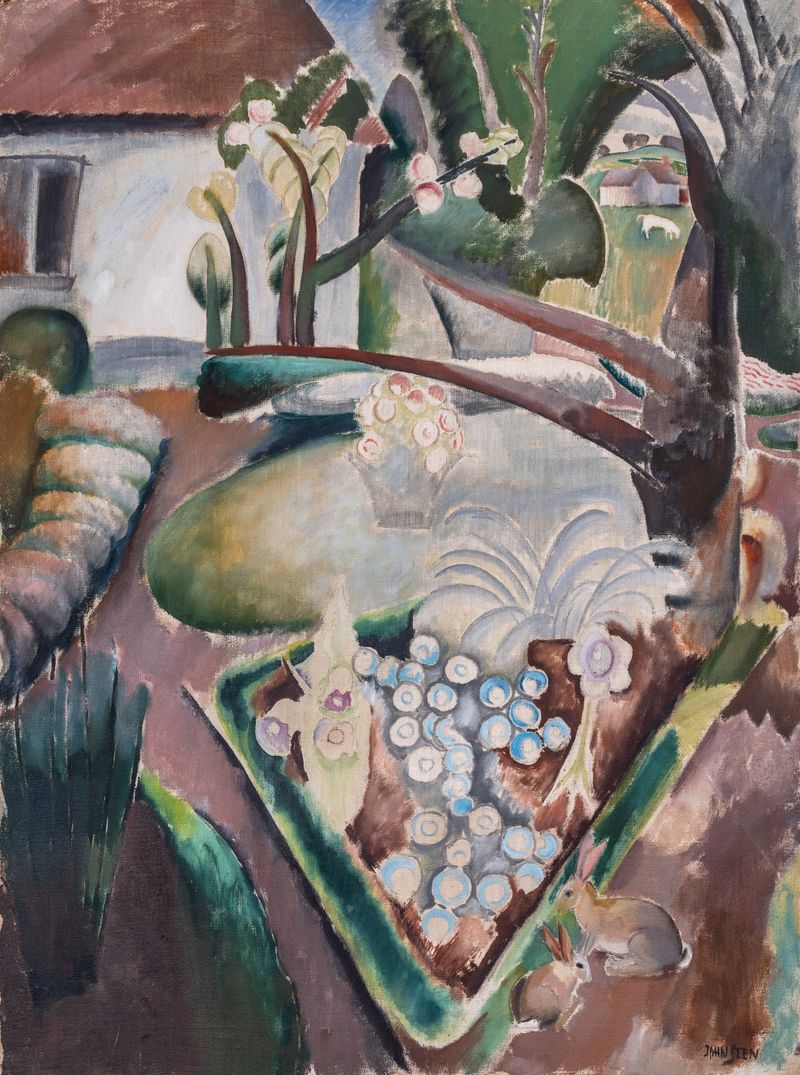
Did the painter know this moment would outlive them? The stillness of autumn whispers secrets of transience and fear, channeling the essence of life’s fleeting beauty into a single frame. Look to the left at the vibrant foliage, bursts of burnt orange and deep crimson reaching towards a sky that hints at the encroaching chill of winter. The composition balances a tranquil lake, mirroring the trees, while a solitary figure, almost swallowed by the landscape, embodies isolation. The brushwork is delicate yet deliberate, allowing the colors to bleed into one another, enhancing the sense of transformation inherent in the scene. Yet, beneath the surface of this serene autumn vista lies a tension between beauty and impermanence.
The looming shadows hint at an approaching dusk, symbolizing the fear of loss that accompanies change, while the figure's smallness against the grandeur of nature evokes a profound existential contemplation. This juxtaposition of the vibrant landscape with the solitary human presence amplifies the emotional weight of the scene, suggesting that even amid beauty, one cannot escape the looming specter of solitude. John Sten painted Höstlandskap in 1906, during a period of personal reflection and artistic exploration. Living in Sweden, he was influenced by the natural landscapes that surrounded him, while the broader art world was still grappling with the effects of Impressionism.
His works reveal a deep engagement with the themes of nature and the human condition, embodying the transition from the 19th to the 20th century in both style and sentiment.