
Hugh Scott of Arden — History & Facts
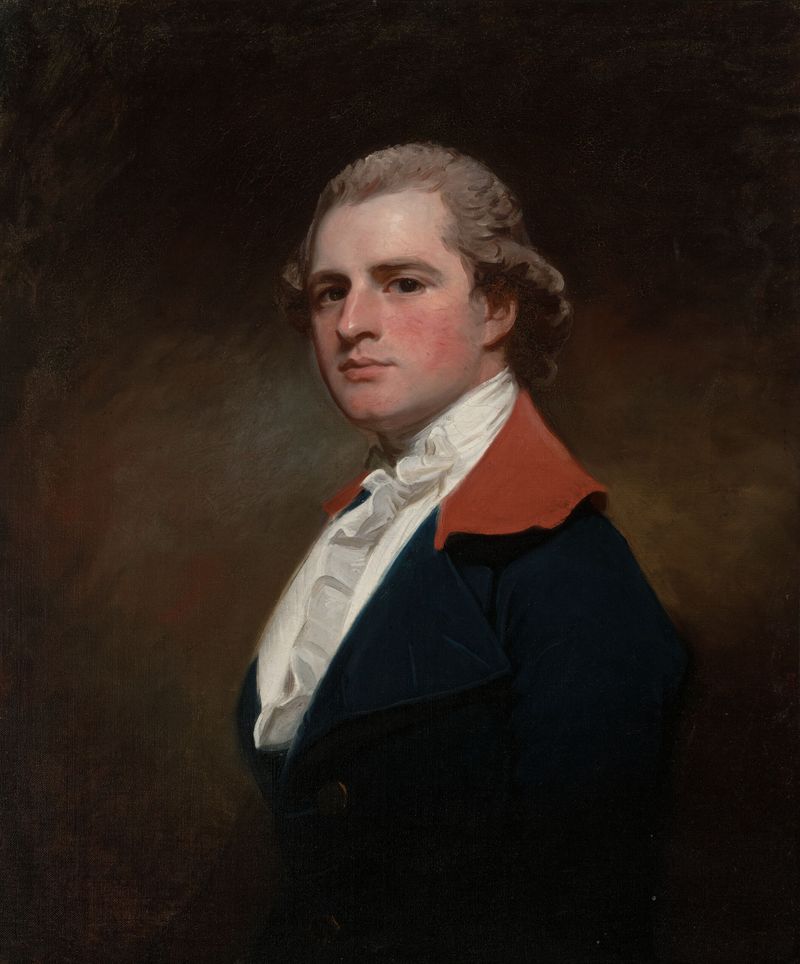
What if silence could speak through light? In the stillness of a canvas, the weight of unspoken grief lingers, inviting us to peer into a world suspended in time. Look to the right at the figure of Hugh Scott, his countenance a delicate interplay of shadow and glow. The soft light highlights his noble features, casting a gentle halo around his head that evokes a sense of solemnity. The rich, muted colors of his attire contrast with the ethereal background, drawing our attention to the nuances of his expression—a mix of vulnerability and strength.
Romney's skillful brushwork enhances the texture of the fabric, while the finely rendered details of Scott's hands, clasped in contemplation, anchor the portrait in a moment of introspective stillness. The painting embodies a poignant duality; while Scott appears dignified and composed, an undercurrent of sorrow lies just beneath the surface. The subtle tension between his poised demeanor and the heaviness in his gaze suggests a story of loss—a reflection of personal grief that transcends his individual experience. The interplay of light and shadow serves as a metaphor for the darkness that often accompanies the human condition, reminding us of the silent battles we all face. In the late 1780s, the artist created this portrait while navigating the complexities of his own career amid a growing interest in portraiture.
Working in England during a time of social change, Romney found his style steadily evolving, reflecting both the aspirations and emotional depths of his sitters. This piece not only captures the essence of its subject but also serves as a testament to the evolving landscape of art at that time, where personal narratives began to take center stage.
More Artworks by George Romney
Browse all →

More Portrait Art
Browse all →
Las meninas
Diego Velázquez

Self-portrait with a Bandaged Ear and Pipe
Unidentified artist

Girl with a Pearl Earring
Johannes Vermeer

The Sampling Officials of the Amsterdam Drapers’ Guild, Known as ‘The Syndics’
Rembrandt van Rijn

The Hundred Guilder Print: the man seen on the back in the lower left corner
Rembrandt van Rijn

Portrait of Dr Gachet
Vincent van Gogh