
John Robinson of Denston Hall, Suffolk — History & Facts
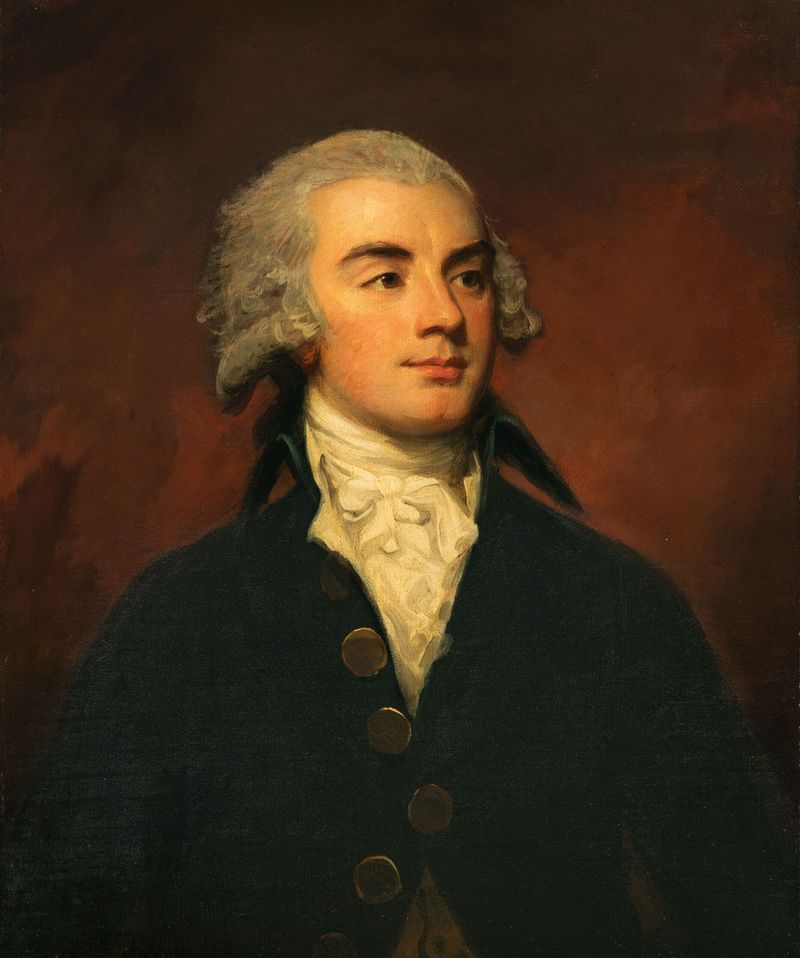
Can paint confess what words never could? In John Robinson of Denston Hall, Suffolk, the artist captures a man whose poised exterior holds the weight of unspoken turmoil, revealing the duality of human experience. Look to the right at the shimmering light that dances across Robinson's tailored coat, a deep navy that contrasts sharply with the muted, earthy tones of the background. Notice how the artist masterfully uses chiaroscuro to define the sharp lines of Robinson’s face, creating an aura of both authority and vulnerability. The subtle play of light emphasizes the meticulous details of his attire while drawing your gaze to the slight furrow of his brow, hinting at an inner conflict that belies the calm exterior. Beyond the surface, the painting pulsates with a hidden tension.
Robinson's expression suggests a silent struggle, possibly reflecting the societal pressures of his time, where the facade of gentility often concealed darker truths. The serene backdrop belies an undercurrent of violence—a clash of social expectations against the reality of personal turmoil. This contrast between the public persona and inner chaos invites contemplation about the nature of identity itself, a theme resonant in the age of Enlightenment. George Romney created this portrait in 1779, during a period when he was establishing his reputation in London’s artistic circles.
At that time, the world was witnessing significant political and social upheaval, including the American Revolution, which influenced the prevailing attitudes towards power and privilege. Romney's work, characterized by its psychological depth, mirrored the complexities of contemporary society, embodying both the grandeur and the frailty of the human condition.
More Artworks by George Romney
Browse all →

More Portrait Art
Browse all →
Las meninas
Diego Velázquez

Self-portrait with a Bandaged Ear and Pipe
Unidentified artist

Girl with a Pearl Earring
Johannes Vermeer

The Sampling Officials of the Amsterdam Drapers’ Guild, Known as ‘The Syndics’
Rembrandt van Rijn

The Hundred Guilder Print: the man seen on the back in the lower left corner
Rembrandt van Rijn

Portrait of Dr Gachet
Vincent van Gogh