Hunting Party — History & Facts
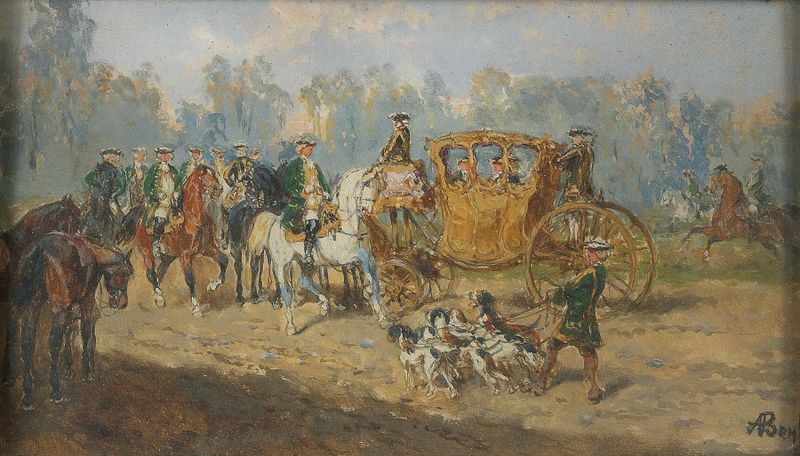
This sentiment resonates deeply within the haunting allure of solitude, where the finest treasures often mask the most profound heartaches. Look to the center, where the figures, draped in luxurious attire, seem to float in a world of their own making. The golden hues of their garments radiate warmth, but the faces tell a different story — shadows dance in their eyes, hinting at an underlying loneliness. The rich textures of the fabric contrast sharply with the desolate landscape behind them, a barren expanse that mirrors their emotional distance.
Notice how the soft light envelops the group, yet fails to penetrate the space between them, emphasizing the isolation despite their gathered presence. Delve deeper into the interplay of connection and estrangement. The hunters, though physically close, reveal an emotional disconnection — their gazes wander beyond the canvas, as if yearning for companionship that eludes them. The juxtaposition of opulence and desolation speaks volumes; the luxurious surroundings are a façade, hiding the void within.
The beauty of the scene is laden with irony, presenting a moment of grandeur while simultaneously unraveling the ache of loneliness that often accompanies such pursuits. During the time this piece was created, Alexander Von Bensa was navigating the complexities of the art world, likely influenced by the evolving Romantic movement. The late 19th century marked an era of profound change and introspection, where the artist sought to explore themes of human experience and emotion. Living in a time when individual feelings were increasingly valued, Bensa's work reflects a poignant commentary on the quiet despair that can accompany even the most lavish of gatherings.