Iliamna, Across Cook Inlet — History & Facts
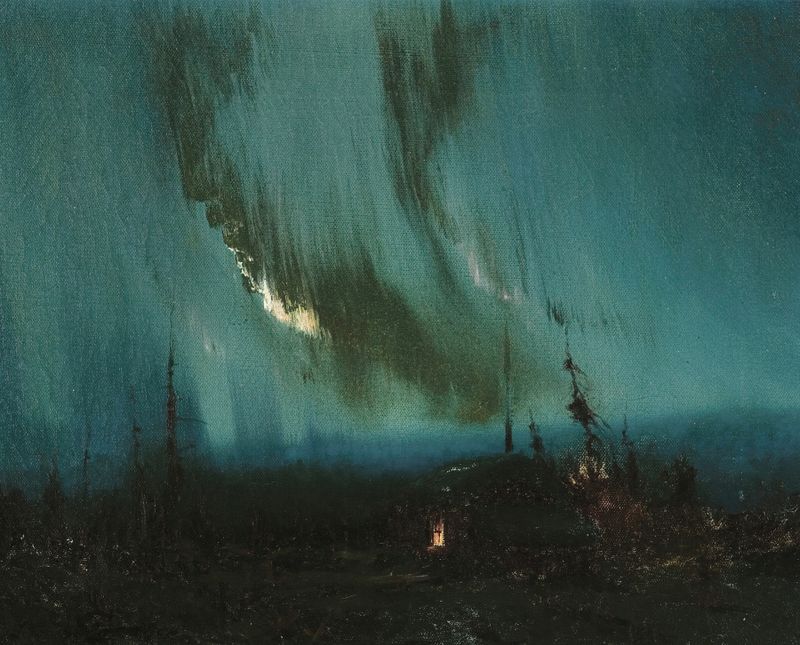
When did color learn to lie? In the depths of this landscape, vibrant hues deceive the eye, revealing truths hidden within nature’s palette. As shadows dance across the water’s surface, one cannot help but ponder the delicate interplay between illusion and reality, where every brushstroke tells a story waiting to be uncovered. Look to the center of the canvas, where the majestic Mount Iliamna rises, its snow-capped peak piercing the azure sky. Notice how the artist employs a masterful gradient of blues and greens, imbuing the scene with a sense of depth and tranquility.
The soft wisps of clouds, brushed lightly across the upper portion, juxtapose the solid, imposing mountain, evoking a harmony between the ephemeral and the permanent. The shimmering water mirrors the landscape, creating a seamless blend of earth and sky that draws the viewer into an immersive experience. Beneath the surface, the artwork resonates with themes of contrast and revelation. The starkness of the mountain against the serene waters suggests an unyielding strength, yet the gentle ripples hint at vulnerability.
The bursts of color might represent the artist's emotional response to this breathtaking wilderness, prompting reflection on mankind's relationship with nature. This duality invites viewers to question what lies beneath the alluring facade of beauty—both in the natural world and within themselves. In the early 1900s, Laurence was inspired by the Alaskan landscape, capturing its grandeur during a time when the region was gaining recognition. He painted Iliamna, Across Cook Inlet around 1905 while living in Alaska, where he aimed to convey the untamed beauty of the American wilderness.
At this juncture, the American art scene was beginning to embrace the landscape genre more fully, aligning with the broader movement towards realism and the exploration of the natural world.