Im Hochsommer, Westnorwegen — History & Facts
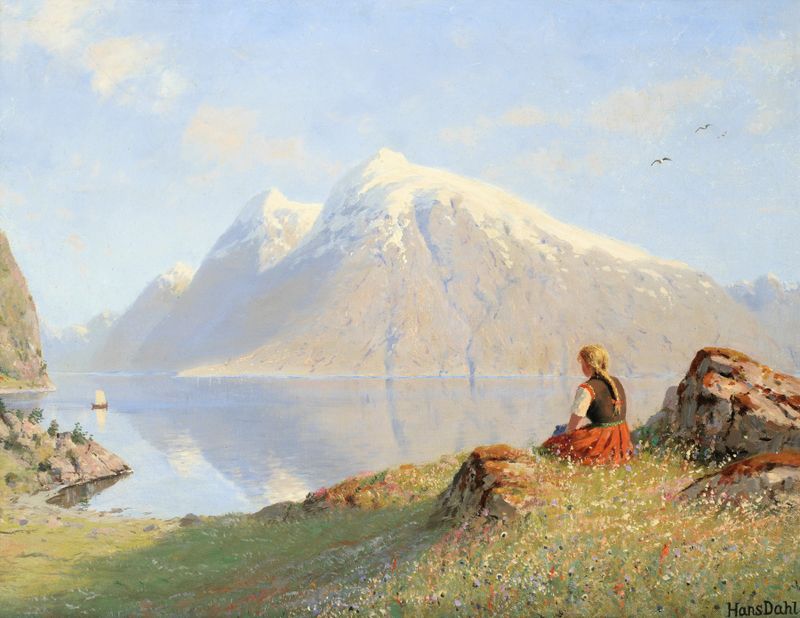
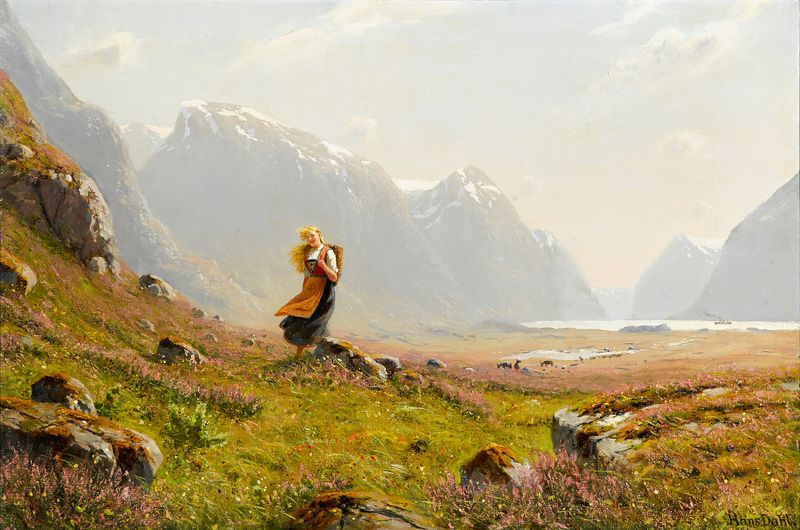
Can paint confess what words never could? In the silent embrace of a summer afternoon in West Norway, the canvas breathes with the whispers of nature and the muted ache of something lost. Look to the left at the gentle slope of the rugged coastline, where the soft blues of the water seamlessly blend with the muted greens of the landscape. Notice the wisps of white clouds lingering in the vast sky, their reflections shimmering across the surface of the water, creating a sense of continuity that invites contemplation. The composition radiates a soothing harmony of color and shape, emphasizing the tranquility of this serene moment while simultaneously hinting at the weight of absence. The subtle interplay of light and shadow plays a crucial role in conveying both beauty and melancholy.
The golden sun casts a warm glow on the landscape, yet the shadows lurking beneath the trees suggest a deeper, unspoken sorrow. Each brushstroke seems to trace the contours of nostalgia and yearning, as if the artist captures not just the scenery, but the emotional landscape of loss itself, enveloping the viewer in a poignant silence. Hans Dahl created this evocative piece during a time when he was deeply immersed in the beauty of his native Norway, painting scenes that reflected both his love for the landscape and the emotional resonance within it. While the exact date of Im Hochsommer remains unclear, Dahl was active in the late 19th and early 20th centuries, a period characterized by the rise of Impressionism and a growing interest in capturing the ephemeral quality of nature.
His work serves as a testament to the delicate balance between joy and sorrow, encapsulating the fleeting essence of summer and the memories it holds.