
Im römischen Klosterhof — History & Facts
Who listens when art speaks of silence? In the hushed tranquility of a cloister, an intimate dialogue unfolds between architecture and nature, whispering secrets of beauty that often go unnoticed. Focus on the serene arches of the cloister, where light filters gently through the stonework. Notice how the muted palette of soft earth tones harmonizes with the lush greenery outside, inviting the viewer's gaze to traverse the transition from the man-made to the organic. The careful attention to detail in the foliage creates a sense of depth, while the play of shadows adds a tangible weight to the scene. The juxtaposition of the rigid lines of the architecture against the flowing curves of nature evokes a tension that is both calming and profound.
Each element in the space, from the meticulously carved columns to the delicate tendrils of climbing plants, speaks of coexistence, suggesting a moment where the divine and the earthly converge. The stillness of the cloister invites introspection, encouraging us to reflect on beauty's ephemeral nature amidst the permanence of stone. Julius Zielke painted this piece between 1860 and 1890, during a time when the art world was increasingly leaning toward Impressionism and a focus on capturing fleeting moments of light. Living in Germany, Zielke was influenced by the Romantic ideals of beauty and nature, often exploring themes of tranquility and harmony.
This work reflects a deep appreciation for classical architecture while resonating with the era's emerging fascination with the natural world.
More Artworks by Julius Zielke
Browse all →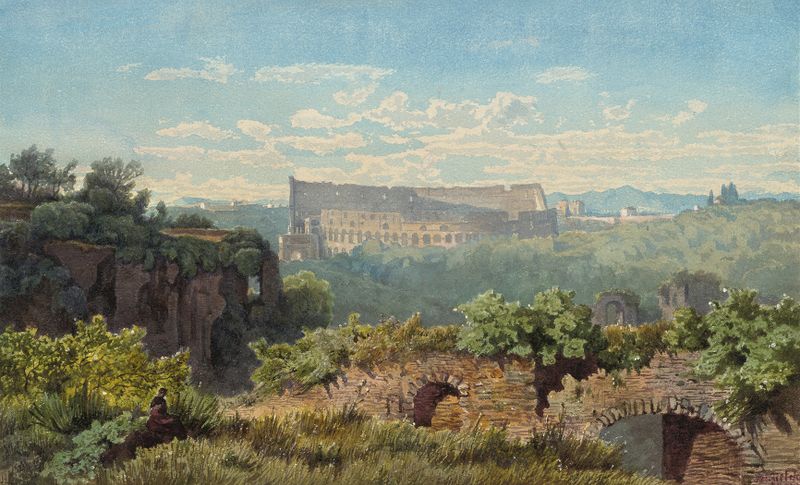
More Architecture Art
Browse all →
The statue of Liberty
Frédéric Auguste Bartholdi

View of Houses in Delft, Known as ‘The Little Street’
Johannes Vermeer

View of Houses in Delft, Known as ‘The Little Street’
Johannes Vermeer

The Cathedral in Rouen. The portal, Grey Weather
Claude Monet

The yellow house
Vincent van Gogh

The Church in Auvers-sur-Oise, View from the Chevet
Vincent van Gogh