In the Farmhouse Garden — History & Facts
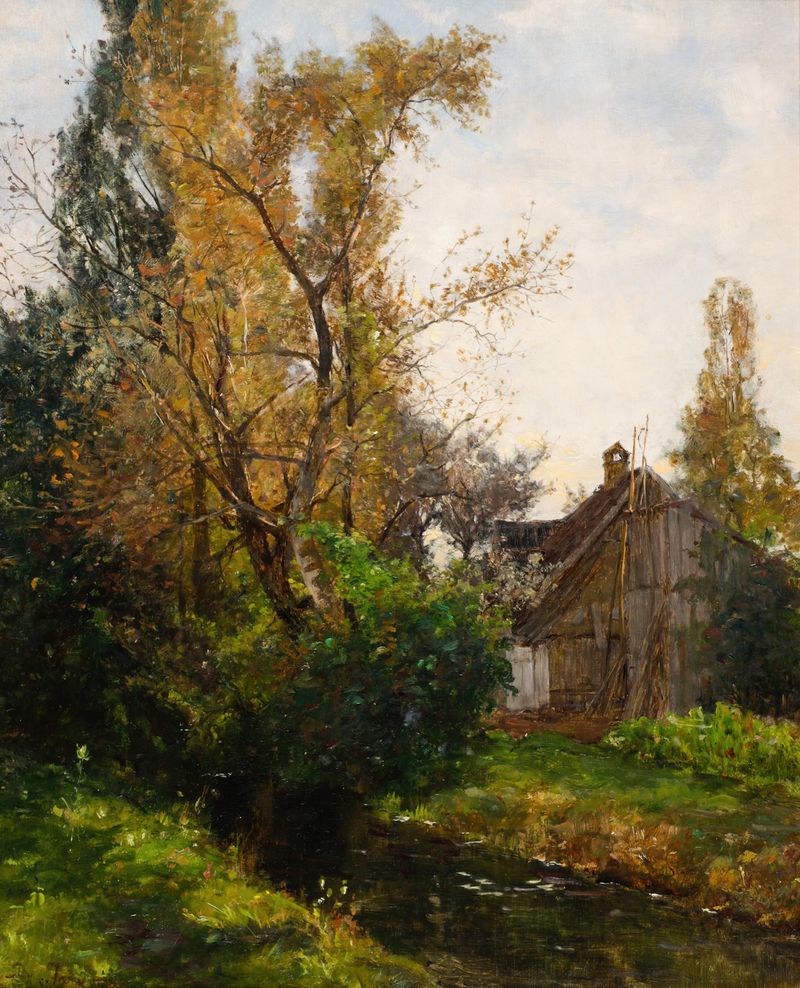
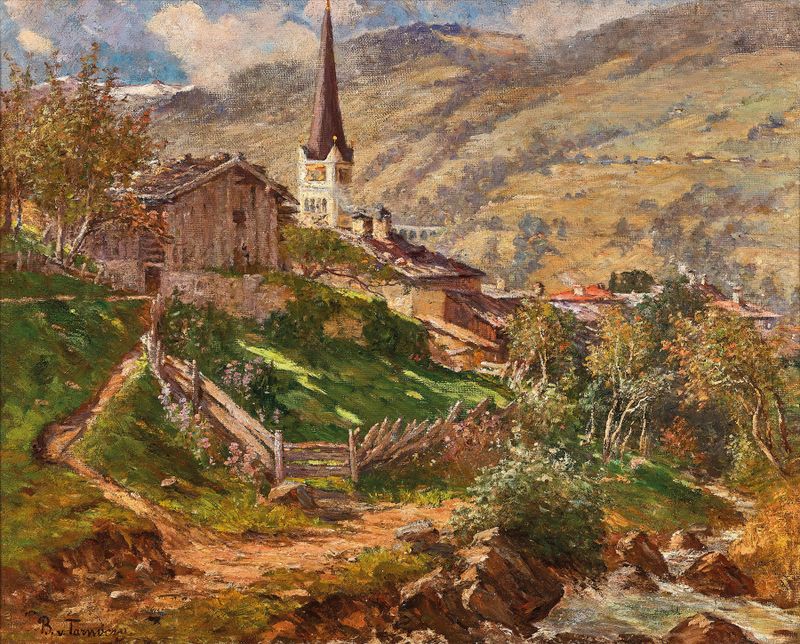
A gentle breeze stirs the leaves, rustling in a garden heavy with the scent of blossoming flowers. In the foreground, a woman kneels, her hands buried in the earth, yet her gaze darts anxiously to the shadows beyond the fence. The slanted sunlight barely penetrates the encroaching dark, enhancing the sense of encroaching dread that lingers like a palpable fog. Look to the left at the vibrant blooms, their colors a stark contrast to the somber tone permeating the scene.
Notice how the artist uses lush greens and bright petals to draw your eye, creating an initial sense of tranquility before the looming darkness corrupts it. The woman's figure, clad in simple but elegant attire, stands out against the chaotic background, emphasizing her isolation in the garden. Every brushstroke echoes her unease, with the shadows of the trees creeping in, suggesting that nature itself is a looming threat. The juxtaposition of beauty and fear within the composition evokes a complex emotional landscape.
The garden symbolizes life and growth, yet the encroaching shadows serve as a reminder of the inevitable decay and danger lurking just beyond the safety of the flowers. The woman's posture conveys a mixture of serenity and panic, capturing that universal tension between hope and fear, as if she is both part of and apart from her surroundings. Bertha von Tarnoczy created this evocative piece during a time when the world was grappling with change and uncertainty. Living in the late 19th century, she was part of a burgeoning art scene that sought to explore deeper emotions and themes.
While specific dates for this work remain elusive, it reflects the artist's engagement with the tension between beauty and dread, encapsulating her personal experiences and the overarching anxieties of her era.