In the Forest — History & Facts
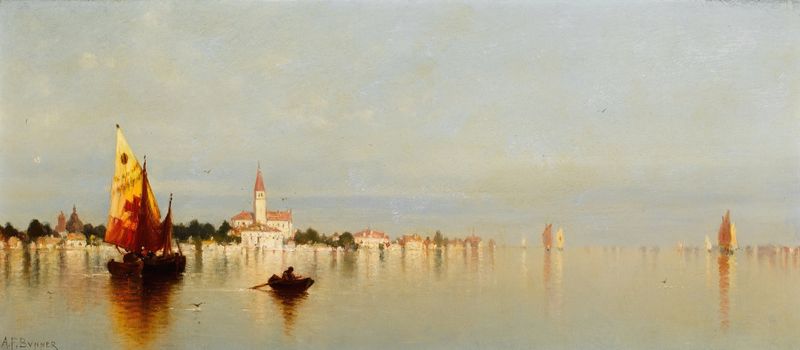
Is this a mirror — or a memory? The delicate interplay between reflection and reality invites us to ponder the nature of perception and the beauty of the unseen. Look closely at the intriguing interplay of light and shadow, where the soft hues of green and brown reveal the forest's whispered secrets. Notice how the dappled sunlight filters through the trees, casting gentle patterns across the surface of a serene pool. The composition draws your eye to the water’s edge, where the stillness reflects the surrounding foliage, blurring the line between what is real and what is merely reflected. As you delve deeper, consider the contrast between the vibrant life of the forest and its mirrored counterpart.
The vivid colors of the leaves above clashing with the muted tones below suggest a duality of existence — one that embodies both vitality and tranquility. The rippling surface hints at movement, yet everything remains eerily still, evoking a sense of nostalgia and fleeting moments. Each detail, from the gentle curves of the tree trunks to the smoothness of the water, captures the essence of nature's quiet introspection. Andrew Fisher Bunner painted this work during the late 19th century, a time when the art world was evolving with new ideas of impressionism.
His focus on the elemental beauty of the landscape reflected a broader trend of artists seeking to capture the ephemeral qualities of nature. Bunner’s exploration of light and reflection emphasizes a moment of stillness amidst life’s ceaseless motion, drawing the viewer into a tranquil reverie.