In the park of Schönbrunn Palace — History & Facts
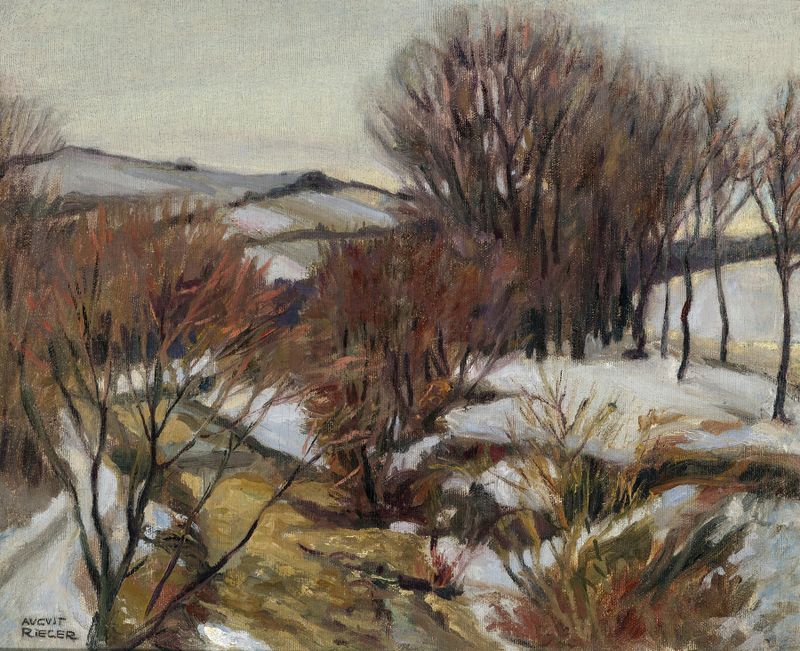
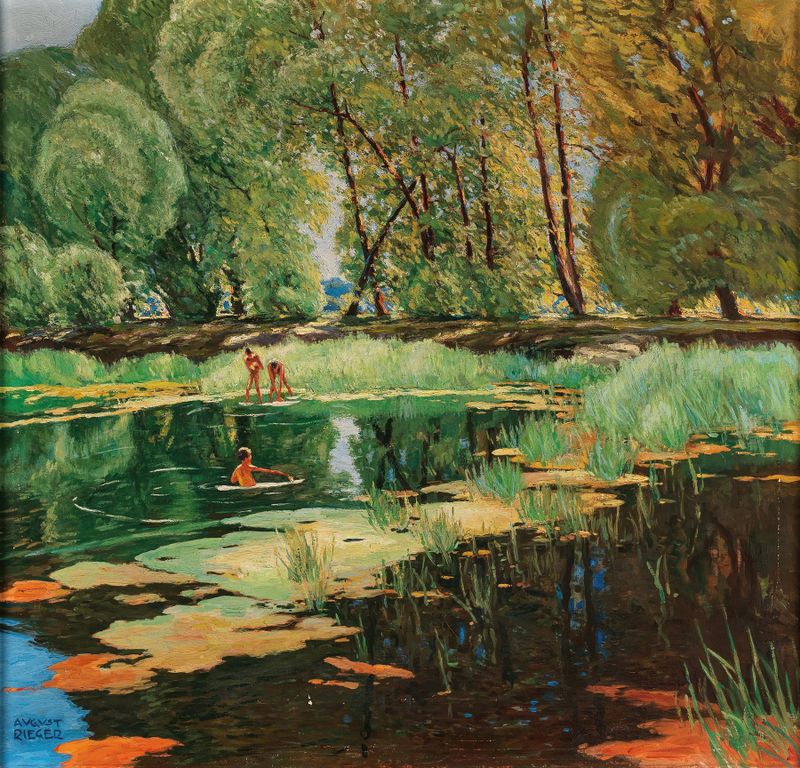
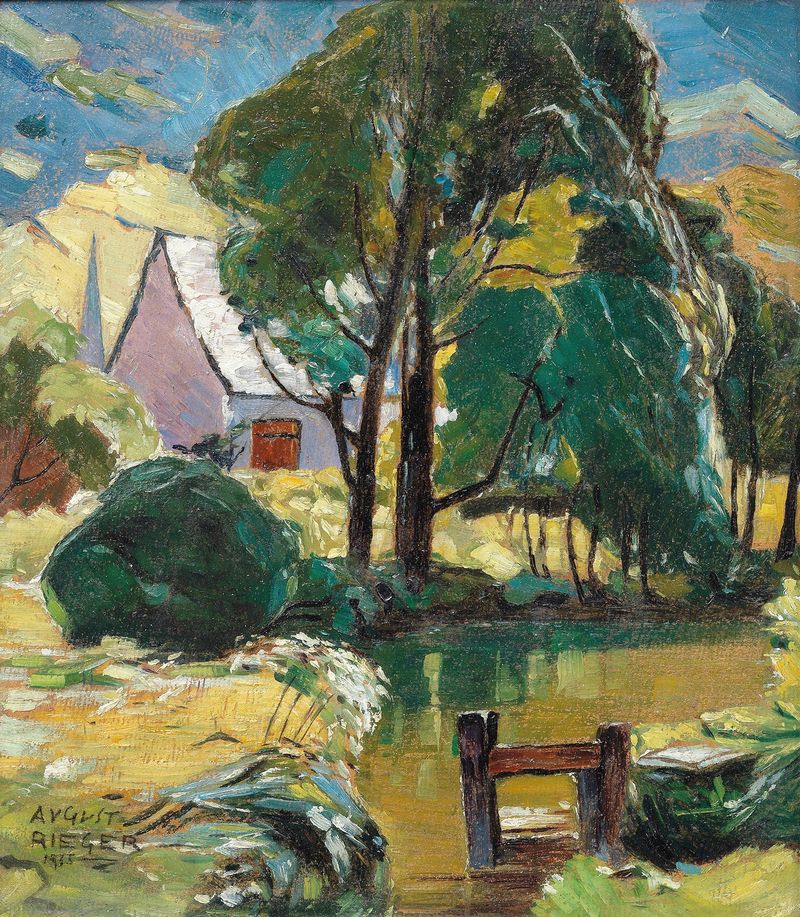
Is this a mirror — or a memory? In August Rieger's In the park of Schönbrunn Palace, the viewer is drawn into a contemplative void, where the beauty of the landscape confronts an underlying sense of emptiness. Look to the center of the canvas, where the carefully manicured lawns stretch out in geometric precision, flanked by stately trees that seem almost to sigh in their stillness. The muted palette, with soft greens and whispers of browns, invites the eye to wander but also creates a feeling of detachment. Notice how the light filters through the branches, casting gentle shadows that play across the ground, suggesting a moment frozen in time, yet devoid of life. Delve deeper, and you'll find the poignant contrasts at play.
The vibrant bursts of flora stand juxtaposed against the absence of figures, creating an unsettling stillness that invites reflection on human presence and absence. The meticulously rendered details of the park's architecture hint at history and grandeur, yet the emptiness elicits a profound loneliness. This tension between beauty and solitude echoes the artist's exploration of memory and the passage of time. Created in 1927, during a period of artistic experimentation in post-war Europe, Rieger's work reflects a moment of introspection.
Living in Vienna, he was influenced by the shifts in society after the Great War, where traditional structures were questioned. This painting embodies both a celebration of nature's elegance and a meditation on the quiet spaces left by human absence, resonating with the larger existential inquiries of the era.