Invaders — History & Facts
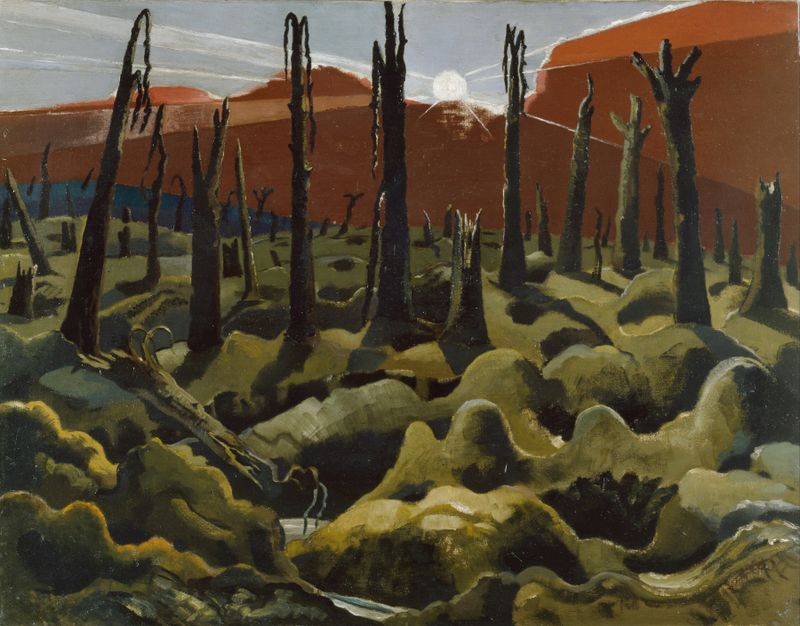
Can paint confess what words never could? In Invaders, the artist captures the haunting duality of decay and intrusion, evoking a visceral response to the passage of time. Begin by examining the foreground, where the vibrant hues of rusting metal and wilted foliage tangle together in a chaotic embrace. Look closely at the textured surface, where layers of paint create a tactile illusion of age. The contrasting colors — deep, somber greens battling against the fiery reds and oranges of decay — draw the eye to the tension between life and death, hinting at a world once alive, now overtaken by nature's slow, inevitable grip. Delve deeper into the composition and notice the subtle forms that emerge from the chaos.
Shadows seem to stretch across the canvas, suggesting the lingering presence of what once was. The interplay of light and shadow creates an atmosphere of nostalgia laced with foreboding, as if the artist asks us to contemplate our own mortality. Each brushstroke echoes the encroachment of nature on manmade structures, a metaphor for the impermanence that surrounds us. Created during a time of personal and artistic introspection, Invaders reflects the artist's observations of a world in flux.
In an era marked by rapid urbanization and ecological shifts, the work embodies the struggle between progress and preservation. As Hook captured this piece, he grappled with his own experiences, translating them into a visual dialogue that seeks to resonate long after the last visitor has left the gallery.