Ire. Vüe du pont d’Arve et de ses environs, prise du bois de la Batie — History & Facts
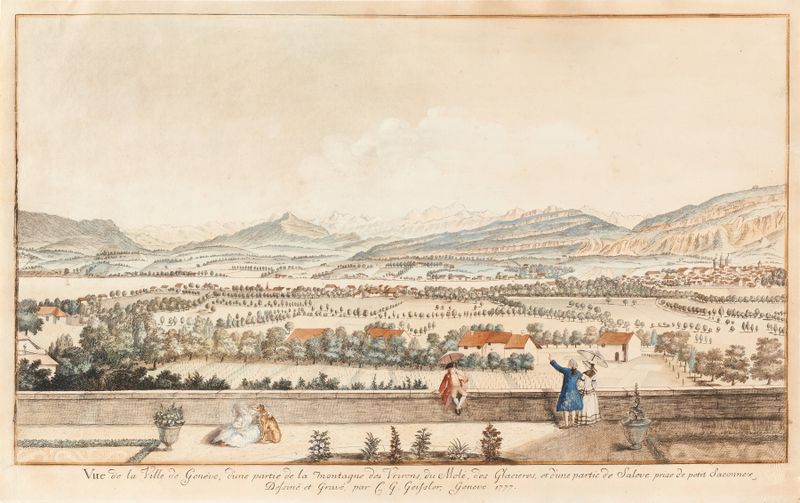
In the stillness of memory, nostalgia lingers like a whispered secret, urging us to revisit the moments that shaped our lives. Look to the gentle curve of the river in Ire. Vüe du pont d’Arve et de ses environs, prise du bois de la Batie, where the water’s surface reflects the soft hues of twilight. Notice the delicate brushstrokes that form the lush greenery, inviting you to trace the outlines of trees and hills.
The bridge, arching gracefully over the water, is framed by a symphony of muted colors, creating a sense of unity and tranquility that pulls the viewer into the pastoral scene. Yet beneath the serene surface lies an emotional depth. The bridge stands not just as a physical structure but as a symbol of connection — between the past and present, nature and human endeavor. The muted palette evokes a sense of longing, hinting at a world that once was, while the distant mountains loom as silent witnesses to the passage of time.
This blend of beauty and melancholy resonates deeply, reflecting the artist's contemplation of change and permanence. Created during a tumultuous period between 1915 and 1945, the artwork emerged amidst the backdrop of global conflict and personal reflection. Christian Gottlieb Geissler, influenced by the shifting tides of modern art and the emotional weight of his surroundings, sought to capture a moment of peace amid chaos. In this work, he transformed a simple landscape into a poignant narrative of memory and longing, inviting viewers to connect with their own histories.