
Island of Philæ on the Nile, Nubia. — History & Facts
When did color learn to lie? In the folds of light and shadow, the soul of a place yearns to be unveiled, yet it deceives, weaving stories that echo through time. Such is the essence of the Island of Philæ on the Nile, Nubia, a vision that beckons one to linger and reflect upon its rich history and untold secrets. Look to the center of the canvas, where the ancient temple rises majestically against the backdrop of a deep blue sky. Notice how the golden hues of the sandstone emerge from the earth, illuminated by a warm, inviting sun, while the tranquil waters of the Nile mirror this vibrancy.
The artist's meticulous attention to detail in the architecture draws the eye, revealing intricate carvings that tell tales of gods and men. Roberts' choice of vibrant colors and strong contrasts invites viewers into a space where the past mingles with the present. Yet, beneath the surface lies a profound dichotomy. The island, both a sanctuary and a relic, symbolizes a yearning for the lost worlds of antiquity, representing the clash between nature and humanity’s constructed legacies.
The shadows cast by the temple evoke a haunting nostalgia, as if the stones themselves mourn the passage of time and the fading whisper of ancient rituals. Each brushstroke encapsulates not only a geographical location but also an emotional landscape that resonates with the viewer's own sense of longing. In the mid-19th century, while painting this work, the artist found himself traversing Egypt, captivated by its majestic ruins and the allure of the Orient. Roberts was part of the Romantic tradition, which emphasized emotion and individual experience in response to grandeur.
During this period, while Western fascination with the East was escalating, he sought to document and celebrate its beauty, spiritual significance, and the weight of its history, ultimately capturing a fleeting glimpse of a culture that continues to inspire awe.
More Artworks by David Roberts
Browse all →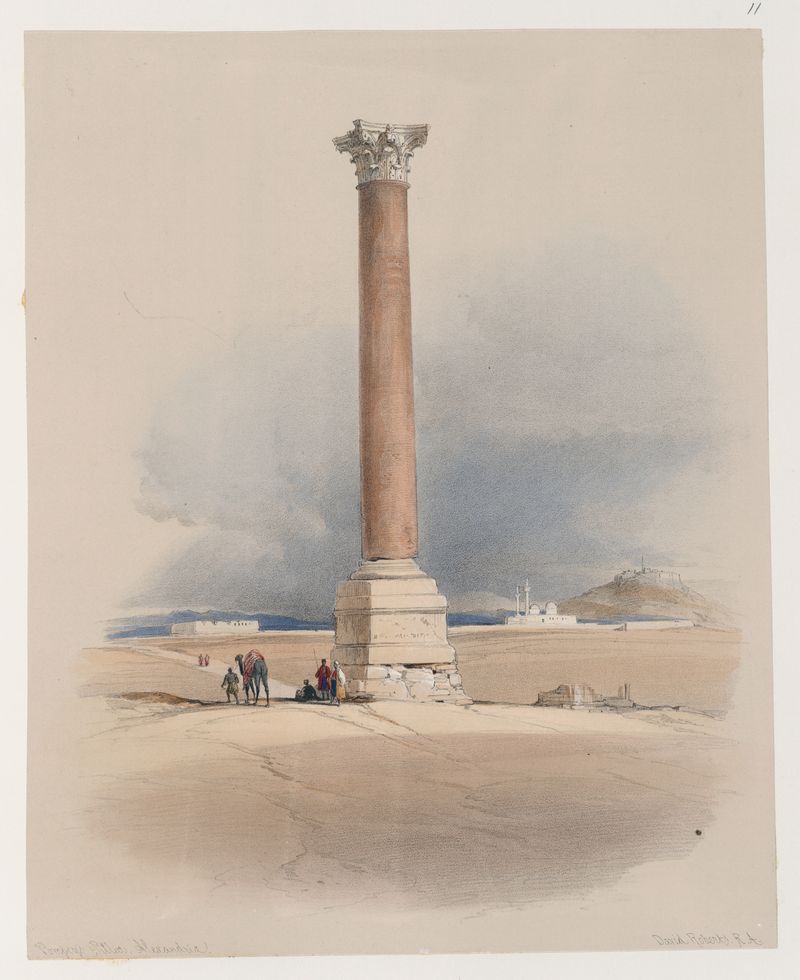
Pompey’s Pillar, Alexandria.
David Roberts

Approach to the Fortress of Ibrim.
David Roberts

Karnac [Karnak]. Nov. 29th, 1838.
David Roberts
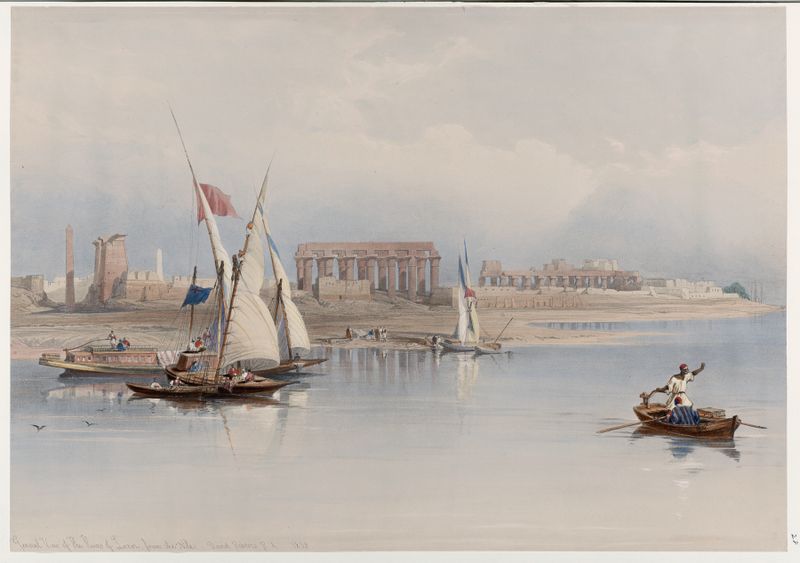
General view of the ruins of Luxor, from the Nile. 1838.
David Roberts

Statues of Memnon at Thebes, during the inundation.
David Roberts

Entrance to the tombs of the kings of Thebes. Bab-el-Malouk [Bîbân al-Mulûk].
David Roberts

The Fortress of the Alhambra, Granada
David Roberts
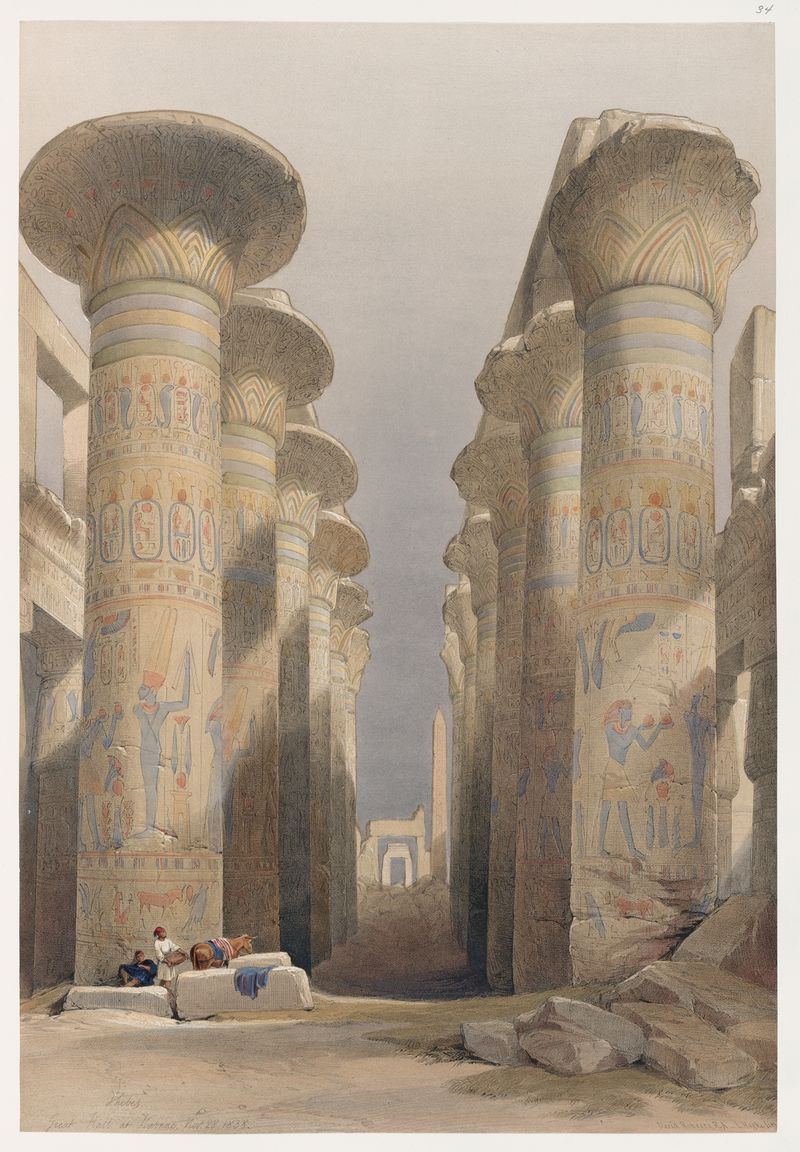
Thebes. Great Hall at Karnak. Nov. 28, 1838.
David Roberts
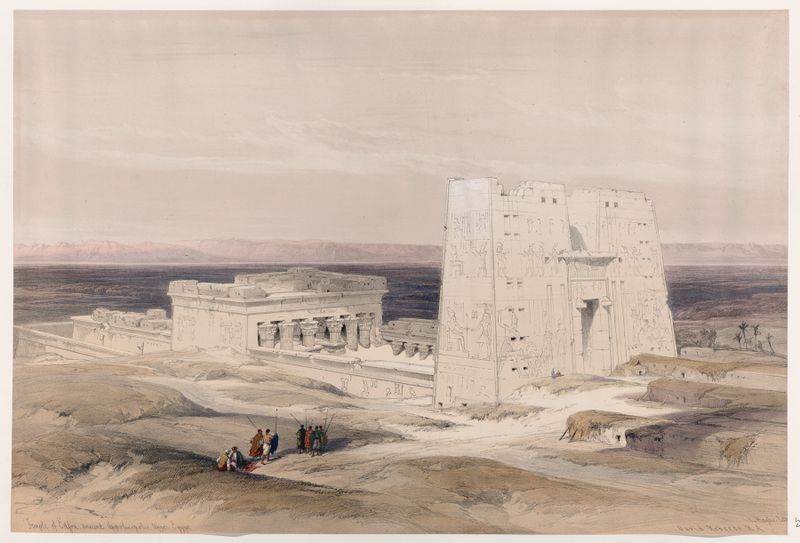
Temple of Edfou [Idfû], ancient Appolinopolis, Upper Egypt.
David Roberts

Temple of Kalabshee [Kalabsha, Kalâbishah], Nubia. Nov. 1838.
David Roberts





