Italian Landscape with Women at a Fountain — History & Facts
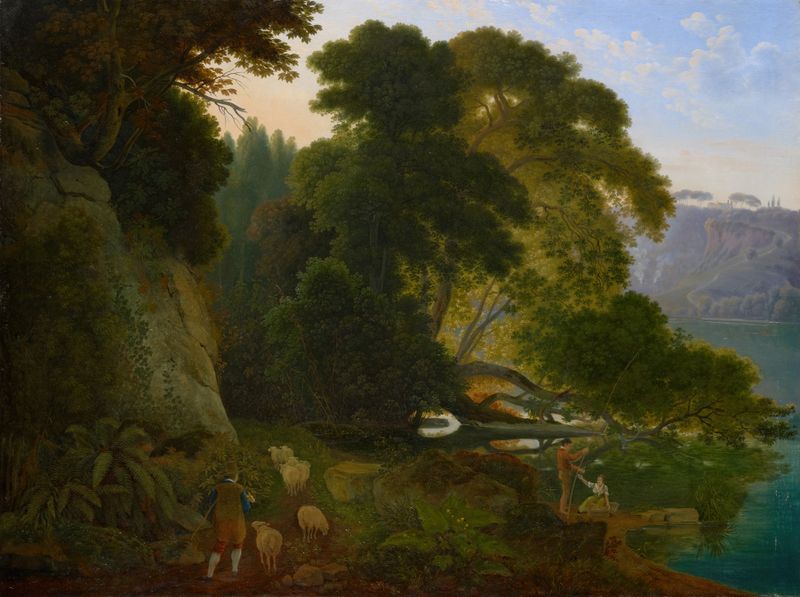
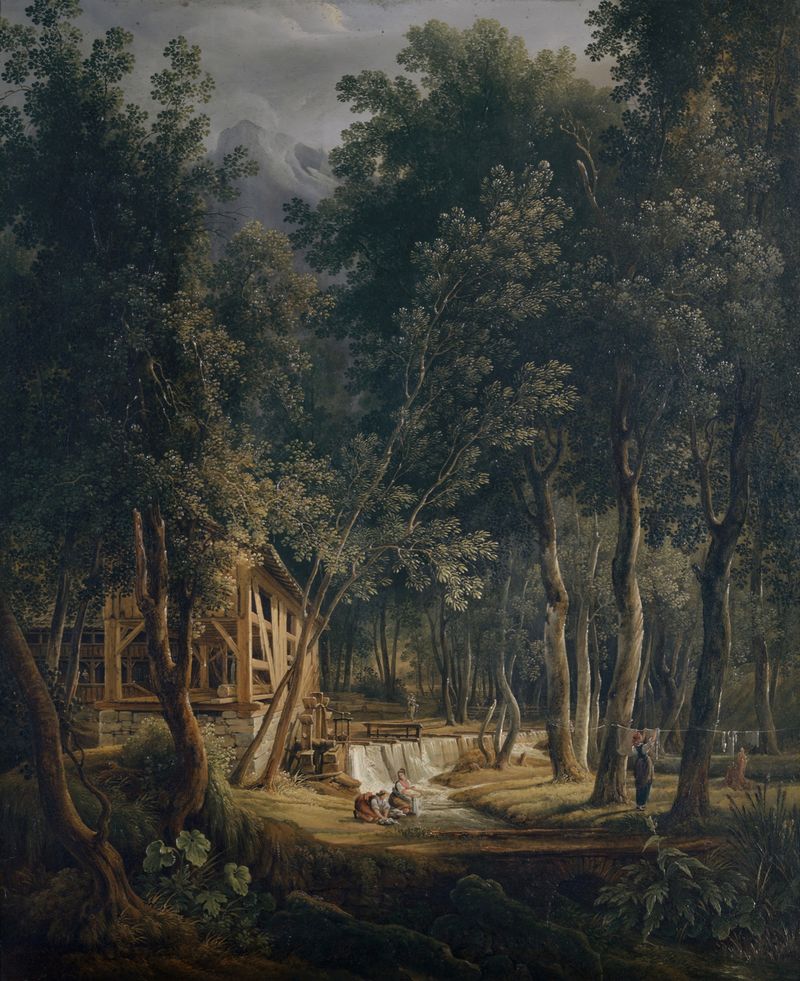
In the stillness of a landscape, emotions flow like the water from a fountain, intertwining memories of joy and melancholy. Look to the left, where two women, draped in flowing garments, congregate near the fountain's edge. The light cascades softly over their figures, illuminating the delicate textures of their clothing, while shadows dance playfully across the cobblestones. The gentle curves of the landscape draw the eye toward the distant hills, their muted greens and blues adding a serene backdrop to the intimate moment captured.
Bright splashes of color from flowers nearby inject life into the composition, highlighting the vibrancy of nature amid human presence. The painting invites contemplation of solitude and connection, as the women’s expressions blend serenity with an undercurrent of introspection. There exists a subtle tension between the vibrant surroundings and the quiet moment shared, suggesting a fleeting beauty that may soon be lost. The glistening water at the fountain symbolizes the passage of time, a reminder of what once was, yet also what continues to flow.
Each detail, from the rippling water to the floral arrangements, contributes to an atmosphere of nostalgia tinged with sadness. Created during the 19th century, the artist worked on this piece while living in Switzerland, a time marked by an increasing appreciation for natural landscapes. Birmann found inspiration in the picturesque charm of places like Tivoli, capturing not just the physical beauty but the emotional echoes that landscapes can hold. His art reflects a transitional period in European painting, where the interplay of nature and human experience began to take center stage.