Italian Mountain Landscape with Travelers at a Well — History & Facts
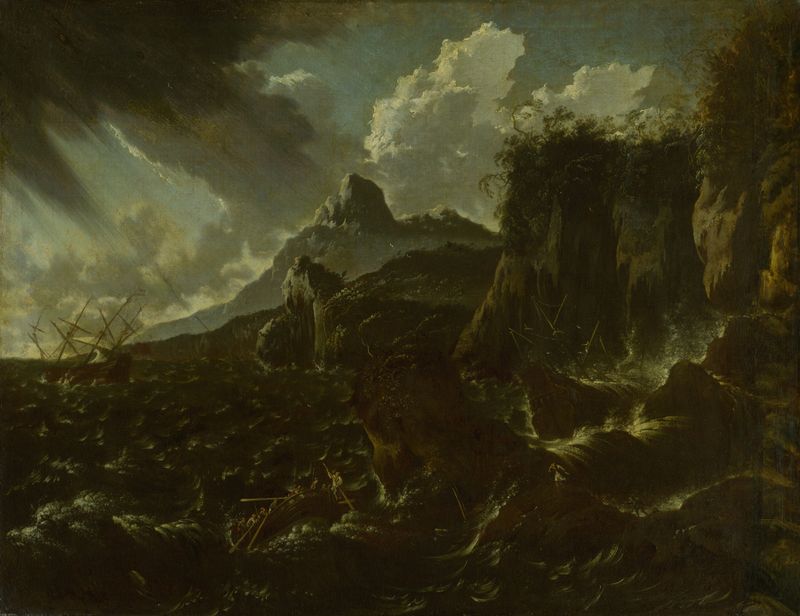
In the hands of a master, nature's splendor can evoke a profound sense of longing and melancholy, compelling the viewer to confront the shadows lurking beneath its surface. Look to the foreground at the well, a focal point brimming with life and interaction. Travelers pause to draw water, their figures rendered with meticulous detail against the serene backdrop of rolling mountains. Notice how the light dances across the scene, illuminating the well’s stones and the travelers’ garments, casting gentle shadows that hint at the hidden stories of those who have traversed this landscape.
The interplay of light and dark creates a striking contrast, emphasizing both the beauty and the elusive nature of this idyllic setting. As you gaze further, the towering peaks loom in the distance, their grandeur softened by a mist that suggests both mystery and distance. The travelers, though engaged in a simple act, are enveloped in an atmosphere tinged with uncertainty—where they come from and where they are going remains unanswered. This ambiguity invites reflection on the passage of time and the fleeting nature of happiness.
The shadows lengthen, whispering tales of the lives intertwined with the land, hinting at struggles and desires that lie beneath the surface. Created between 1650 and 1700, this work emerged during a period of significant change for its creator, who was based in the Netherlands, a hub of artistic innovation. Hans de Jode was known for his landscapes that captured both beauty and emotional depth, exploring the tension between light and shadow—a reflection of his own experiences in a world filled with uncertainty following the tumultuous wars in Europe.