
Jakob ontvangt het bebloede kleed van Jozef — History & Facts
When did color learn to lie? The vivid hues of reality can often mask deeper truths, obscuring reflections of our emotions and experiences. Look to the left of the canvas, where the figure of Jacob is rendered with remarkable attention to detail, his sorrowful expression framed by a cascade of rich colors. The blood-stained cloth, strikingly vibrant in its red, rests poignantly in his hands, a testament to grief and betrayal. Notice how the light dances upon the fabric, accentuating the stains while casting shadows that deepen the contours of Jacob’s anguished face, creating a jarring contrast between the brightness of the garment and the darkness of his despair. Delve into the contrasts within the scene: the vibrant reds juxtaposed against muted browns and greens emphasize not just the loss of a son but the brutal reality of the moment.
The expressions of the surrounding figures, with their varied gestures, whisper unspoken emotions—shock, empathy, and disbelief—all united in this single, heart-wrenching tableau. This emotional tension pulls the viewer into the narrative, urging them to reflect on themes of familial bonds and the pain of separation. Aertgen Claesz van Leyden painted Jakob ontvangt het bebloede kleed van Jozef during a time when the Northern Renaissance was flourishing, marked by an increasing interest in emotional depth and realism. Active from the late 15th century into the 16th, he explored biblical themes with a deep sense of human experience.
This piece emerged as the world was grappling with profound religious and social shifts, and his work resonates with the changing tides of both art and society, capturing a moment of human vulnerability that remains timeless.
More Artworks by Aertgen Claesz van Leyden
Browse all →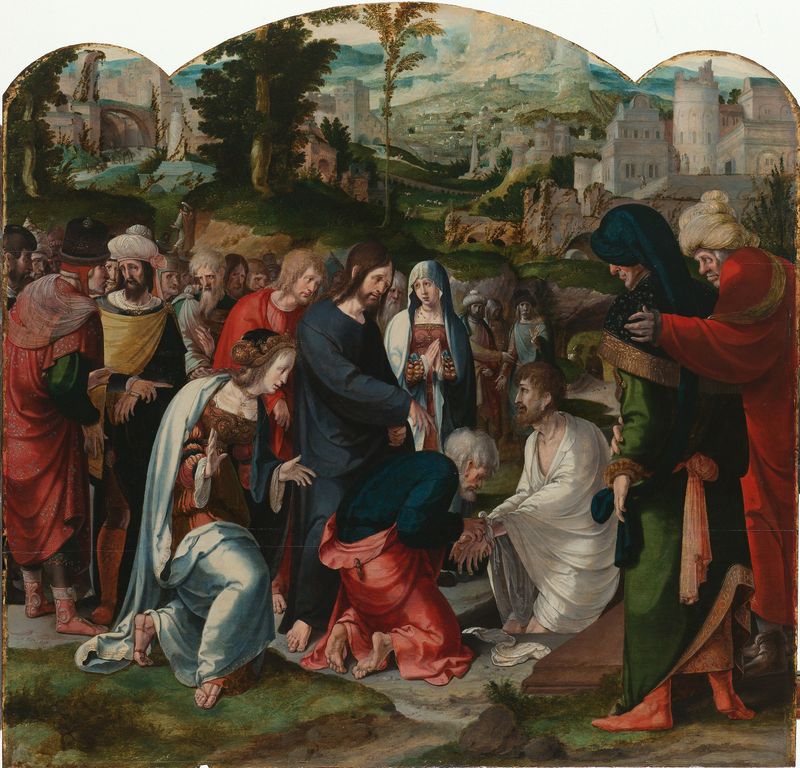

More Religious Art
Browse all →
The Return of the Prodigal Son
Rembrandt van Rijn

The Garden of Earthly Delights
El Bosco

Count Orgaz’ funeral
El Greco

The Hundred Guilder Print: the central piece with Christ preaching, the plate arched
Rembrandt van Rijn

The Descent from the Cross
Rogier van der Weyden

The return of the prodigal son
Rembrandt van Rijn