
Saint Jerome in his Study by Candlelight — History & Facts
Can beauty exist without sorrow? In the flickering candlelight that dances across the surface of Saint Jerome in his Study by Candlelight, one can sense the fragile balance between knowledge and decay, illumination and shadow. Look to the left where Saint Jerome, hunched over his desk, is enveloped in a warm, golden glow. The gentle light catches the intricate textures of his robes, rendering the fabric almost tangible, while casting a stark contrast against the darkened corners of the room. A few meticulously placed objects—a skull, a quill, and open books—tell a silent story of reflection and mortality, inviting the viewer to explore the depths of wisdom and its inevitable ties to human transience. In this intimate setting, the interplay between light and darkness evokes a profound tension.
The flickering flame symbolizes both enlightenment and the fleeting nature of existence, while the skull serves as a poignant reminder of mortality. Each detail—the tattered pages, the shadows lurking at the edges—whispers of a world that is constantly on the brink of decay, urging us to ponder what remains when knowledge illuminates yet cannot shield us from our fate. Aertgen Claesz van Leyden painted this work between 1520 and 1530 during a period of significant artistic evolution in the Northern Renaissance. Emerging amidst a cultural shift that valued humanism and detailed realism, he found himself at the crossroads of tradition and innovation.
This painting is a reflection of that time, capturing not only the essence of Saint Jerome's scholarly pursuits but also the broader human condition—a meditation on the pursuit of knowledge within the constraints of mortality.
More Artworks by Aertgen Claesz van Leyden
Browse all →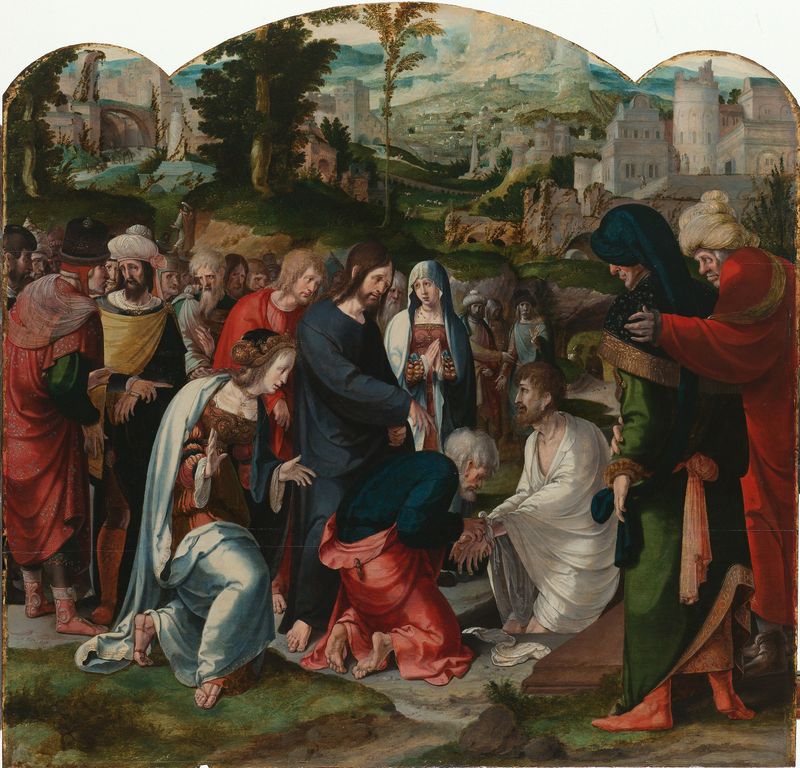

More Religious Art
Browse all →
The Return of the Prodigal Son
Rembrandt van Rijn

The Garden of Earthly Delights
El Bosco

Count Orgaz’ funeral
El Greco

The Hundred Guilder Print: the central piece with Christ preaching, the plate arched
Rembrandt van Rijn

The Descent from the Cross
Rogier van der Weyden

The return of the prodigal son
Rembrandt van Rijn