
Jäger im Winterwald — History & Facts
Could a single brushstroke hold eternity? In Jäger im Winterwald, the interplay of darkness and light encapsulates the haunting duality of existence, teetering on the edge of violence and tranquility. Look to the center, where a lone hunter stands poised, rifle at the ready, amid the ghostly white of the snow-laden trees. The stark contrast between the deep greens and grays of the forest surrounding him creates a palpable tension, drawing your gaze toward the figure's rigid posture. Notice how the brushwork captures the ethereal shimmer of snowflakes as they cascade around him, while the shadows loom heavily, suggesting an unseen threat lurking just beyond the canvas.
The composition constrains the hunter within the confines of nature, amplifying the very violence that he embodies in this serene yet foreboding landscape. The juxtaposition of the hunter’s stillness against the swirling chaos of falling snow speaks to a deeper conflict within human existence — the struggle between survival instincts and the fragile beauty of nature. Each stroke seems to echo the heartbeat of the forest, while also hinting at the violence inherent in the act of hunting. The hunter’s isolation, surrounded by the serenity of winter, reveals a profound disconnection that resonates with both fear and the inevitability of predation, blurring the lines between hunter and hunted. During the time Jäger im Winterwald was created, Thomassin was immersed in a world grappling with the consequences of industrialization and war.
The artist, whose style often reflected the stark realities of life, was likely acutely aware of the violent undertones that permeated society. Though the exact date remains unknown, this work reflects a period of introspection and complexity, when nature and humanity were in a delicate dance of destruction and beauty, both in Europe and within the artist himself.
More Artworks by Désiré Thomassin
Browse all →
Fishermen On The Beach
Désiré Thomassin
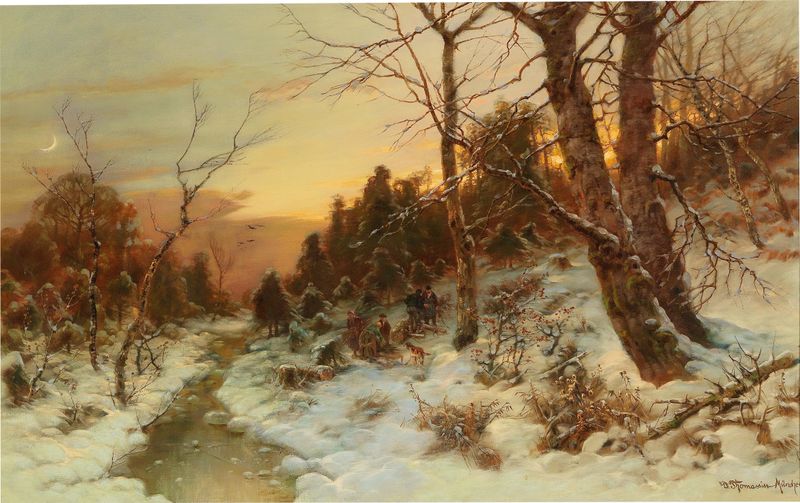
Woodworkers In A Winter Woodland
Désiré Thomassin
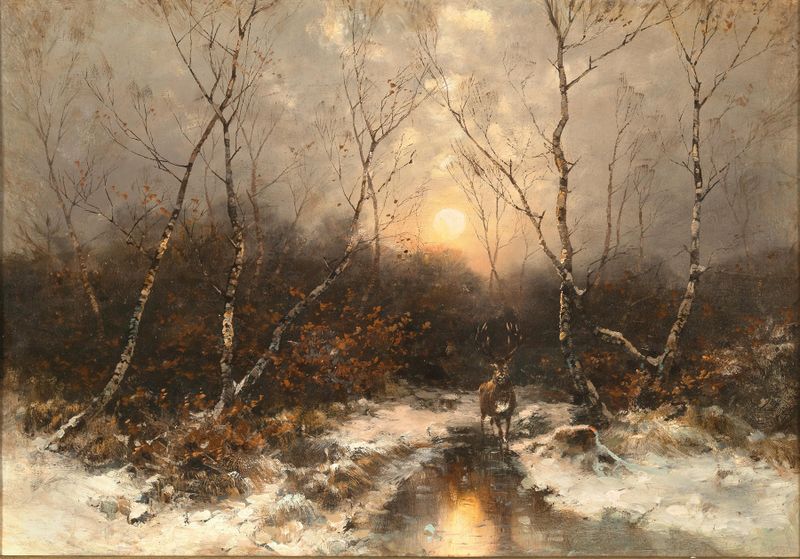
A Deer in a Forest by Moonlight
Désiré Thomassin
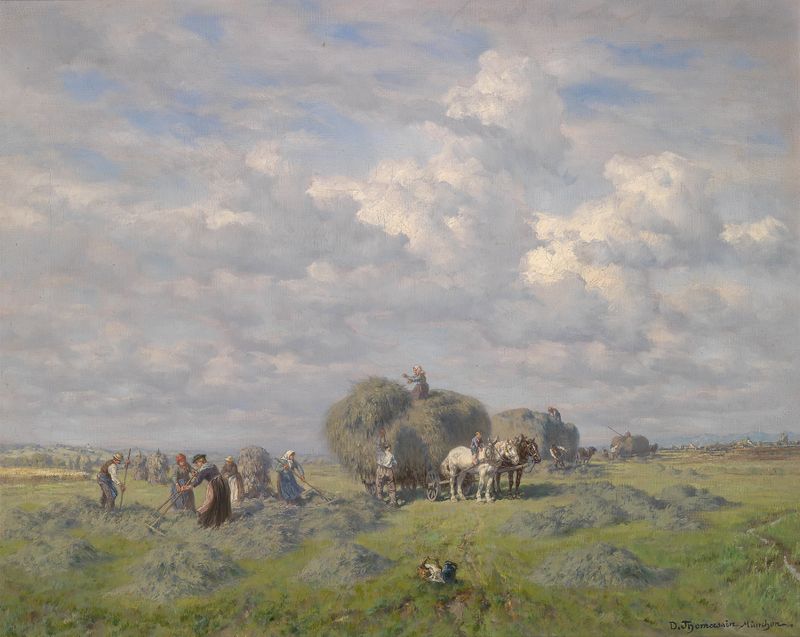
Heuernte an einem Sommertag
Désiré Thomassin

Rehe in Winterlandschaft
Désiré Thomassin
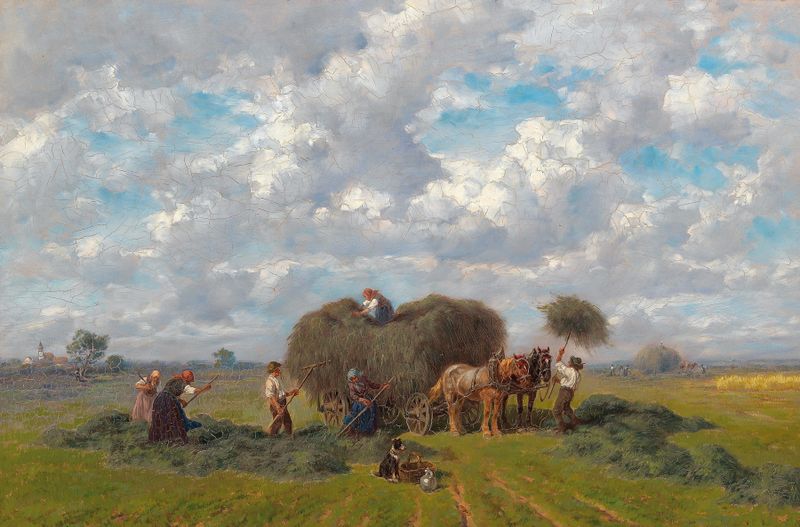
Harvesting
Désiré Thomassin
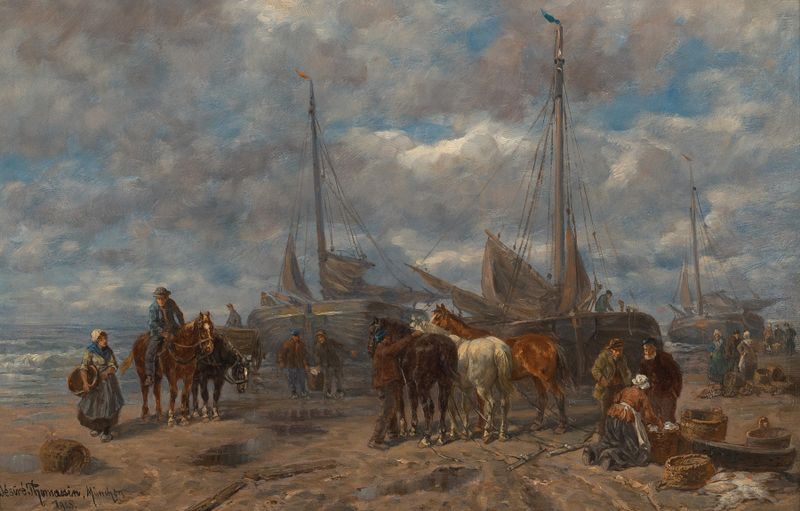
The Homecoming of the Fishermen, Market on the Beach
Désiré Thomassin
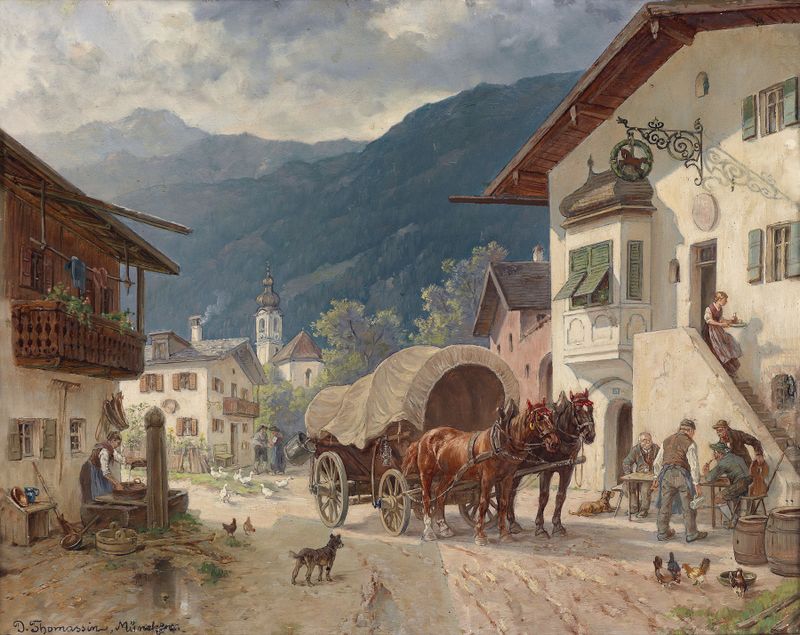
Rast vor dem Wirtshaus
Désiré Thomassin

Returning Home From The Hunt At Sunset
Désiré Thomassin

Returning Home At Sunset
Désiré Thomassin





