
John Newton — History & Facts
What secret hides in the quiet of the canvas? In the shadows that envelop a figure, there lies a world of unspoken narratives, waiting to be unveiled. Look to the left at the intricate folds of John Newton's garments, where light gently caresses the fabric, creating a subtle interplay between shadow and illumination. The artist employs rich, muted colors, allowing the deep browns and soft creams to evoke an atmosphere of introspective serenity. The composition is carefully balanced, drawing the viewer's eye toward Newton's contemplative gaze, which seems to hold the weight of history and personal transformation. Beneath the surface, the painting encapsulates the tension between Newton's past as a slave trader and his later role as a clergyman and abolitionist.
The shadows cast upon his face can be seen as a metaphor for the burdens of guilt and redemption, suggesting a complex internal struggle. His direct gaze invites us to consider the profound change he endured, while the contrasts of light and dark in the background evoke a sense of both conflict and hope, hinting at the duality of his journey. Thomas Hudson painted this portrait during a transformative period in the 1750s, as he was establishing himself within the English art scene. Working in London, Hudson was influenced by the stylistic shifts of the time, embracing a more intimate approach to portraiture.
This was also a time of growing awareness regarding issues of morality and human rights, coinciding with Newton’s own evolving views, which would later inspire his famous hymn, "Amazing Grace."
More Artworks by Thomas Hudson
Browse all →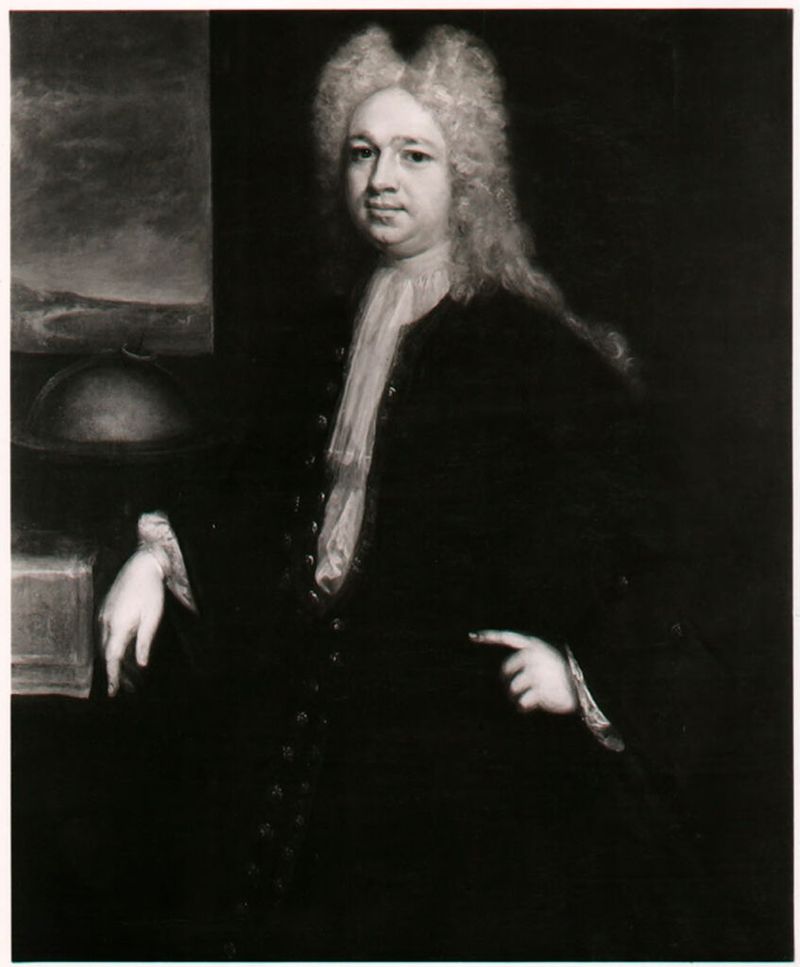

More Portrait Art
Browse all →
Las meninas
Diego Velázquez

Self-portrait with a Bandaged Ear and Pipe
Unidentified artist

Girl with a Pearl Earring
Johannes Vermeer

The Sampling Officials of the Amsterdam Drapers’ Guild, Known as ‘The Syndics’
Rembrandt van Rijn

The Hundred Guilder Print: the man seen on the back in the lower left corner
Rembrandt van Rijn

Portrait of Dr Gachet
Vincent van Gogh