
John Van der Wall — History & Facts
The stillness of John Van der Wall carries an unsettling weight, whispering of thoughts unvoiced, emotions restrained, and the thin line between sanity and madness. Each gaze lingers longer, searching for clues hidden beneath the surface. Look to the right at the gentleman's expression, which oscillates between contemplation and an unsettling intensity. The careful strokes of Hudson’s brush create a lifelike quality, especially in the play of light that dances across the subject’s face, illuminating the tension in his furrowed brow.
The dark background frames the figure, drawing the eye to the shimmering fabric of his attire, rich with color and texture, capturing the viewer's attention while hinting at underlying complexities. Delve deeper into the subtleties—the slight upward tilt of his head suggests both confidence and vulnerability, a paradox of power intertwined with an impending unraveling. The meticulous detailing of his eyes invites us to question what lies behind them: a troubled mind or the burden of expectation. These contrasts evoke an emotional tumult, reflecting the artist’s exploration of identity and the fragile nature of the human psyche. Thomas Hudson painted John Van der Wall around 1745, during a time when he was establishing himself within the English portrait landscape.
It was a period marked by a growing interest in individualism and personal expression in art, paralleling the artist's own development as he navigated the challenges of patronage and his transition to a more refined style. This painting stands as both a reflection of his skill and a window into the complexities of the human condition.
More Artworks by Thomas Hudson
Browse all →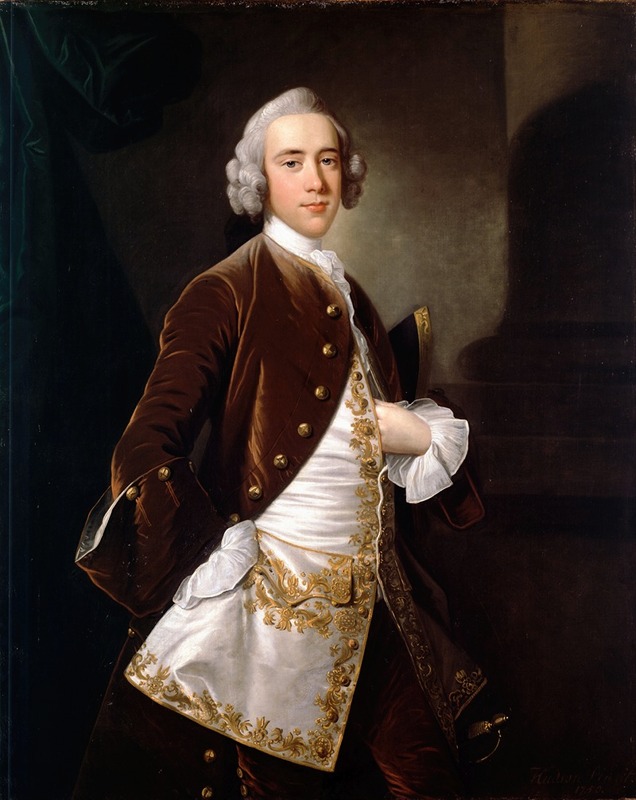
More Portrait Art
Browse all →
Las meninas
Diego Velázquez

Self-portrait with a Bandaged Ear and Pipe
Unidentified artist

Girl with a Pearl Earring
Johannes Vermeer

The Sampling Officials of the Amsterdam Drapers’ Guild, Known as ‘The Syndics’
Rembrandt van Rijn

The Hundred Guilder Print: the man seen on the back in the lower left corner
Rembrandt van Rijn

Portrait of Dr Gachet
Vincent van Gogh