Jug — History & Facts
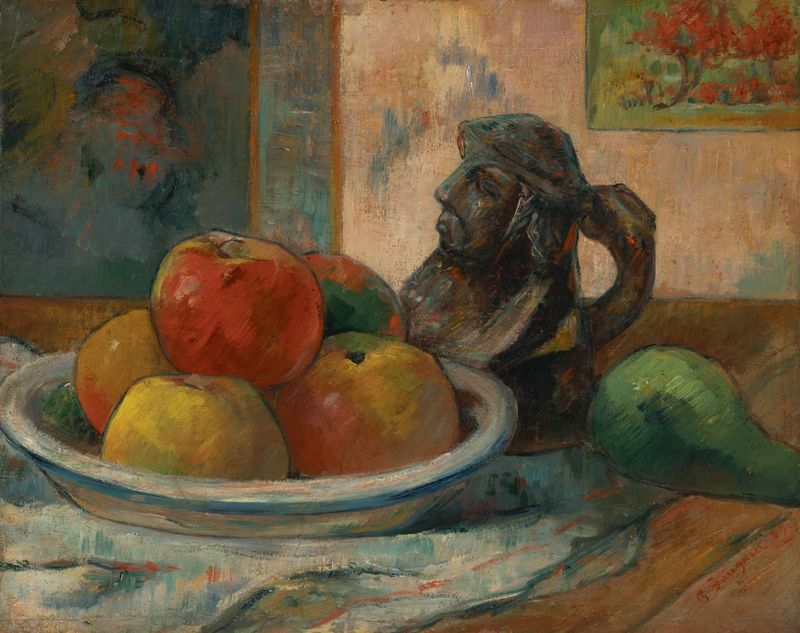
Where does light end, and longing begin? The delicate interplay of shadow and shimmer in this work evokes a profound yearning that transcends the mere physicality of its form. Look closely at the jug, positioned centrally, radiating a soft luminescence that captures your attention immediately. Notice how the light dances across its surface, illuminating the intricate patterns that swirl in a harmonious blend of earthy tones—deep browns interwoven with hints of ochre. The careful brushstrokes breathe life into the ceramic, making it feel almost alive, as if it holds secrets from centuries past. Yet, this jug is not merely functional; it symbolizes a deeper emotional resonance.
The contrast between its sturdy form and the ethereal quality of light reflecting off it speaks to the tension between permanence and transience. Each curve and shadow invites contemplation about the stories it may hold, the hands that have cradled it, and the spaces it has inhabited. This vessel embodies a yearning not just for the material, but for connection—a reminder of what it means to have and to hold. Created between 1700 and 1720, this piece reflects an era of intricate craftsmanship and artistic exploration in the Netherlands.
As De Drie Posteleyne Astonne thrived in an age marked by the flourishing of decorative arts, this jug stands as a testament to both individual skill and the broader cultural movements that celebrated beauty and functionality in design. In a world transforming with commerce and craftsmanship, it captures the essence of a time when art was deeply intertwined with daily life.