Jug with the arms of Saxony and Brunswick — History & Facts
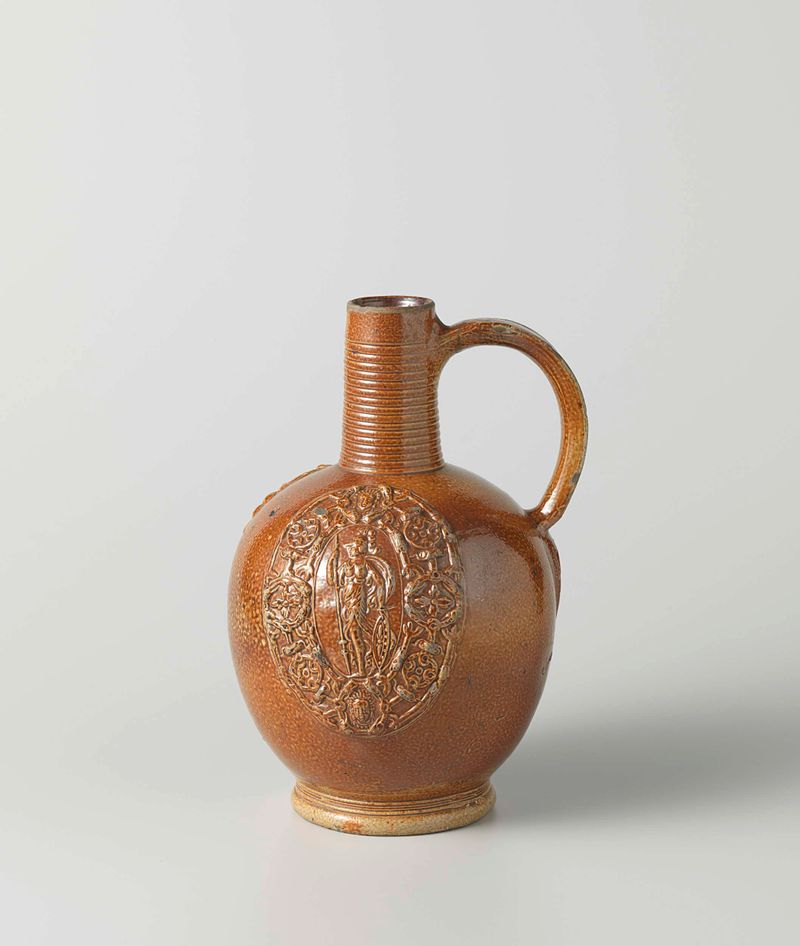
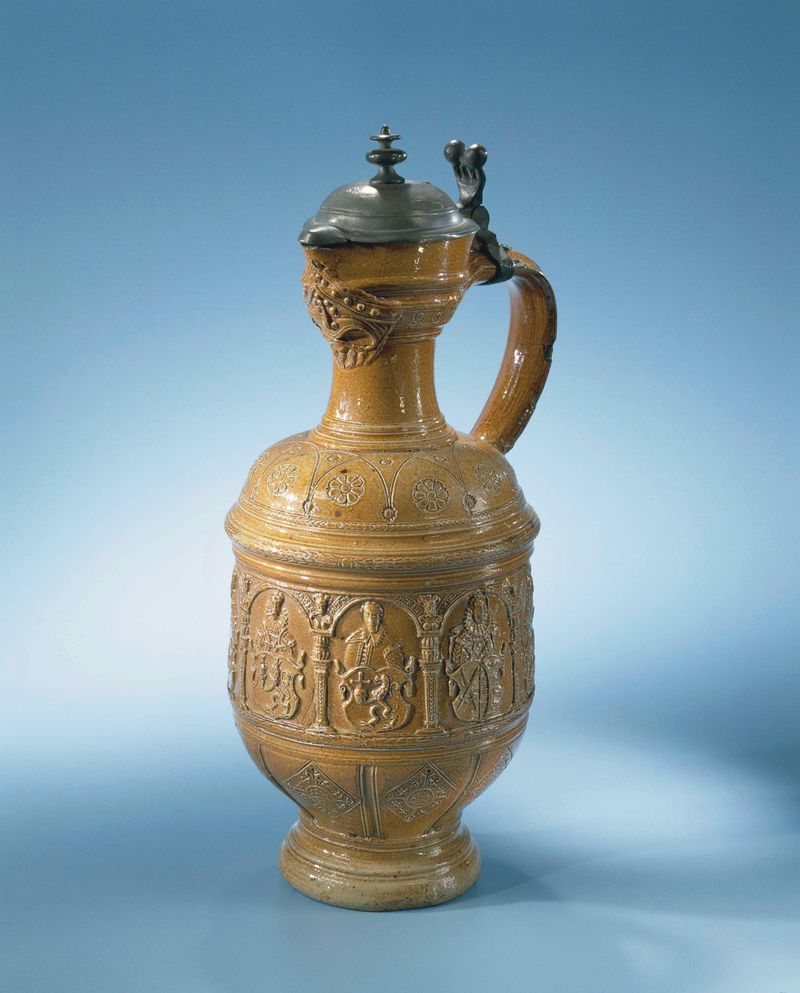
In a time of fleeting existence and inevitable decay, an object can transcend its purpose, becoming a vessel for reflection and remembrance. Look to the intricate detailing on the jug’s surface, where the arms of Saxony and Brunswick emerge from the darkened palette, muted yet defiant. Notice how the light interacts with the glossy glazes, casting shadows that soften their sharp contours. The craftsmanship invites us to trace our fingers along the graceful curves and meticulously painted heraldry, revealing layers of history embedded in every brushstroke. Yet, beneath the beauty lies a subtle tension, a poignant reminder of mortality.
The jug serves as a testament to nobility, but its very existence hints at the decay of power and the ephemeral nature of glory. This juxtaposition compels the viewer to consider not just the object’s role in ceremonial life, but also the inevitable erosion of legacy, as time continues its relentless march forward. Jan Baldems Mennicken created this work in 1599, a period when the arts were flourishing across Europe yet shadowed by the realities of political strife and social upheaval. Living in a time marked by the rise and fall of empires, the artist’s choice to immortalize such a ceremonial object reflects a deep awareness of the transitory nature of human achievements in a tumultuous world.